01How are drugs classified?
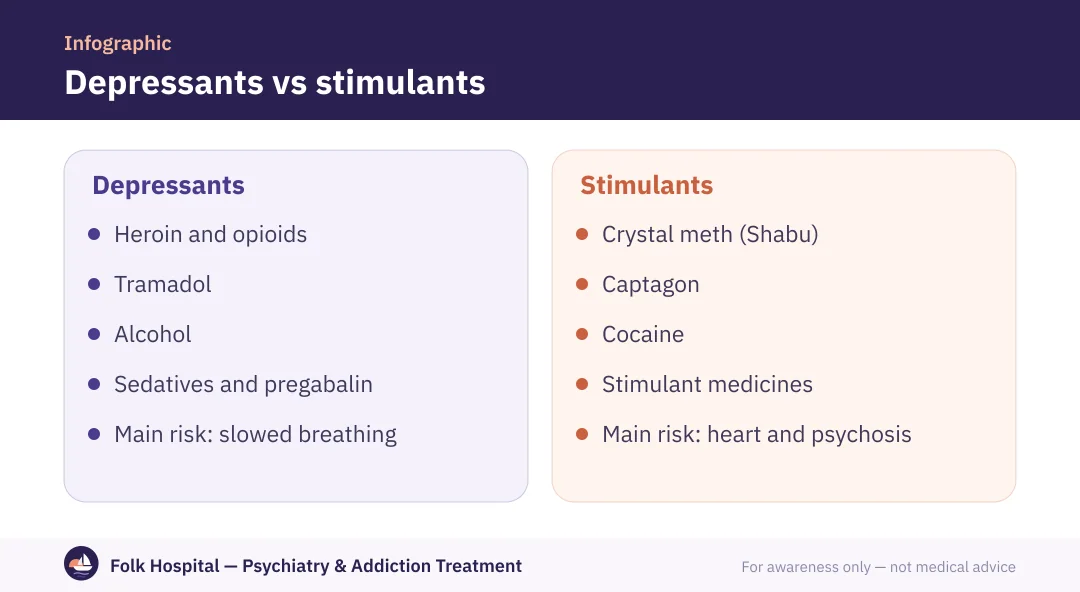
| Group | Examples | Main effect |
|---|---|---|
| Opioids | Heroin, tramadol, morphine | Pain relief, euphoria, slowed breathing |
| Stimulants | Crystal meth, Captagon, cocaine | Energy, alertness, low appetite, insomnia |
| Cannabinoids | Hashish, bango | Relaxation, altered perception and time |
| Synthetic cannabinoids | Strox, voodoo | Unpredictable acute effects and seizure risk |
| Sedatives | Pregabalin, benzodiazepines | Calm, drowsiness, muscle relaxation |
| Alcohol | Beer, wine, spirits | General depression; withdrawal can be dangerous |
02Why do all these substances cause addiction?
Different as they are, every addictive substance raises dopamine in the brain's reward centre beyond anything natural pleasures can match. With repetition the brain adapts, everyday pleasure fades, and the drug becomes necessary just to feel normal. That's the core of addiction whatever the substance.
؟Frequently asked questions
What is the most dangerous drug?
There's no single answer. Strong opioids like heroin lead on overdose deaths, meth on psychological harm and psychosis, and alcohol and sedatives on dangerous withdrawal. Mixing substances is more dangerous than any one alone.
Is hashish a soft drug?
Hashish does cause addiction and is linked to anxiety and psychosis, especially in teenagers. Today's products are much stronger than in the past, and Strox isn't hashish at all but a more dangerous synthetic.
Sources and references
- Drugs, Brains, and Behavior: The Science of Addiction — National Institute on Drug Abuse (NIDA)
- World Drug Report 2024 — United Nations Office on Drugs and Crime (UNODC)
- Mental disorders — fact sheet — World Health Organization

A psychiatrist specialising in addiction and mental illness in adults and adolescents, with a focus on dual diagnosis.
For awareness only — not a substitute for medical advice. Editorial policy · View profile