01Which conditions does the psychiatric unit treat?
Depression
From persistent sadness to severe depression and suicidal thoughts.
Bipolar disorder
Controlling manic and depressive episodes and stabilising mood.
Psychosis and schizophrenia
Hallucinations, delusions and loss of contact with reality.
OCD
Repetitive thoughts and actions that consume the day.
Anxiety and panic disorders
Intense fear attacks and anxiety that disrupts life.
Sleep disorders
Chronic insomnia and a reversed body clock.
We also admit people with PTSD, eating disorders and borderline personality disorder in crisis, drug-induced psychosis, and cases where mental illness and addiction occur together, within our dual diagnosis programme.
02Levels of psychiatric care
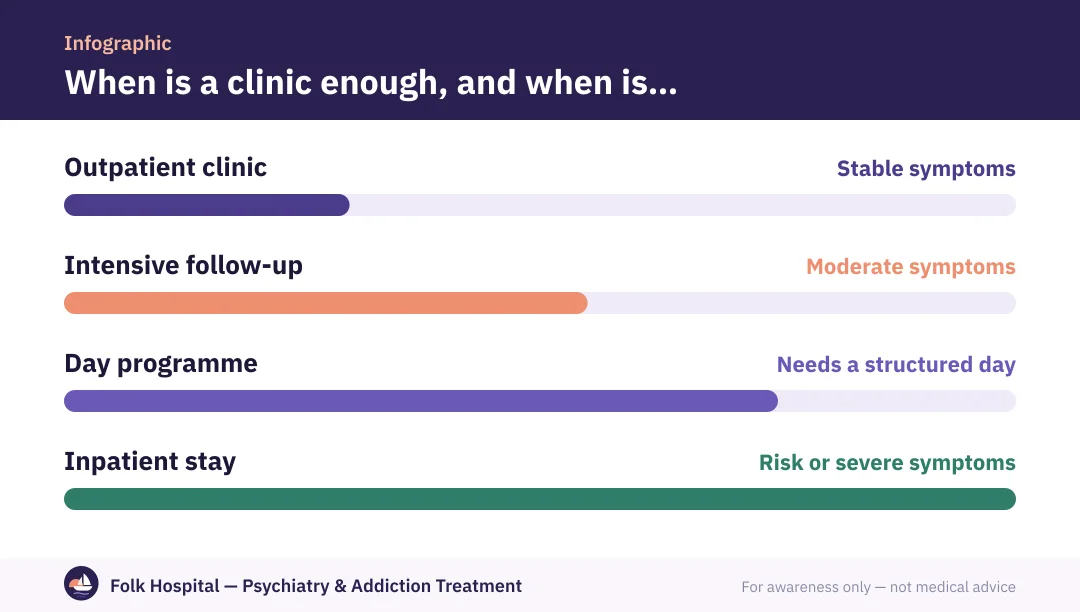
Not every person with a mental illness needs admission. Care comes in levels, chosen according to severity of symptoms, degree of risk and how well the home environment can support:
| Level | Who it suits | What it looks like |
|---|---|---|
| Outpatient clinic | Stable, or mild to moderate symptoms | Regular visits, medication and sessions |
| Intensive follow-up | Moderate symptoms or early deterioration | Frequent visits and phone follow-up |
| Day care | Needs a structured therapeutic day but sleeps at home | A daily programme of several hours |
| Full admission | Risk to self or others, or severe symptoms that can't be managed at home | A stay with round-the-clock care |
03When does someone need psychiatric admission?
- Suicidal thoughts or attempts, or self-harm.
- Aggression or risk to others.
- Hallucinations or delusions that control behaviour.
- Refusing food or medication with clear deterioration.
- No response to outpatient treatment after adequate attempts.
In immediate danger call an ambulance on 123 or the mental health hotline on 08008880700.
Ambulance: 123Other reasons include an acute manic episode with dangerous decisions or destructive spending, severe depression with refusal to eat or drink, a major change in medication that needs monitoring, or cases where mental illness occurs with an addiction that needs medical detox.
04Voluntary and involuntary admission
Voluntary admission
- Requested by the patient or agreed after the plan is explained.
- The patient takes part in decisions and can request discharge through the proper procedure.
- This is the most common form.
Admission without consent
- In specific situations set out in the mental health care law.
- Such as serious risk to the patient or others, or severe deterioration with refusal of treatment.
- Done with procedures, safeguards and regular review, and we explain each step to the family.
In both cases the patient keeps their basic rights to dignity, information and complaint. Read about involuntary treatment.
05What happens during a psychiatric stay?
- Admission and assessmentan interview with the psychiatrist, and medical checks to rule out a physical cause for the symptoms.
- Diagnosis and planconfirming and explaining the diagnosis to the patient and family, and setting a written medication and therapy plan.
- Stabilisationdaily review of the patient's response, dose adjustments, and making sure they sleep and eat.
- Psychological therapyindividual and group sessions, plus psychoeducation to help the patient understand their illness.
- Safe dischargea clinic follow-up plan and training for the family on early warning signs.
Why do we look for a physical cause?
Some psychiatric symptoms can be caused by a physical problem: a thyroid disorder, vitamin deficiencies, infection, a medicine's side effects, a drug, or a brain condition. So the first days include blood tests and a physical examination, sometimes with imaging, so the patient isn't treated for a mental illness while suffering from something else.
06Available treatments
- Medication: antidepressants, mood stabilisers, antipsychotics, and anxiety and sleep medicines, chosen by the psychiatrist and reviewed daily. Read about psychiatric medicines.
- Psychological therapy: CBT, DBT and group therapy.
- Brain stimulation treatments: such as ECT under anaesthesia and TMS for specific cases, with informed consent.
- Psychoeducation: for the patient and family about the illness, medicines and signs of relapse.
- Therapeutic activities: exercise, creative activities and a structured day that restores a natural rhythm of sleep and life.
07A patient's day on the unit
- Morning: getting up at a set time, breakfast and a review with the doctor.
- Late morning: a group or individual session and a therapeutic activity.
- Afternoon: rest, arranged visits and activities.
- Evening: a calm activity, then sleep at a regular time, with nursing around the clock.
08The family's role
The family is a partner in treatment, not just a visitor. We involve families in:
- Understanding the diagnosis and what it means, and dealing with stigma and fear.
- Managing symptoms at home after discharge.
- Supporting medication without conflict, and knowing the side effects.
- Early warning signs of relapse, and what to do when they appear.
Read caring for a relative with mental illness.
09Discharge and follow-up
No patient leaves without a written plan covering the first clinic appointment within days, medicines and doses, warning signs, and crisis contact numbers. The first weeks after discharge are a sensitive time, especially for anyone who was at risk of suicide, and close follow-up then protects the patient.
10Myths about psychiatric hospitals
The myth
- Psychiatric hospitals are only for "the mad".
- Once you go in, you don't come out.
- All psychiatric medicines are addictive.
- ECT is a painful punishment.
The reality
- They treat common illnesses that can affect anyone.
- Most stays last a few weeks, then the patient returns to their life.
- Most aren't addictive and are used with follow-up.
- It's a medical treatment under anaesthesia, for specific cases, with consent.
11How does Folk protect patients' rights?
We are committed to treating every patient with respect, explaining their diagnosis and plan in language they understand, and involving them in decisions as far as they're able. Any restrictive measure is used only when absolutely necessary, for the shortest possible time, and on a documented medical decision. Patient data stays confidential under our privacy policy.
Read about the cost of psychiatric hospital treatment and our medical team.
؟Frequently asked questions
Can someone be admitted without their consent?
Egypt's mental health care law sets out specific situations where this is allowed, such as serious risk to the patient or others, or severe deterioration with refusal of treatment, with clear procedures and safeguards. We explain every step to the family before taking it.
Will the patient stay on medication for life?
It depends on the condition. Some need treatment for months and then a gradual taper; others, such as bipolar disorder, need long-term follow-up. The decision is made with the psychiatrist, and medication is never stopped suddenly.
Is ECT used?
Electroconvulsive therapy under anaesthesia is an approved option for specific cases such as severe treatment-resistant depression, used only on medical advice with informed consent.
How long is a psychiatric stay?
Usually two to six weeks depending on the diagnosis, severity and response to treatment, then follow-up continues in clinic.
Can the patient have visitors?
Yes, visits are arranged according to the patient's condition, and family involvement is part of treatment. In the first days, visits may be short until the patient settles.
Will anyone know I was admitted to a psychiatric hospital?
No. Patient information is confidential and isn't shared with anyone without permission, except within the limits the law requires.
What's the difference between a psychiatric hospital and a rehab centre?
A psychiatric hospital treats mental illnesses such as depression and psychosis; a rehab centre treats substance use. At Folk we treat both, including cases where addiction and mental illness occur together.
What should I bring on admission?
ID, current medicines and previous medical reports, and comfortable clothes for a week. Medicines are handed to nursing staff, and belongings are checked to keep all patients safe.
Sources and references
- Mental disorders — fact sheet — World Health Organization
- Mental Health Medications — National Institute of Mental Health (NIMH)
- Psychotherapies — National Institute of Mental Health (NIMH)
- Suicide Prevention — National Institute of Mental Health (NIMH)
- Depression in adults: treatment and management (NG222) — National Institute for Health and Care Excellence (NICE)
- Psychosis and schizophrenia in adults (CG178) — National Institute for Health and Care Excellence (NICE)

A psychiatrist specialising in addiction and mental illness in adults and adolescents, with a focus on dual diagnosis.
For awareness only — not a substitute for medical advice. Editorial policy · View profile