01When is it an emergency?
- No response to calling or shaking.
- Very slow or irregular breathing, or strange snoring.
- Blue lips or nails.
- Seizures.
- Chest pain or severe palpitations.
- Very high temperature with agitation or confusion.
- Severe agitation or threats to harm themselves or others.
Don't wait to see «if they'll wake up on their own». Delay is the most common cause of death in these situations.
Ambulance: 123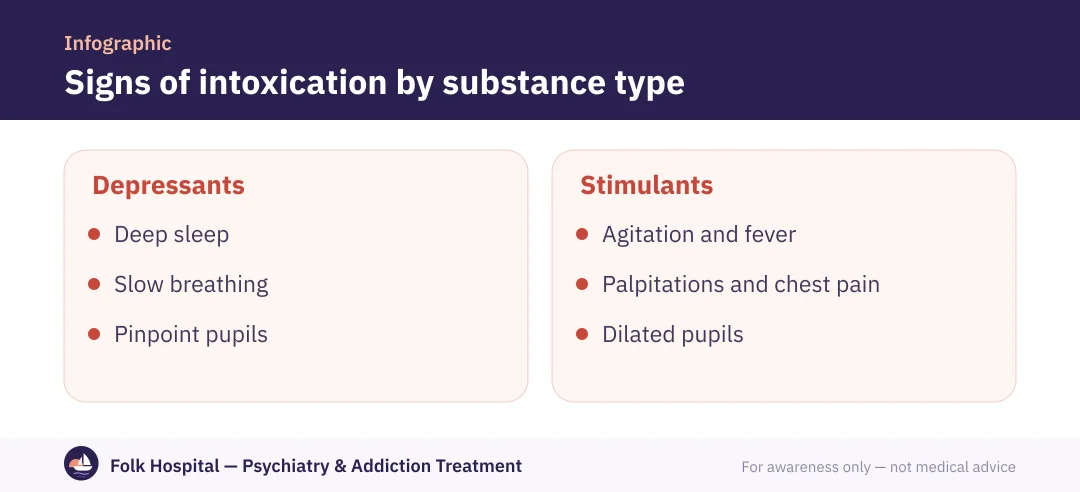
02Signs by type of substance
| Type | Common signs | Main danger |
|---|---|---|
| Opioids | Deep drowsiness, pinpoint pupils, slow breathing | Breathing stops |
| Sedatives and alcohol | Unsteadiness, slurred speech, drowsiness, vomiting | Suppressed breathing; choking on vomit |
| Stimulants | Agitation, dilated pupils, fever, palpitations, chest pain | Heart attack, stroke, overheating |
| Synthetic cannabinoids | Freezing, panic, vomiting, seizures | Seizures and heart rhythm problems |
| Hallucinogens | Panic, hallucinations, risky behaviour | Accidents and injury |
| Contaminated alcohol | Blurred vision, abdominal pain, breathlessness hours later | Blindness and death |
03What to do until the ambulance arrives
- Make sure you're safe firstkeep clear of sharp objects or used needles.
- Call an ambulance on 123describe what you see clearly and name the substance if you know it.
- Check breathingwatch the chest and listen for breathing for 10 seconds.
- Recovery positionif they're unconscious and breathing, roll them onto their side, bend the upper knee, and tilt the head slightly back to keep the airway open.
- Stay with themkeep watching their breathing and be ready to tell the paramedics about any change.
- Gather informationsubstances, amounts and timing; keep any packets or leftovers.
04What not to do
Common mistakes
- Splashing cold water or putting them under a shower.
- Slapping or hitting them to wake them.
- Giving coffee, salt, milk or another substance.
- Forcing them to vomit.
- Leaving them alone to «sleep it off».
What actually helps
- Calling an ambulance immediately.
- The recovery position on the side.
- Continuously watching their breathing.
- A calm, cool place with stimulants.
- Giving the paramedics all the information.
05With agitation and panic
If the person is agitated or panicking after stimulants, hallucinogens or synthetic cannabinoids, speak calmly, reduce light and noise, remove dangerous objects, and don't try to restrain them by force unless to prevent imminent harm, because struggling raises body temperature and strains the heart.
06What happens in hospital?
Doctors assess breathing, consciousness, heart and temperature, give oxygen and fluids, use specific antidotes when needed, such as the opioid antidote naloxone, and treat seizures and fever. Once stable, the episode is an important opportunity to assess addiction and start treatment. Read overdose and the dangers of mixing drugs.
؟Frequently asked questions
What's the difference between acute intoxication and overdose?
The terms overlap. Acute intoxication describes any severe effect of a substance; overdose is usually used for life-threatening cases, especially with opioids and depressants.
What should I do if I find someone unconscious after taking drugs?
Make sure the area is safe, call an ambulance on 123, check breathing, put them on their side in the recovery position if they're breathing, and stay with them until paramedics arrive.
Does cold water wake someone who has taken drugs?
No. Cold water, slapping or a shower doesn't treat intoxication and can cause shock, falls or drowning. The recovery position and calling an ambulance are best.
Should I make them vomit?
No. Forcing vomiting can cause choking, especially if they're drowsy. Leave it to the paramedics and doctors.
Will someone who reports intoxication be punished?
In an emergency, saving life comes first, and the medical team treats it as a medical case. Delaying out of fear of consequences can cost the person's life.
Does a person return to normal after intoxication?
Many recover fully with prompt treatment, but prolonged lack of oxygen, seizures, or heart and kidney complications can leave damage. That's why fast emergency care matters.
Sources and references
- Opioid overdose — fact sheet — World Health Organization
- Drugs, Brains, and Behavior: The Science of Addiction — National Institute on Drug Abuse (NIDA)
- Synthetic Cannabinoids (K2/Spice) DrugFacts — National Institute on Drug Abuse (NIDA)
- Cocaine — research topic — National Institute on Drug Abuse (NIDA)
- Alcohol withdrawal — U.S. National Library of Medicine — MedlinePlus

A psychiatrist specialising in addiction and mental illness in adults and adolescents, with a focus on dual diagnosis.
For awareness only — not a substitute for medical advice. Editorial policy · View profile