01Guide to the chemicals
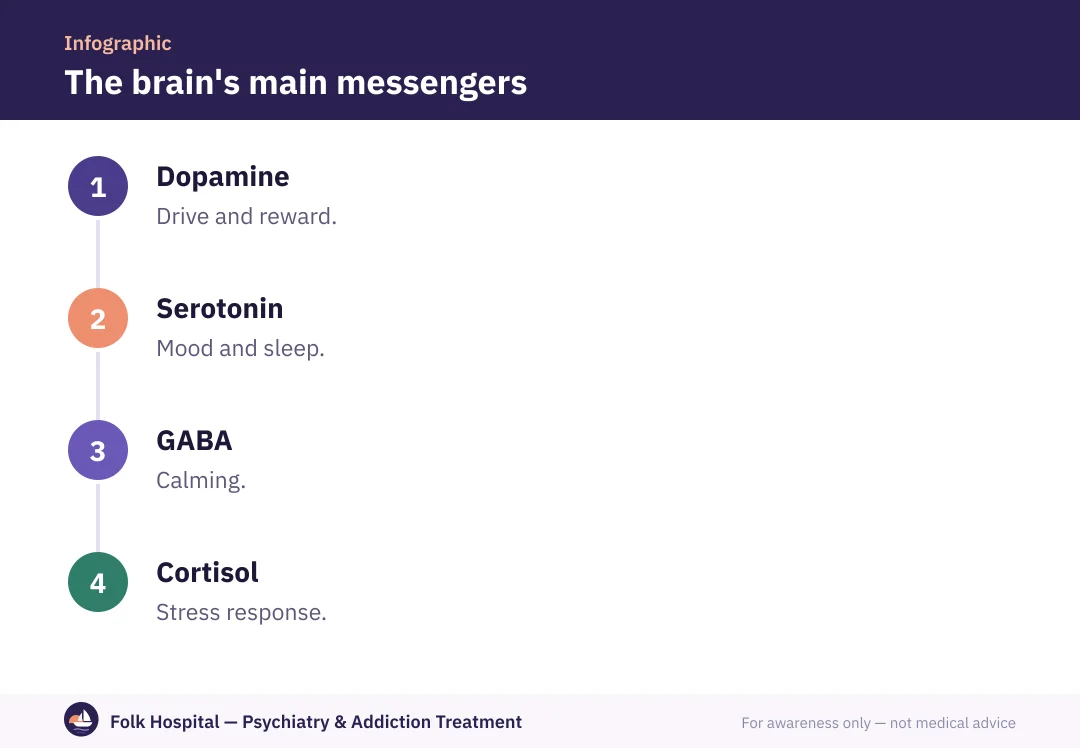
| Chemical | Main role |
|---|---|
| Dopamine | Reward and drive |
| Serotonin | Mood and sleep |
| GABA | Calming |
| Glutamate | Activation and learning |
| Cortisol | Stress |
| Adrenaline | Danger response |
| Endorphins | Pain relief |
| Oxytocin | Bonding |
| Melatonin | Sleep |
| Norepinephrine | Alertness |
| Acetylcholine | Memory and muscles |
02How drugs hijack chemistry
- Mimickingopioids mimic endorphins.
- Releasingstimulants release dopamine.
- Inhibitingalcohol and sedatives boost GABA.
- Adaptingthe brain changes itself, causing dependence.
Read also: types of brain chemistry, neurotransmitters, hormones.
؟Frequently asked questions
What is brain chemistry?
Chemical communication between nerve cells and the body via neurotransmitters and hormones.
How does a neurotransmitter differ from a hormone?
A neurotransmitter acts between nerve cells; a hormone travels in blood to distant organs; some do both.
How do drugs affect the brain?
They raise, mimic or block certain messengers, changing mood and behaviour and causing addiction.
Does a «chemical imbalance» explain mental illness?
Partly; mental illnesses have multiple causes.
Can brain chemistry be tested?
No simple blood tests reflect it accurately.
How can I support its balance?
Sleep, exercise, nutrition, relationships and avoiding drugs.
Sources and references
- Neurotransmitters — Cleveland Clinic
- Hormones — Cleveland Clinic
- Drugs, Brains, and Behavior: The Science of Addiction — National Institute on Drug Abuse (NIDA)

Written byDr. Mahmoud ElsawyConsultant in psychiatry and addiction treatment
A psychiatrist specialising in addiction and mental illness in adults and adolescents, with a focus on dual diagnosis.
For awareness only — not a substitute for medical advice. Editorial policy · View profile