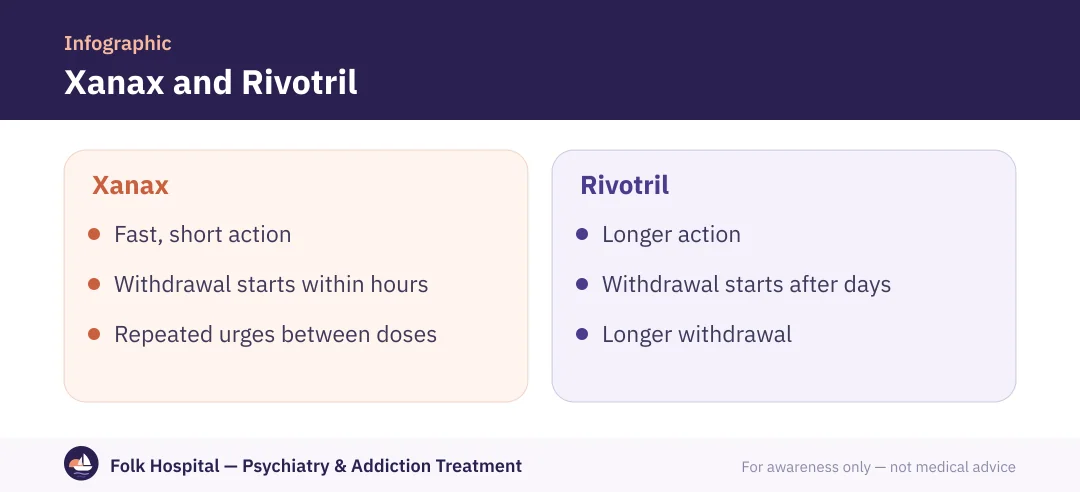
- Long action means later, longer withdrawal.
- It's often mixed with tramadol, which is dangerous.
- Tapering should be slow and steady.
- Treating panic and anxiety reduces the need for it.
01What is Rivotril?
Rivotril enhances the calming neurotransmitter GABA, reducing seizures and panic. Because it stays in the body a long time, its effect is steadier than Xanax's, but that doesn't prevent dependence. Read about Xanax and benzodiazepines.
In short: Rivotril is effective at the doctor's dose, but long use or mixing turns it into a dependence that needs a slow exit.
02Why is it mixed with tramadol?
Because some people believe it "completes" tramadol's effect or calms its withdrawal. But together they suppress breathing and raise the risk of death. Read about tramadol.
- Severe drowsiness and slow breathing.
- No response, especially with opioids or alcohol.
- Seizures after stopping suddenly.
Call 123 immediately.
Ambulance: 12303What to read next
؟Frequently asked questions
Is Rivotril a drug of abuse?
It's an important medicine, but it's among the substances that are misused and cause dependence, which is why it's dispensed under controls.
Can I stop Rivotril suddenly?
Not after regular use, especially with epilepsy, because it can cause seizures and severe withdrawal. Tapering should be gradual under supervision.
Sources and references
- Prescription Medicines — research topic — National Institute on Drug Abuse (NIDA)
- Drugs, Brains, and Behavior: The Science of Addiction — National Institute on Drug Abuse (NIDA)

A psychiatrist specialising in addiction and mental illness in adults and adolescents, with a focus on dual diagnosis.
For awareness only — not a substitute for medical advice. Editorial policy · View profile