
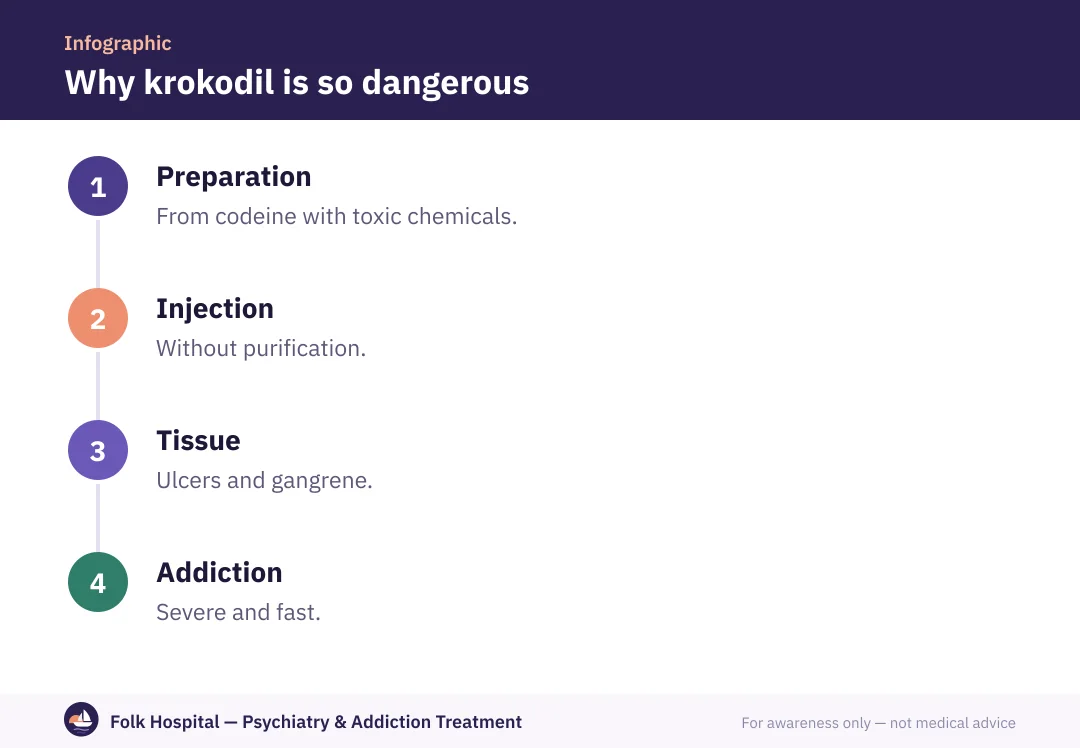
Krokodil is one of the most dangerous drugs known, not just because of the opioid itself but because of the toxic chemicals left from home preparation.
01Key facts
| Item | Details |
|---|---|
| Class | Synthetic opioid (desomorphine) |
| Common forms and names | A home-made liquid |
| How it's used | Injected |
| Does it show on a standard test? | Needs a specific test |
| Risk of dependence | Very high |
02How does it affect the brain and body?
Desomorphine is a strong, short-acting opioid, so it's injected many times a day, and the toxic substances damage vessels and tissues.
03The main risks
- Ulcers, tissue death and gangrene.
- Severe infection.
- Overdose.
- Organ damage.
Call an ambulance on 123 immediately for
- A blackened or spreading wound with fever.
- Slow breathing or unresponsiveness.
What to do right nowAmbulance: 123
04What to read next
؟Frequently asked questions
Is krokodil common in Egypt?
There's no reliable data on local spread; it emerged mainly in Russia and Eastern Europe, but knowing its danger matters because the name circulates.
Can its effects be treated?
They need urgent medical care and may need surgery, along with addiction treatment.
Sources and references
- Opioids — research topic — National Institute on Drug Abuse (NIDA)

Written byDr. Mahmoud ElsawyConsultant in psychiatry and addiction treatment
A psychiatrist specialising in addiction and mental illness in adults and adolescents, with a focus on dual diagnosis.
For awareness only — not a substitute for medical advice. Editorial policy · View profile