- "A pharmacy medicine" doesn't mean it can't be addictive.
- Taking many combination tablets can damage the liver.
- Mixing it with alcohol or sedatives suppresses breathing.
- Withdrawal resembles opioid withdrawal, usually milder.
01What is codeine?
Codeine is a natural opioid from the opium poppy, weaker than morphine, and part of it is converted in the liver into morphine, relieving pain and coughing. How fast this happens varies between people, and some convert it so quickly that even a normal dose can be dangerous.
In short: codeine is an opioid in the form of a familiar medicine. With repetition it works on the brain like any opioid: tolerance, dependence and withdrawal.
02How does it turn into addiction?
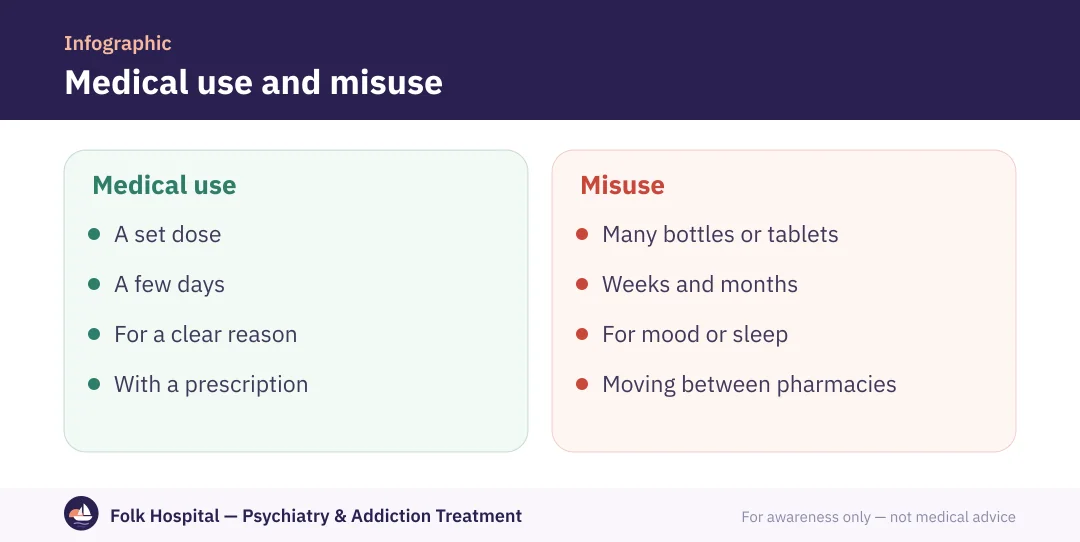
It usually starts with a cough or pain; then the person notices the medicine calms them and helps them sleep, so they continue after the cause has gone and raise the dose. Read about prescription drugs and addiction.
- Severe drowsiness and slow breathing.
- Blue lips or no response.
- Yellow skin or abdominal pain after many tablets.
Call 123 immediately.
Ambulance: 12303What to read next
؟Frequently asked questions
Can you get addicted to cough syrup?
Yes, if it contains codeine and is used in large doses, for a long time or for mood. Some young people mix it with drinks or other substances, which is dangerous.
What's the risk of codeine and paracetamol combination tablets?
People who take more tablets to get codeine's effect also take a large dose of paracetamol, which can cause serious liver damage.
Sources and references
- Opioids — research topic — National Institute on Drug Abuse (NIDA)
- Prescription Medicines — research topic — National Institute on Drug Abuse (NIDA)

A psychiatrist specialising in addiction and mental illness in adults and adolescents, with a focus on dual diagnosis.
For awareness only — not a substitute for medical advice. Editorial policy · View profile