Our team is available now — confidential consultation 24/7 Instant reply from a specialist01026009992
Folk library

Behavioural addictions When a habit becomes a chain

Behavioural addiction is loss of control over a behaviour that gives quick pleasure, such as gambling, gaming, phone use, pornography and shopping, with continuing despite harm. It works in the brain through the same reward circuit and dopamine that drugs exploit, so it brings cravings, tolerance and psychological withdrawal, and is treated with CBT and specialist programmes.

Written by Medically reviewed by: Dr. Mahmoud Elsawy Updated: 2 min read
Explore the section

All behavioural addictions

Screen addictions7

Reward behaviours7

Smoking and nicotine1

Compulsive habits2

General topics1

Behavioural addictions

01How does behavioural addiction happen?
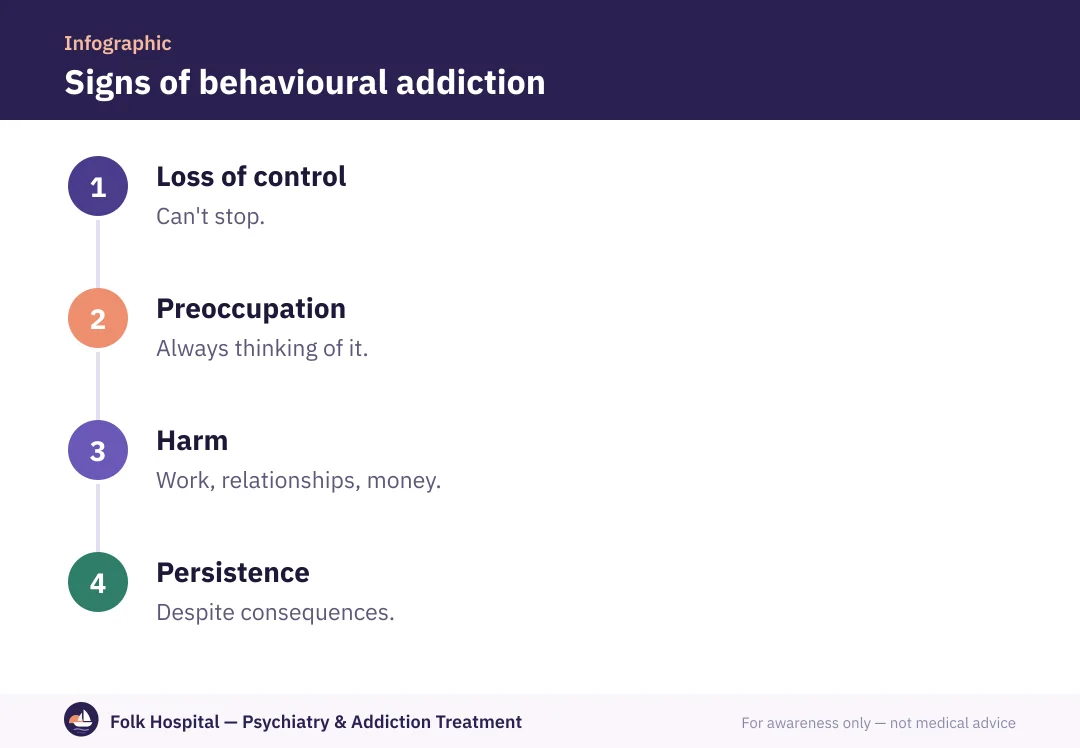
Infographic showing signs of behavioural addiction
The four key signs

Every pleasurable behaviour releases dopamine. With excessive repetition the brain adapts, needing more of the behaviour for the same feeling, and stopping brings distress and irritability. Risk rises with loneliness, anxiety, depression and ADHD.

؟Frequently asked questions

Is behavioural addiction like drug addiction?

They share the reward circuit, cravings and loss of control, but there's no toxic substance and usually no dangerous physical withdrawal.

Dr. Mohamed Hosney
Written byConsultant in mental health and behavioural rehabilitation

A specialist in psychological rehabilitation, behaviour modification and relapse prevention, with over 15 years in addiction programmes.

Published: 16 November 2026 Updated: 16 November 2026 Medically reviewed by: Dr. Mahmoud Elsawy

For awareness only — not a substitute for medical advice. Editorial policy · View profile
Call now WhatsApp