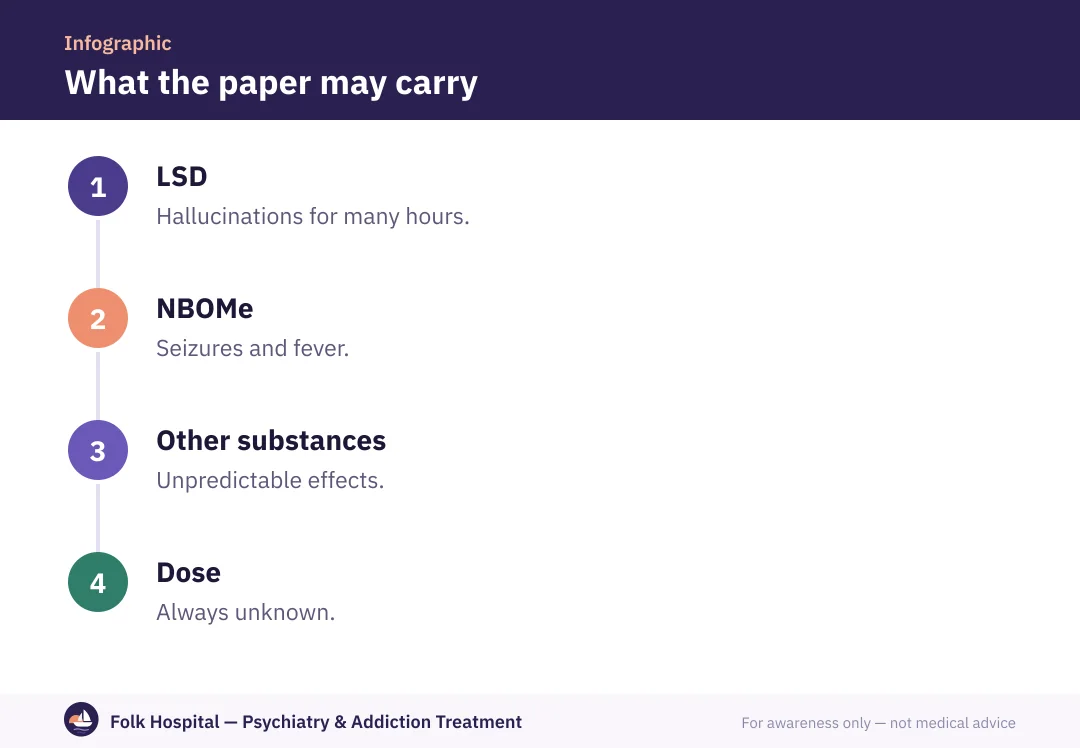
«Paper» is a street name for small squares soaked in a hallucinogen. The biggest problem is that the user doesn't know what the paper actually contains.
01Key facts
| Item | Details |
|---|---|
| Class | Hallucinogens (LSD or synthetic substitutes) |
| Common forms and names | Small coloured or printed paper squares |
| How it's used | Placed on or under the tongue |
| Does it show on a standard test? | No, it needs a specific test |
| Risk of dependence | Low physically, but psychological harm is real |
02How does it affect the brain and body?
Hallucinogens alter perception and the sense of time and self for many hours, and can cause a bad trip with panic and fear. Synthetic substitutes can cause seizures and overheating.
03The main risks
- Panic and dangerous behaviour during hallucinations.
- Psychosis in predisposed people.
- Flashbacks after stopping.
- Synthetic substitutes that can be fatal.
- Seizures or high temperature.
- Attempts at self-harm or dangerous behaviour.
04What to read next
؟Frequently asked questions
How can I tell if my son is using paper?
You may notice small coloured or patterned squares, dilated pupils, strange behaviour and long sleepless nights. Talk to him calmly and seek an assessment.
What's the difference between paper and LSD?
Paper is a delivery method and may contain LSD or various other substances.
Does paper cause addiction?
It doesn't usually cause strong physical dependence, but its psychological harms and accidents are serious.
Sources and references
- Hallucinogens — research topic — National Institute on Drug Abuse (NIDA)

A psychiatrist specialising in addiction and mental illness in adults and adolescents, with a focus on dual diagnosis.
For awareness only — not a substitute for medical advice. Editorial policy · View profile