01How does a substance reach the baby?
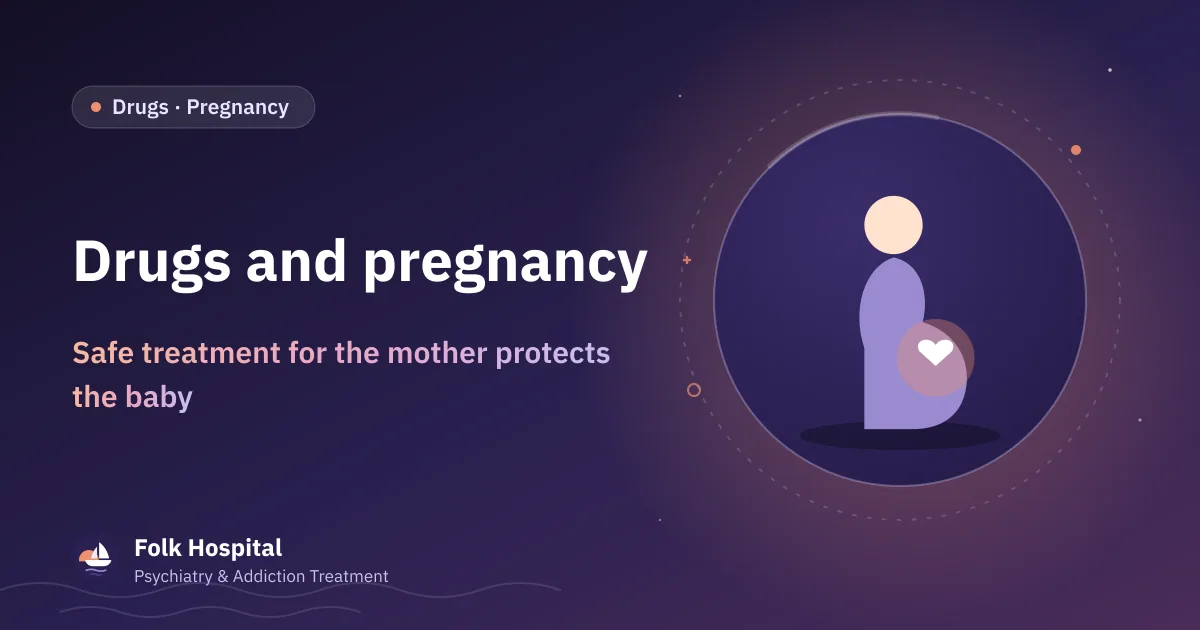
The placenta passes food and oxygen from mother to baby, but it doesn't block most substances that act on the brain. What reaches the mother's blood reaches the baby, sometimes lingering longer because the baby's liver and kidneys are immature. Harm depends on timing: early months are riskiest for organ formation, later months for growth and the nervous system.
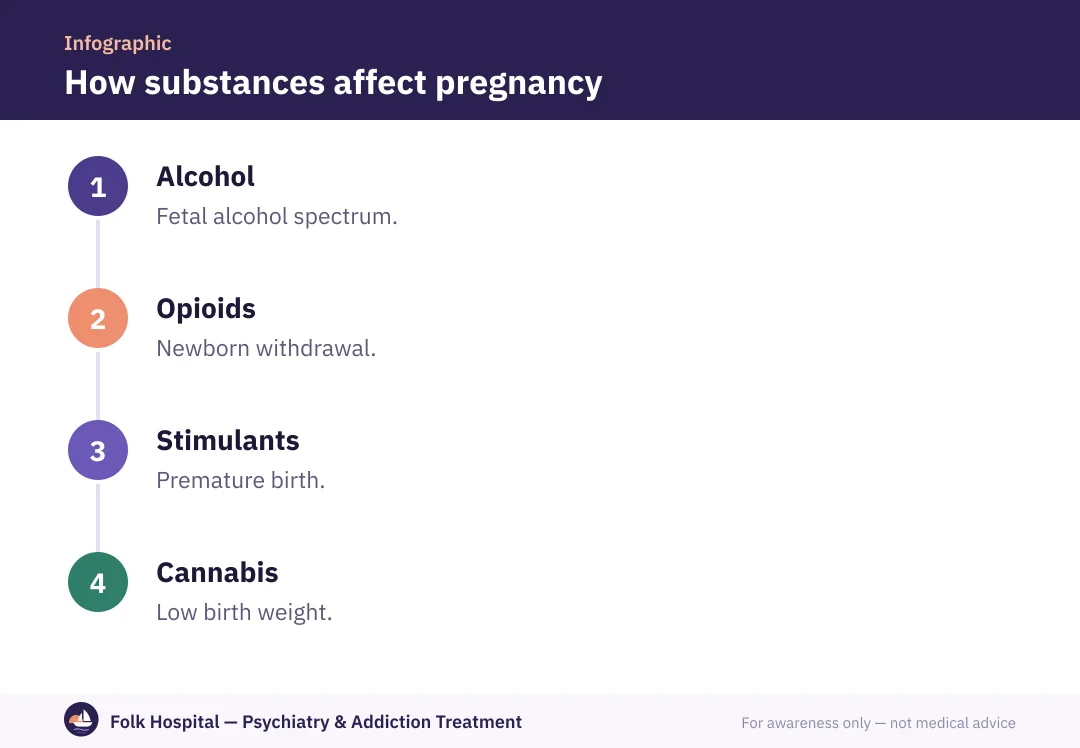
02How different substances affect pregnancy and the baby
| Substance | Main possible effects |
|---|---|
| Alcohol | Fetal alcohol spectrum disorders: distinctive facial features, growth restriction, lifelong learning and behaviour problems |
| Opioids (tramadol, heroin) | Neonatal withdrawal syndrome, low birth weight, premature birth |
| Stimulants (shabu, cocaine) | Premature birth, low birth weight, placental abruption, high maternal blood pressure |
| Hashish | Lower birth weight and possible effects on brain development |
| Sedatives | A floppy newborn with feeding difficulties, and withdrawal after birth |
| Tobacco and vaping | Restricted growth, premature birth and higher risk of sudden infant death |
03Why a pregnant woman shouldn't stop suddenly
Stopping immediately may seem best for the baby, but not with every substance:
Substances not to stop suddenly
What happens instead
- Usually stable substitution treatment with opioids.
- A supervised gradual taper with sedatives.
- Safe inpatient detox when needed.
- Joint follow-up with the obstetrician.
04What a pregnant woman's treatment plan includes
- Urgent assessmentsubstances, amounts, stage of pregnancy, and the health of mother and baby.
- A safe medication plansubstitution or gradual taper depending on the substance, not an abrupt stop.
- Pregnancy follow-upcoordination with the obstetrician and fetal growth scans.
- Psychological and social supporttreating depression and anxiety, and involving family or husband where possible.
- After birthmonitoring the newborn for withdrawal, and supporting the mother to prevent postpartum relapse.
05Emergency signs in pregnancy
- Vaginal bleeding or severe abdominal pain.
- Seizures or loss of consciousness.
- Severe headache with blurred vision or sudden swelling.
- The baby's movements stopping or clearly reducing.
Tell the doctor everything you've taken; that information protects your life and your baby's.
Ambulance: 12306A message to mothers
Asking for help during pregnancy isn't an admission of failure; it's the most important step to protect your child. Many mothers succeed in recovery because pregnancy gives them strong motivation. Read women and addiction and the family guide.
؟Frequently asked questions
Do drugs affect the unborn baby?
Yes, most substances cross the placenta. Effects depend on the substance, amount and timing in pregnancy, from low birth weight and premature birth to malformations and withdrawal after birth.
Should I stop tramadol or heroin suddenly because I'm pregnant?
Don't stop suddenly without a doctor. Abrupt opioid withdrawal in pregnancy can put the baby at risk; stable substitution treatment under supervision with obstetric follow-up is usually better.
What is neonatal withdrawal syndrome?
Withdrawal symptoms in a newborn exposed to opioids or certain medicines in the womb, such as irritability, high-pitched crying, feeding difficulties, diarrhoea and poor sleep. It's treatable in hospital.
Does one drink of alcohol in pregnancy cause harm?
There's no known safe amount of alcohol in pregnancy, so the medical advice is to avoid it completely.
Can I breastfeed during treatment?
It depends on the substance and treatment. Some mothers on stable substitution treatment can breastfeed under supervision, while it's advised against with other substance use. The doctor decides for each case.
Will I be reported if I seek treatment while pregnant?
Treatment in specialist centres is confidential, and its aim is to protect mother and child. Delaying help is the real danger.
Sources and references
- Substance Use While Pregnant and Breastfeeding — Research Report — National Institute on Drug Abuse (NIDA)
- Alcohol — fact sheet — World Health Organization
- Opioids — research topic — National Institute on Drug Abuse (NIDA)
- Medications to Treat Opioid Use Disorder — Research Report — National Institute on Drug Abuse (NIDA)

A psychiatrist specialising in addiction and mental illness in adults and adolescents, with a focus on dual diagnosis.
For awareness only — not a substitute for medical advice. Editorial policy · View profile