01What are benzodiazepines?
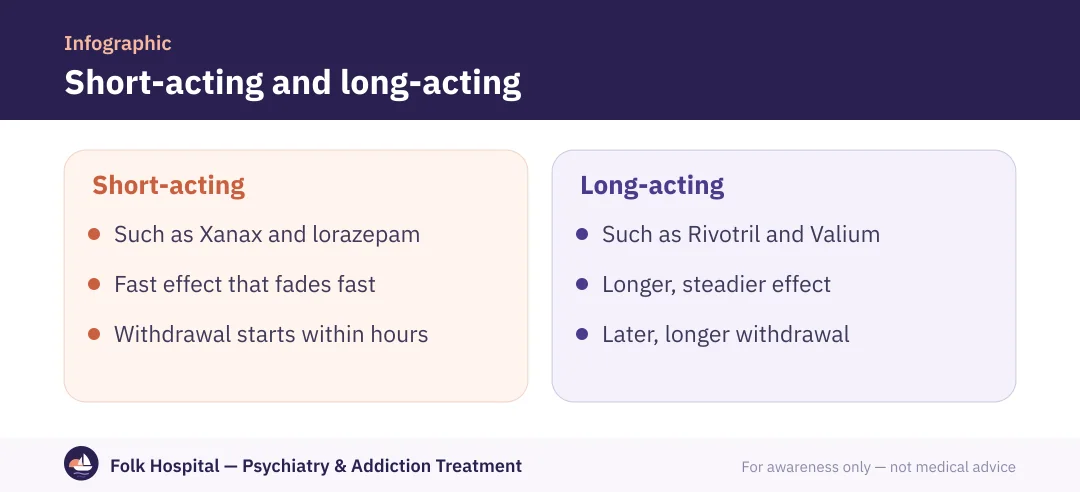
Medicines that calm the nervous system, easing anxiety, helping sleep, preventing seizures and relaxing muscles. Types differ in how fast and how long they act, which changes the shape of dependence and withdrawal. Read about Xanax and Rivotril.
In short: benzodiazepines are first-aid tools for anxiety and insomnia, not a substitute for treating them.
02When does use become risky?
Signs worth a review
- Daily use for more than a few weeks.
- Raising the dose without a doctor.
- Mixing with tramadol or alcohol.
- Severe anxiety when a dose is late.
- Severe drowsiness and slow breathing, especially with opioids.
- Seizures after stopping suddenly.
Call 123 immediately.
Ambulance: 12303What to read next
؟Frequently asked questions
Are all sedatives addictive?
Benzodiazepines can cause dependence with long daily use. That's why they're used at the doctor's dose, short-term, with a clear plan to stop.
What's the most dangerous thing about benzodiazepines?
Mixing them with opioids or alcohol, which can stop breathing, and stopping high doses suddenly, which can cause seizures.
Sources and references
- Prescription Medicines — research topic — National Institute on Drug Abuse (NIDA)
- Drugs, Brains, and Behavior: The Science of Addiction — National Institute on Drug Abuse (NIDA)

A psychiatrist specialising in addiction and mental illness in adults and adolescents, with a focus on dual diagnosis.
For awareness only — not a substitute for medical advice. Editorial policy · View profile