- Heroin is made chemically from morphine extracted from the opium poppy, and it is stronger and faster-acting than morphine.
- It binds to opioid receptors, switches off pain and releases a surge of dopamine; with repetition the brain loses its ability to feel at ease without it.
- Physical dependence develops quickly, and withdrawal begins within hours of the last dose.
- Stopping is possible, and much safer and more successful under medical supervision within a full rehab programme.
01What is heroin?
Heroin is an illegal opioid made in labs through a simple chemical change to morphine, the active substance in the opium poppy. That change lets heroin cross into the brain faster than morphine, so its effect is felt within seconds when injected or smoked, and within minutes when snorted.
On the street it's usually sold as a white or brown powder, or as a dark, sticky lump in less refined forms. Because street heroin is rarely pure, its strength can vary from one batch to the next, which on its own explains many overdoses.
In short: heroin is morphine chemically modified to reach the brain faster and hit harder, which is why it combines an intense high with rapid physical dependence.
02Why is it called "bodra"? Heroin's street names
In Egypt heroin is best known as "bodra" (powder), after its appearance. In some areas it's called "bisa", and "hero" is a common shortening. Other names refer to its colour or origin, such as "brown" for less refined types.
Knowing these names matters for families, because they often show up in conversations or messages before any physical sign appears. See our guide to drug street names for other substances.
03How does heroin affect the brain?
The brain has natural opioid receptors designed to respond to the body's own painkillers, such as endorphins. When heroin arrives it's converted to morphine and binds to these receptors far more strongly than the body's own chemicals ever do.
Three things happen at once: pain switches off, a wave of dopamine in the reward centre produces euphoria, and the brainstem, which controls breathing and heart rate, slows sharply. That last effect is what makes overdose deadly.
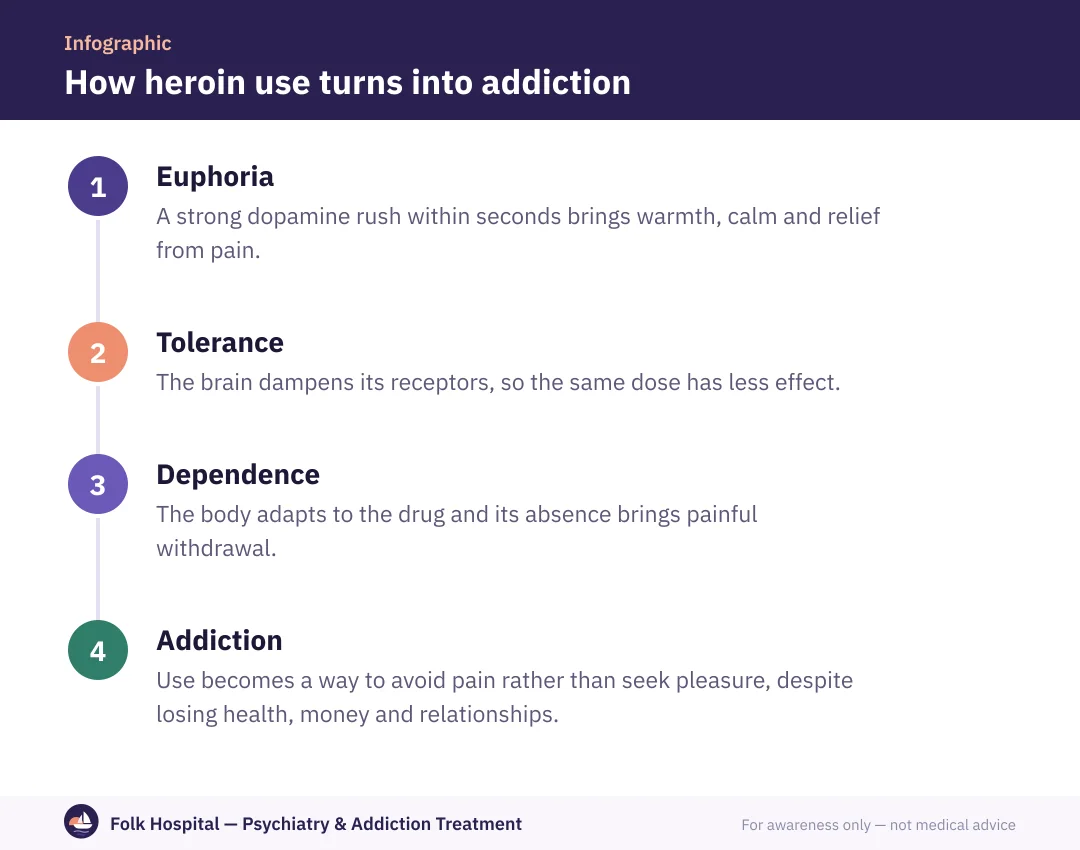
With repeated use the brain tries to restore balance by reducing the number and sensitivity of its receptors. Tolerance sets in, then dependence, and the absence of the drug becomes physically and emotionally painful. To understand dopamine's role in this cycle, read about dopamine and addiction.
04Why does heroin cause addiction so quickly?
How fast a drug reaches the brain strongly shapes how addictive it is: the faster and stronger the effect, the deeper the brain links the drug with relief. Heroin delivers both.
There's a second factor that matters just as much. Heroin is often used to mute emotional pain such as anxiety, depression or old trauma. When the effect wears off, that pain returns alongside withdrawal, and using again seems like the only answer. Treatment therefore has to address that pain as well as the body, which is the focus of dual diagnosis care.
05Does heroin have any medical use?
In Egypt and most countries heroin has no medical use and is a prohibited substance. A few countries use a pharmaceutical equivalent in very limited circumstances under strict control, but street heroin has nothing to do with any treatment.
Medical opioids such as morphine and codeine have specific roles in pain relief, but they too can cause dependence when used without supervision. Compare them on our morphine and codeine pages.
06How does heroin compare with other opioids common in Egypt?
| Substance | Source | Speed of effect | Overdose risk |
|---|---|---|---|
| Heroin | Made from morphine | Very fast | Very high |
| Morphine | Extracted from poppy; a medicine | Moderate to fast | High without supervision |
| Tramadol | Fully synthetic medicine | Slower | Moderate, plus seizure risk |
| Raw opium | Dried poppy latex | Slower | Moderate and variable |
These differences shape the type and length of withdrawal, which is why detox protocols differ from one substance to another. Read about tramadol and opium for a wider comparison.
07What to read next
If you're looking for something specific, these pages cover each aspect of heroin in detail:
؟Frequently asked questions
Are heroin and "bodra" the same thing?
Yes. "Bodra" (powder) is the most common street name for heroin in Egypt, after its appearance as a white or brown powder. Street bodra is often cut with other substances, which makes its strength unpredictable.
How many times does it take to get addicted to heroin?
There's no fixed number, but physical dependence can form within a few weeks of repeated use. The danger is that many people believe they're in control until the first withdrawal symptoms appear.
Is snorting heroin less dangerous than injecting it?
Injecting acts faster and adds risks of infection and immediate overdose, but snorting and smoking also cause addiction and don't make heroin safe.
Can heroin addiction be fully treated?
Yes, recovery is possible and happens every day. It starts with medically supervised detox, continues with therapy that addresses the reasons for using, and is protected by follow-up. See heroin addiction treatment.
Sources and references
- Heroin — research topic — National Institute on Drug Abuse (NIDA)
- Opioid overdose — fact sheet — World Health Organization
- World Drug Report 2024 — United Nations Office on Drugs and Crime (UNODC)

A psychiatrist specialising in addiction and mental illness in adults and adolescents, with a focus on dual diagnosis.
For awareness only — not a substitute for medical advice. Editorial policy · View profile