Magic mushrooms are types of mushroom containing a hallucinogen, and they can be confused with toxic wild mushrooms that look similar.
01Key facts
| Item | Details |
|---|---|
| Class | Hallucinogens (psilocybin) |
| Common forms and names | Dried or fresh mushrooms, sometimes in chocolate or tea |
| How it's used | Swallowed |
| Does it show on a standard test? | No, it needs a specific test |
| Risk of dependence | Low physically |
02How does it affect the brain and body?
Psilocybin turns into psilocin in the body, which acts on serotonin receptors, altering perception, mood and the sense of time for hours.
03The main risks
- A bad trip with panic and fear.
- Accidents and dangerous behaviour.
- Psychosis in predisposed people.
- Poisoning from similar-looking toxic mushrooms.
- Severe vomiting and diarrhoea hours later.
- Panic that won't settle or dangerous behaviour.
04What to read next
؟Frequently asked questions
Are magic mushrooms a treatment for depression?
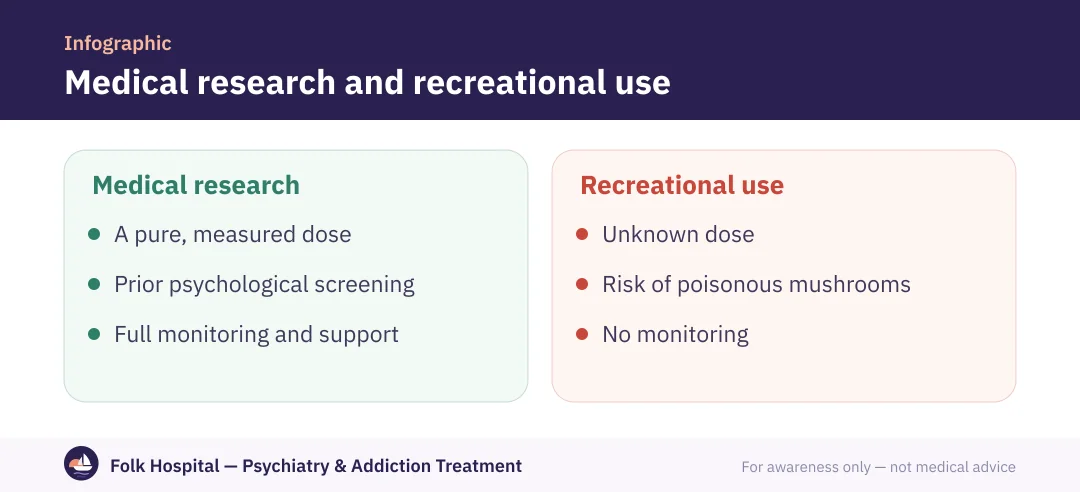
Psilocybin is being researched under monitored therapeutic conditions, but it's not an available approved treatment, and using it outside that carries real risks.
Are magic mushrooms legal?
They fall under drug laws in many countries, including Egypt.
Are they used as treatment?
Research is done under controlled medical conditions, which differs from non-medical use.
Sources and references
- Psilocybin (Magic Mushrooms) — National Institute on Drug Abuse (NIDA)
- Hallucinogens — research topic — National Institute on Drug Abuse (NIDA)

A psychiatrist specialising in addiction and mental illness in adults and adolescents, with a focus on dual diagnosis.
For awareness only — not a substitute for medical advice. Editorial policy · View profile