- Controlled medical use is very different from street use.
- Captagon sold today is usually counterfeit amphetamine.
- Withdrawal is psychologically draining with depression, fatigue and cravings.
- There's no approved medication specifically for its addiction; therapy is the core.
01What is amphetamine?
Amphetamine is a stimulant that raises dopamine and noradrenaline in the brain, increasing alertness and focus and reducing appetite and sleep. That's why it has limited medical uses, but it's also made and sold outside pharmacies in unknown forms and strengths, most famously in the region as Captagon pills.
In short: amphetamine speeds up the whole nervous system. With misuse, it drains the brain and leaves it unable to feel energy and pleasure without it.
02How does it turn into addiction?
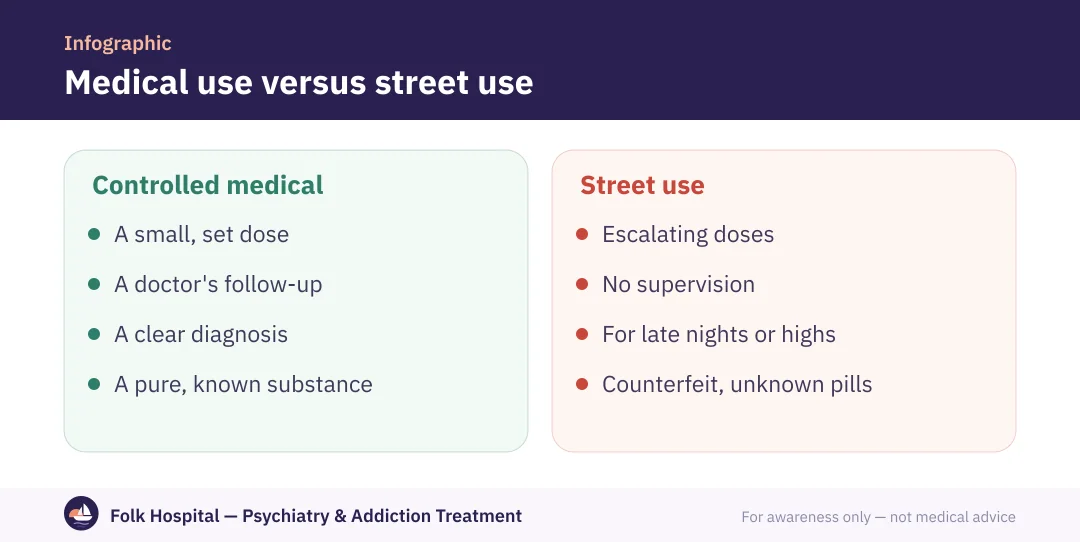
It often starts for late nights, studying or weight loss. Then the response fades, so the dose rises, and the crash when it wears off sends the person back to the pill to escape it. That's how the cycle forms.
- Chest pain or severe palpitations.
- Very high temperature or seizures.
- Violent agitation or hallucinations.
Call 123 immediately.
Ambulance: 12303What to read next
؟Frequently asked questions
What's the difference between amphetamine and shabu?
Shabu is methamphetamine, chemically close to amphetamine but it reaches the brain faster and is usually more potent, more addictive and more harmful.
Is amphetamine addictive?
Yes, especially at high doses, by fast routes such as snorting or injecting, or when used without a prescription and supervision.
Sources and references
- Methamphetamine — research topic — National Institute on Drug Abuse (NIDA)
- Drugs, Brains, and Behavior: The Science of Addiction — National Institute on Drug Abuse (NIDA)

A psychiatrist specialising in addiction and mental illness in adults and adolescents, with a focus on dual diagnosis.
For awareness only — not a substitute for medical advice. Editorial policy · View profile