- Nalbuphine (Nubain) is an injectable opioid painkiller.
- It's misused in Egypt through repeated injection.
- Injecting adds risks of infection and vein damage.
Nalbuphine is a medical painkiller, but it has spread among some young people in Egypt as a substance injected for calm or to ease withdrawal from other substances.
01Key facts
| Item | Details |
|---|---|
| Class | Opioid painkiller (agonist-antagonist) |
| Common forms and names | Injection ampoules |
| How it's used | Intramuscular or intravenous injection |
| Does it show on a standard test? | Usually doesn't show on the opioid strip |
| Risk of dependence | High with repeated injecting |
02How does it affect the brain and body?
It acts on opioid receptors in a mixed way, causing calm and drowsiness, and with repetition, dependence and a strong urge to inject develop.
03The main risks
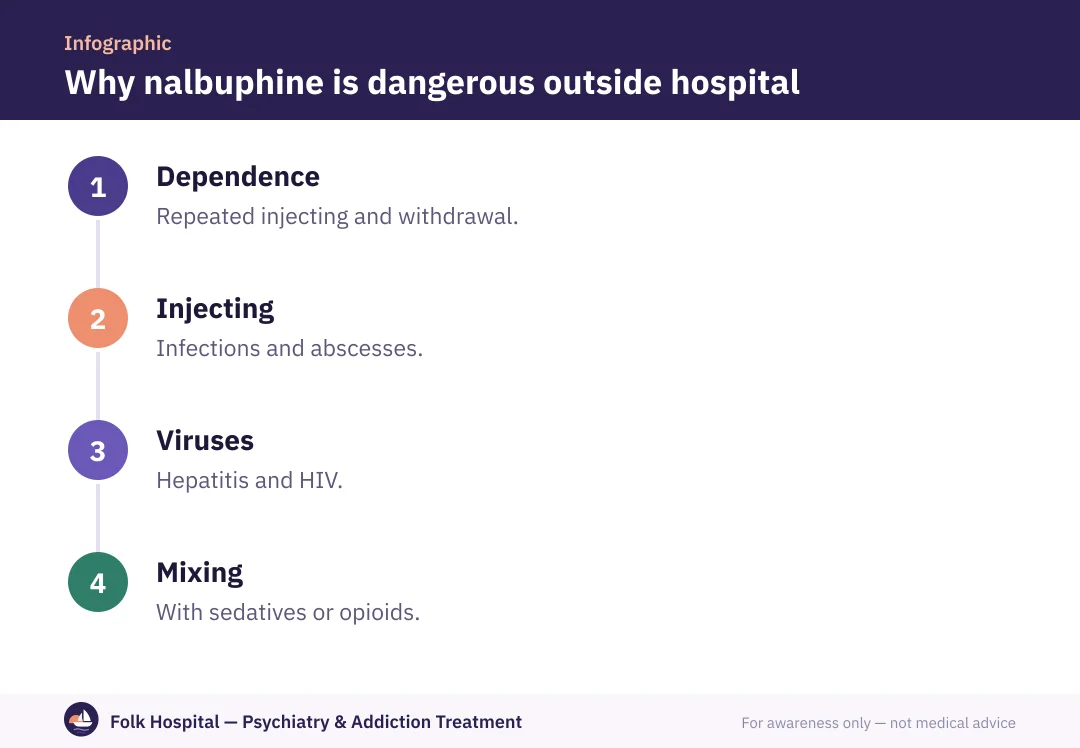
- Abscesses and vein damage.
- Hepatitis and HIV infection.
- Dependence and withdrawal.
- Slowed breathing when mixed.
- Fever with swelling at an injection site.
- Slow breathing with other substances.
04What to read next
؟Frequently asked questions
Is nalbuphine milder than other opioids?
It has less effect on breathing than some opioids, but it causes dependence, and repeated injecting alone carries major risks.
Does it show on a drug test?
Usually not on a standard opiate test; it needs a specific test.
What is Nubain?
A brand name for nalbuphine, an injectable opioid painkiller.
Does someone injecting nalbuphine need tests?
Yes. Tests for hepatitis viruses and HIV are important.
Sources and references
- Opioids — research topic — National Institute on Drug Abuse (NIDA)
- Prescription Medicines — research topic — National Institute on Drug Abuse (NIDA)

A psychiatrist specialising in addiction and mental illness in adults and adolescents, with a focus on dual diagnosis.
For awareness only — not a substitute for medical advice. Editorial policy · View profile