Caffeine is part of most people's day, and most use it in moderation. But energy drinks and caffeine pills have made high doses easier and more dangerous.
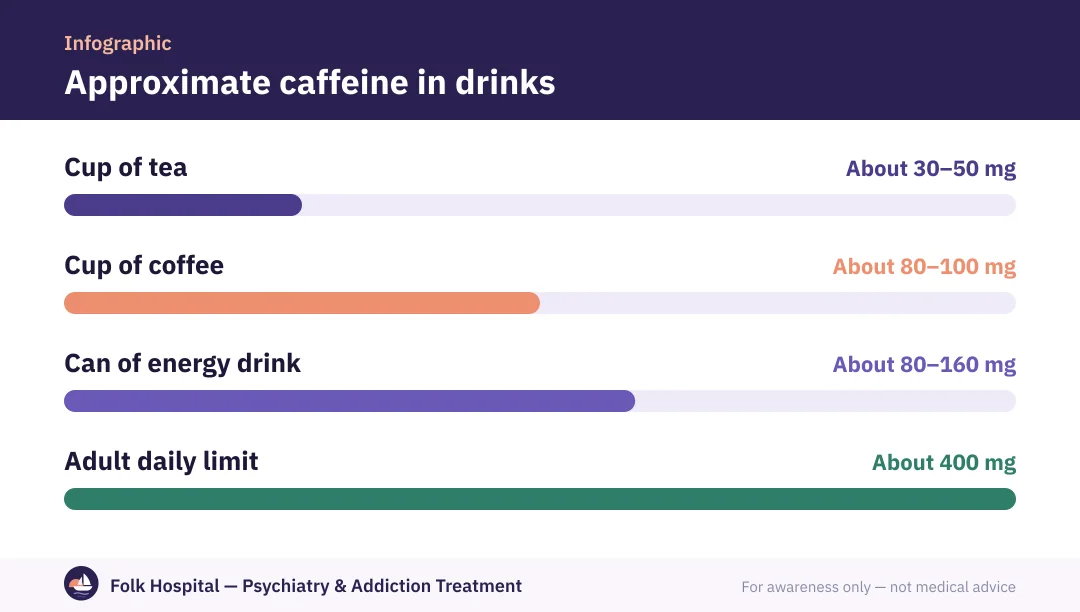
01Key facts
| Item | Details |
|---|---|
| Class | Nervous-system stimulant |
| Common forms and names | Coffee, tea, energy drinks, fizzy drinks and some medicines |
| How it's used | Drunk or as tablets |
| Does it show on a standard test? | Not tested for in drug tests |
| Risk of dependence | Mild dependence and withdrawal such as headache |
02How does it affect the brain and body?
Caffeine blocks adenosine, which is responsible for feeling tired, so it increases alertness and slightly raises pulse and blood pressure; in excess it causes anxiety and insomnia.
03The main risks
- Insomnia, anxiety and panic attacks in those prone to them.
- Palpitations and raised blood pressure.
- Upset stomach.
- Greater risk with energy drinks and pills.
- Chest pain or a very fast irregular heartbeat.
- Fainting or seizures.
04What to read next
؟Frequently asked questions
Is caffeine a drug?
It's a legal psychoactive stimulant that can cause mild physical dependence and withdrawal, but it isn't classed among prohibited drugs.
How many cups of coffee a day are safe?
It depends on size and type; what matters is a total of no more than about 400 mg for most healthy adults, and less in pregnancy.
Are energy drinks safe for teenagers?
They aren't recommended for teenagers because of high caffeine and other stimulants.
Sources and references
- Caffeine — U.S. National Library of Medicine — MedlinePlus

A psychiatrist specialising in addiction and mental illness in adults and adolescents, with a focus on dual diagnosis.
For awareness only — not a substitute for medical advice. Editorial policy · View profile