GHB is a depressant sometimes used at parties and misused in crimes by being slipped into drinks, because it's colourless and causes memory loss.
01Key facts
| Item | Details |
|---|---|
| Class | Nervous-system depressant |
| Common forms and names | Colourless liquid or powder |
| How it's used | By mouth, usually mixed into a drink |
| Does it show on a standard test? | No, it needs a specific, early test |
| Risk of dependence | High with repeated use |
02How does it affect the brain and body?
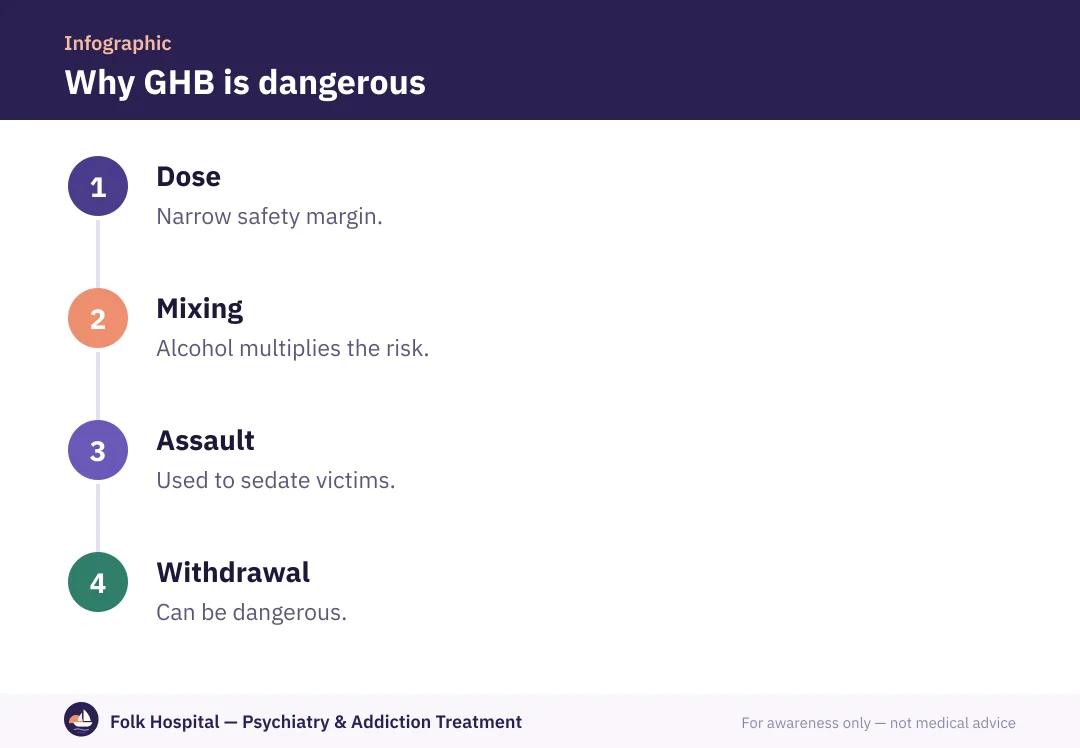
It slows brain activity, causing euphoria and relaxation, then dizziness and drowsiness, and with a small dose increase, unconsciousness and slowed breathing can follow.
03The main risks
- Sudden unconsciousness and choking on vomit.
- Slowed breathing, especially with alcohol.
- Memory loss and exploitation.
- Dependence and severe withdrawal.
- Unresponsiveness or difficulty waking them.
- Slow breathing.
04What to read next
؟Frequently asked questions
What should I do if I suspect my drink was spiked?
Get help from someone you trust immediately, go to the emergency department, and ask for testing as soon as possible because GHB clears quickly.
Does GHB show up on a test?
It disappears quickly, so testing must be done within hours if suspected.
How can I protect myself at parties?
Don't leave your drink, don't accept drinks from strangers, and get help if you feel suddenly unwell.
Sources and references
- Drugs, Brains, and Behavior: The Science of Addiction — National Institute on Drug Abuse (NIDA)
- Prescription Medicines — research topic — National Institute on Drug Abuse (NIDA)

A psychiatrist specialising in addiction and mental illness in adults and adolescents, with a focus on dual diagnosis.
For awareness only — not a substitute for medical advice. Editorial policy · View profile