01Why classify drugs by their effect?
Drugs can be classified in many ways: by source (natural or synthetic), by legal status, or by their effect on the brain. The last is the most useful to families, patients and doctors, because it directly answers the important questions: what symptoms to expect, how great the overdose risk is, whether withdrawal is dangerous, and which combinations kill.
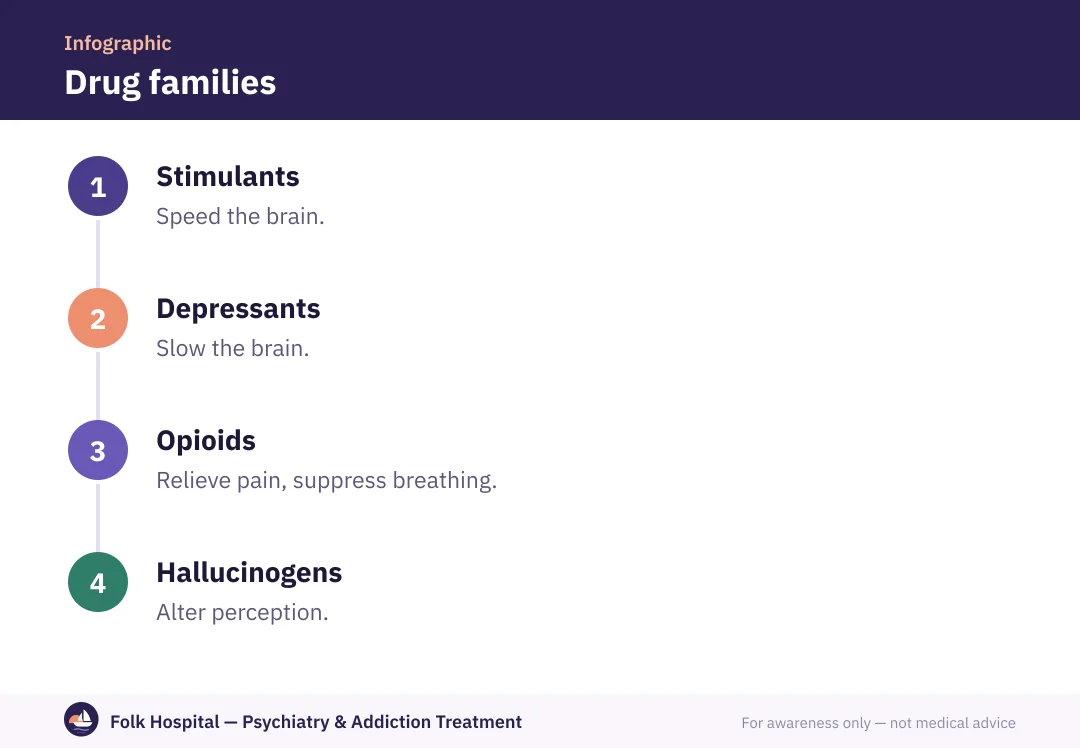
02The seven drug families
| Family | Main effect | Examples | Biggest danger |
|---|---|---|---|
| Stimulants | Speed up the brain and heart | Shabu, captagon, cocaine | Heart and psychosis |
| Depressants and sedatives | Slow the brain | Xanax, Rivotril, pregabalin | Breathing when mixed; withdrawal seizures |
| Opioids | Relieve pain, suppress breathing | Tramadol, heroin, fentanyl | Overdose |
| Cannabis products | Alter perception and mood | Hashish, bango, hydro | Memory and psychosis |
| Synthetic cannabinoids | A far stronger cannabis effect | Strox, voodoo | Seizures and unknown contents |
| Hallucinogens | Alter perception and reality | LSD, mushrooms, ketamine | Bad trips and accidents |
| Alcohol and inhalants | Depress the nervous system | Alcohol, glue, petrol | Alcohol withdrawal; sudden sniffing death |
03Substances with more than one effect
Classification is a useful simplification, but some substances don't fit one box:
- Tramadol is an opioid that also raises serotonin and noradrenaline, so it can cause seizures.
- Ecstasy is a stimulant with sensory effects resembling hallucinogens.
- Ketamine is a medical anaesthetic causing dissociation, sometimes grouped with hallucinogens.
- Pregabalin isn't a benzodiazepine, but its calming effect puts it alongside them in practice.
04How the type of substance changes withdrawal
Withdrawal that can be physically dangerous
Painful or psychological withdrawal
- Opioids: pain, diarrhoea and insomnia; rarely fatal on its own.
- Stimulants: depression, fatigue and strong cravings.
- Cannabis: irritability, insomnia and poor appetite.
Read more in withdrawal symptoms.
05Mixing across families: where the greatest danger lies
Mixing two depressants, such as tramadol or heroin with sedatives or alcohol, multiplies the suppression of breathing and is one of the commonest causes of death. Mixing a stimulant with a depressant doesn't cancel the risk; it hides the signs of overdose so the person takes more. Details in the dangers of mixing drugs.
- No response or slow breathing.
- Seizures.
- Chest pain or very high temperature.
Put the person on their side, don't leave them alone, and tell the paramedics everything they took.
Ambulance: 12306The street name doesn't guarantee the contents
What's sold as captagon, «paper» or strox may contain entirely different or mixed substances, so a person may show symptoms that don't match what they think they took. Read street names for drugs and «powder».
07What next, once you know the type?
The type helps understanding, but treatment is built on assessing the person: which substances, for how long, and their mental and physical state. Start with the addiction treatment guide or detox.
؟Frequently asked questions
How many types of drugs are there?
There's no fixed number, but the most widely used classification by effect places substances in about seven families: stimulants, depressants and sedatives, opioids, cannabis products, synthetic cannabinoids, hallucinogens, and alcohol and inhalants.
What are the most dangerous types of drugs?
Each type has its own danger: opioids through overdose and slowed breathing, stimulants through heart problems and psychosis, synthetic cannabinoids through unknown contents and seizures, sedatives and alcohol through withdrawal and mixing. The most dangerous overall is mixing several substances.
What's the difference between natural and synthetic drugs?
Natural drugs come from plants such as cannabis, opium and khat; synthetic ones are made in labs, such as shabu and strox. Being natural doesn't make a substance safe.
Are prescription medicines considered drugs?
Some act on the brain and cause dependence if misused, such as sedatives, opioid painkillers and ADHD medicines. Using them on prescription under supervision is different from misusing them.
Why does the type of drug matter?
It determines the expected symptoms, the form and danger of withdrawal, whether the patient needs inpatient detox, and whether supporting medication exists.
Does every type show on the same test?
No. Rapid urine tests detect specific groups, and some substances, such as synthetic cannabinoids and certain medicines, need specialist tests.
Sources and references
- Drugs, Brains, and Behavior: The Science of Addiction — National Institute on Drug Abuse (NIDA)
- Commonly Used Drugs Charts — National Institute on Drug Abuse (NIDA)
- World Drug Report 2024 — United Nations Office on Drugs and Crime (UNODC)
- Mental health: strengthening our response — World Health Organization

A psychiatrist specialising in addiction and mental illness in adults and adolescents, with a focus on dual diagnosis.
For awareness only — not a substitute for medical advice. Editorial policy · View profile