- A residential stay cuts the link with the drug and the people and places tied to using, giving the brain time to regain its balance.
- The day is fully structured with sessions, exercise, activities and rest, because structure itself is part of treatment.
- Research links longer periods in treatment with better results than very short programmes.
- Discharge happens with a written plan, not a sudden decision.
01Who is residential rehab for?
We recommend a residential stay when outpatient care isn't enough or isn't safe. The commonest situations are:
Cases best suited to a residential stay
- Regular use of heroin, crystal meth or alcohol.
- Using several substances together.
- Previous attempts at treatment that ended in relapse.
- A home where the drug is easy to get.
- Severe depression, thoughts of self-harm or psychotic symptoms.
Add to these anyone who needs medical detox requiring round-the-clock monitoring, anyone living with violence or severe stress that makes recovery at home almost impossible, and anyone who has lost control of their day so completely that they can't keep outpatient appointments.
02Why does residential care work when other attempts fail?
Addiction doesn't live in the drug alone but in the routine built around it: friends, places, times and the feelings the person learned to escape by using. At home all these triggers remain, so every hour becomes a test of willpower. A residential stay gives the patient two rare things: a safe distance from these triggers, and enough time for the brain to regain its balance and learn new skills before facing them again.
Reviews by the US National Institute on Drug Abuse point out that staying in treatment long enough is one of the most important factors in success, and that very short programmes are linked to weaker results.
03The stages of a residential stay
- Stabilisation (roughly the first week)safe medical detox if needed, a full psychiatric assessment, and getting to know the team, the other patients and the house rules.
- Building foundations (weeks 2–4)daily individual and group sessions, understanding the person's own addiction story, and starting treatment for any co-existing depression or anxiety.
- Deeper work (weeks 4–8)facing triggers and automatic thoughts, repairing relationships in family sessions, and learning skills to handle stress and cravings.
- Preparing to return (final weeks)trial visits home, writing a relapse-prevention plan, arranging work or study, and booking the first follow-up.
Not every patient moves at the same pace; the length is set by progress, not a fixed number of days.
04What happens in the programme?
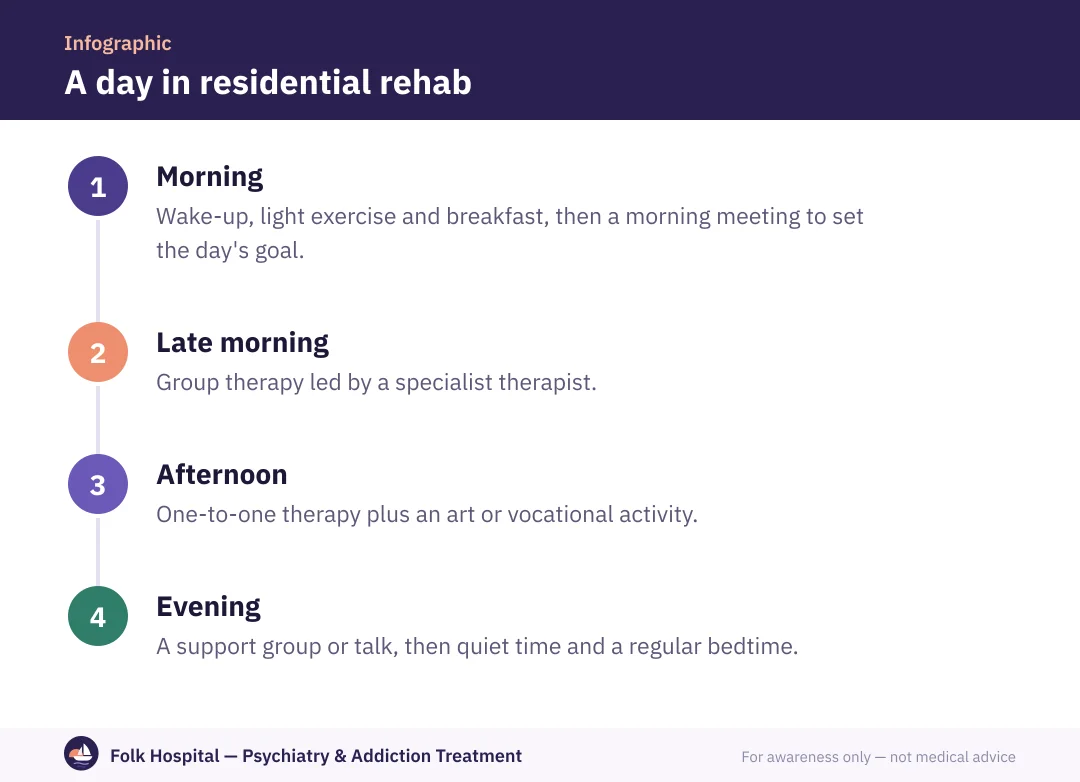
The programme combines evidence-based approaches, chiefly cognitive behavioural therapy, which helps the patient spot and change the thoughts that lead to using, motivational interviewing, which strengthens their own drive to change, and group therapy, which breaks the feeling of being alone in their struggle.
Individual therapy
Regular sessions with a consistent therapist who follows the patient's progress.
Group therapy
Sharing experiences and learning skills with others on the same journey.
Family therapy
Repairing relationships and building a supportive home for after discharge.
Physical activity
Daily exercise that lifts mood, improves sleep and restores energy.
Alongside these, the programme includes:
- Psychoeducation: simple talks on how addiction changes the brain, why cravings happen and what relapse is.
- Relapse prevention: practical training for high-risk situations, refusing offers, and handling boredom, anger and loneliness.
- The 12-step programme: for those it suits, as a way into support groups after discharge.
- Creative and practical activities: art, writing and practical skills restore a sense of achievement and fill the time that using used to fill.
- Ongoing medical care: monitoring physical illness, nutrition, sleep and psychiatric medicines when needed.
05When there's a co-existing mental illness
A large share of people with addiction also have depression, anxiety, bipolar disorder or past trauma. Treating the addiction alone in these cases leaves half the problem untouched and often ends in relapse. So during the stay a psychiatrist diagnoses and treats these conditions alongside the addiction. Read about our dual diagnosis programme.
06How long is a residential stay?
The usual minimum is four weeks, but many patients benefit from eight to twelve weeks, especially after years of use. We review progress weekly and only extend a stay for a clear clinical reason that we explain to the family.
| Factor | Usually shortens the stay | Usually lengthens it |
|---|---|---|
| Length of use | A few months | Many years |
| Type of substance | A single drug | Several drugs, or alcohol and sedatives |
| Mental state | Stable | Severe depression, psychosis or trauma |
| Previous attempts | First treatment | Repeated relapses |
| Home after discharge | Supportive family and stable work | Drugs around or ongoing conflict |
07Rules and rights during the stay
The rules exist to protect the patient and others, not to punish:
House rules include
- No drugs or medicines brought in without the team's knowledge.
- Keeping to session and activity times.
- Respecting others, with no violence of any kind.
- Phone use and visits arranged by stage of treatment.
Patient rights include
- Treatment that preserves dignity, with no humiliation or violence.
- Confidentiality of medical information.
- Knowing their treatment plan and the medicines they take.
- Making a complaint or asking to see the doctor at any time.
08What should the patient bring?
- ID, and previous medical reports if available.
- Any regular medicines, which are handed to nursing staff.
- Comfortable clothes for a week, and trainers.
- Simple personal items, and a notebook and pen for sessions.
- Not needed: large sums of money, valuables, or any products containing alcohol.
09Residential or outpatient care?
Residential care
- Supervision around the clock.
- Complete distance from triggers.
- Intensive daily treatment.
- Best for moderate and severe cases.
Outpatient care
- The patient lives at home and keeps working.
- Regular sessions several times a week.
- Needs a safe home and strong motivation.
- Best for milder cases or as a step after a residential stay.
Read about outpatient care.
10How we prepare the patient for discharge
- Mapping triggersthe patient writes down the places, people and feelings that push them to use, and a plan for each.
- Trial visitsshort visits home in the later stages to test skills in real life.
- A support networknames and numbers to call when cravings hit, and the date of the first follow-up session.
- A daily plana routine that fills time with work, study or exercise instead of empty hours.
The patient then moves to our aftercare programme, because the first months after discharge carry the highest risk of relapse. The family prepares at the same time with our guide to life after rehab.
11How do we know the stay has done its job?
- Stable sleep, appetite and mood without needing sedatives.
- The patient can describe their triggers and their plan for each.
- Better communication with the family and trust gradually returning.
- Taking part in sessions and activities without outside pressure.
- A clear plan for after discharge that the patient helped write.
؟Frequently asked questions
Can the family visit?
Yes, once the first phase is over and at set times. Visits are part of treatment, and we make sure they support rather than unsettle the patient.
Is a phone allowed during the stay?
Phone use is arranged according to the stage of treatment, because unrestricted contact early on can pull the patient back into the cycle of using or distract them.
What if the patient wants to leave before the programme ends?
We talk with them and their family to understand and address the reason. In cases the doctor approves under the mental health care law, treatment may continue for the patient's protection.
Is residential rehab like prison?
No. It's a structured therapeutic setting that respects the patient's dignity and privacy, with clear rules to protect them and others and written rights they know from day one.
Can the patient keep up with work or study during the stay?
The first weeks focus on treatment; later, limited time for work contact or study can be arranged depending on their progress and in agreement with the team.
Does the patient take medicines throughout the stay?
Not necessarily. Some only need medicines for withdrawal, others need treatment for co-existing depression or anxiety, or a relapse-prevention medicine, all decided by the doctor.
What's the difference between residential and outpatient care?
In residential care the patient lives in the hospital and receives intensive daily treatment; in outpatient care they live at home and attend regular sessions. The choice depends on severity and the home environment.
What happens after discharge?
The patient leaves with a written plan and a follow-up appointment, then moves to outpatient care and aftercare for months, with sessions for the family.
Sources and references
- Treatment Approaches for Drug Addiction — DrugFacts — National Institute on Drug Abuse (NIDA)
- Drug misuse in over 16s: psychosocial interventions (CG51) — National Institute for Health and Care Excellence (NICE)
- Co-Occurring Disorders and Health Conditions — National Institute on Drug Abuse (NIDA)
- Mental disorders — fact sheet — World Health Organization
- Drug addiction: getting help — NHS (UK)

A specialist in psychological rehabilitation, behaviour modification and relapse prevention, with over 15 years in addiction programmes.
For awareness only — not a substitute for medical advice. Editorial policy · View profile