- Pethidine is a short-acting injectable opioid painkiller.
- Its medical use has declined because of its risks.
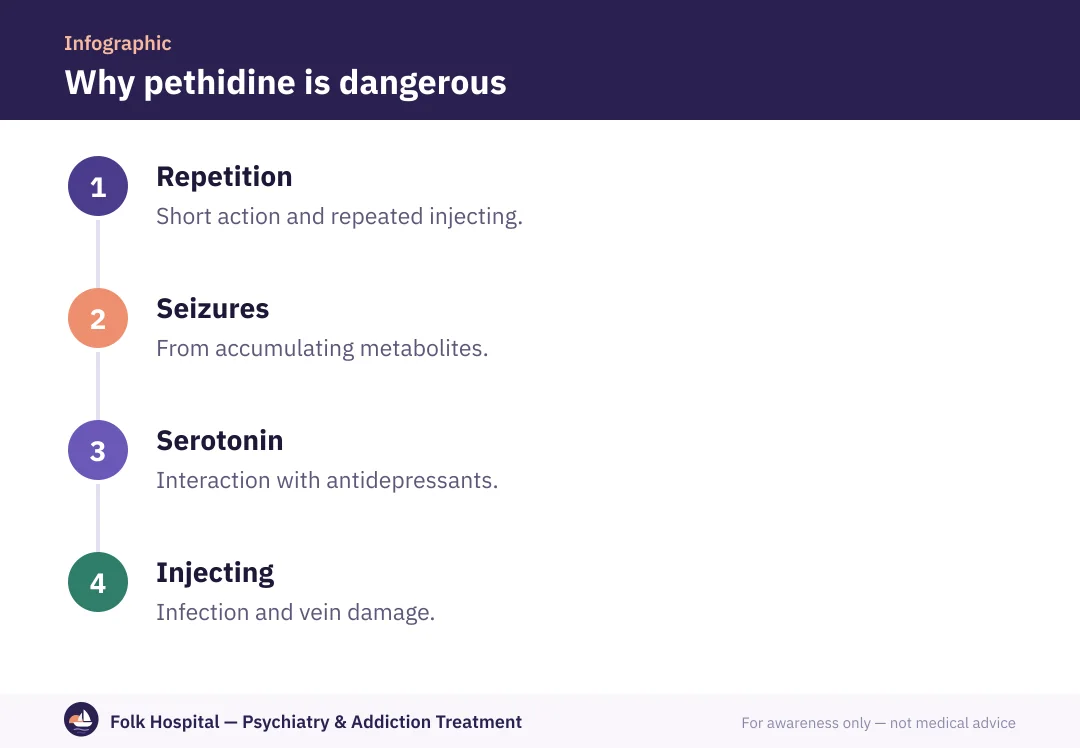
- Repeated injecting causes rapid dependence and a build-up that causes seizures.
Pethidine (meperidine) was once a common hospital painkiller; its use declined because of its risks, but it's still sometimes misused.
01Key facts
| Item | Details |
|---|---|
| Class | Opioid painkiller |
| Common forms and names | Injection ampoules |
| How it's used | Intramuscular or intravenous injection |
| Does it show on a standard test? | Usually needs a specific test |
| Risk of dependence | High |
02How does it affect the brain and body?
It eases pain and causes brief calm and euphoria, so users need repeated injections, and over time a by-product builds up that causes tremor and seizures.
03The main risks
- Rapid dependence and repeated injecting.
- Seizures with repeated doses.
- A dangerous interaction with some antidepressants.
- Vein and muscle damage and infection.
- Seizures or severe tremor.
- Slow breathing or unresponsiveness.
04What to read next
؟Frequently asked questions
Why has medical use of pethidine declined?
Because its metabolites can cause seizures, because of its dangerous interactions, and because safer pain alternatives are available.
Why is pethidine linked to healthcare workers?
Because of easier access in some settings; confidential treatment is available to them.
Is pethidine more dangerous than morphine?
It has particular risks such as seizures and drug interactions.
Sources and references
- Opioids — research topic — National Institute on Drug Abuse (NIDA)
- Prescription Medicines — research topic — National Institute on Drug Abuse (NIDA)

A psychiatrist specialising in addiction and mental illness in adults and adolescents, with a focus on dual diagnosis.
For awareness only — not a substitute for medical advice. Editorial policy · View profile