- Heroin withdrawal is very hard but rarely life-threatening in itself when the person is cared for.
- Dehydration from vomiting and diarrhoea is the main physical risk to prevent.
- The most dangerous moment is using again after a few days off, because tolerance has fallen.
01Why does heroin withdrawal happen?
With regular use, the brain cuts back its own production of natural painkillers and tunes the body's systems around heroin. When the drug stops, the opposite of everything it did happens: it eased pain, so pain floods back; it caused constipation, so diarrhoea follows; it calmed, so anxiety and insomnia take over. Withdrawal looks like a "mirror image" of the drug's effects.
02When does heroin withdrawal start and how long does it last?
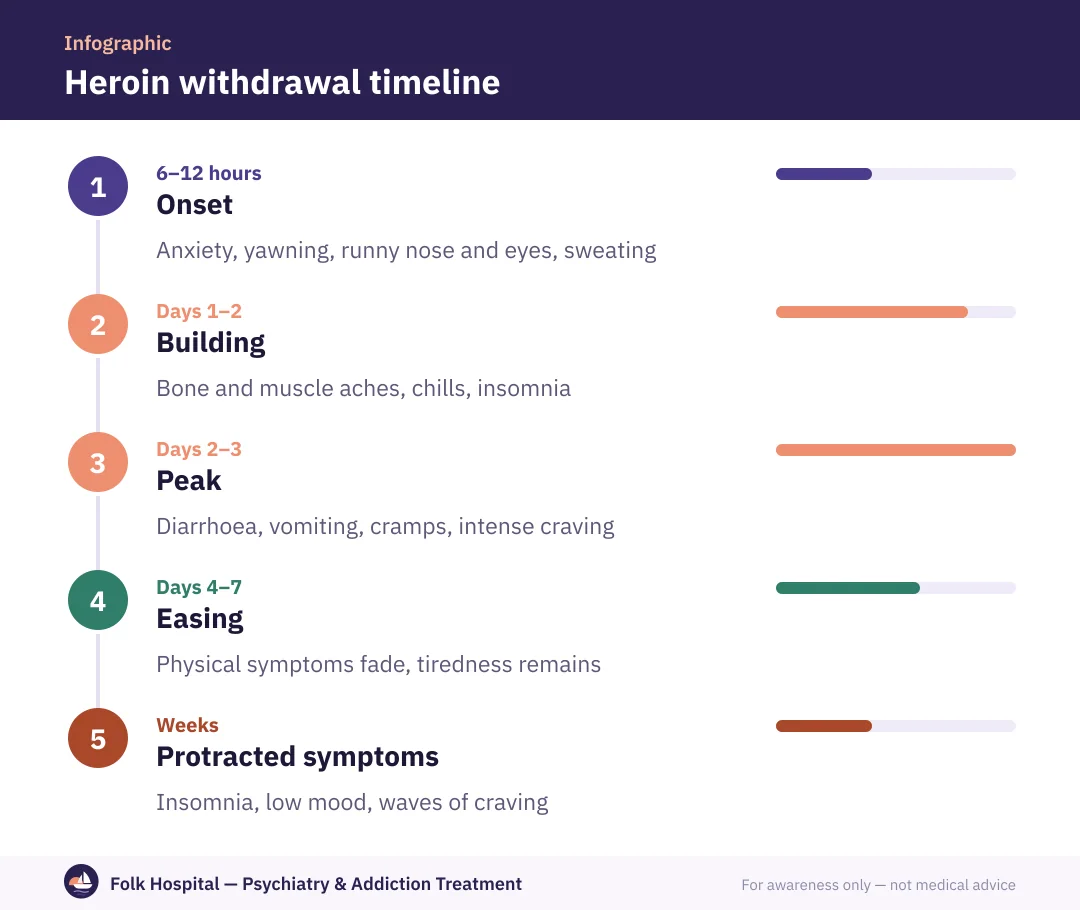
- 6–12 hours
Onset
Anxiety, frequent yawning, runny nose and watery eyes, sweating.
Intensity - Days 1–2
Building
Aches in bones and muscles, chills with goosebumps, insomnia.
Intensity - Days 2–3
Peak
Diarrhoea, vomiting, stomach cramps, raised blood pressure and pulse, intense craving.
Intensity - Days 4–7
Easing
Physical symptoms fade gradually; fatigue and poor appetite linger.
Intensity - Weeks
Protracted symptoms
Insomnia, anxiety, low mood and waves of craving.
Intensity
03What are the symptoms of heroin withdrawal?
Physical symptoms
- Severe aches in bones, muscles and back
- Heavy sweating and chills
- Runny nose, tears and constant yawning
- Diarrhoea, nausea, vomiting and cramps
- Dilated pupils
- Raised pulse and blood pressure
Psychological symptoms
- Anxiety, irritability and tension
- Severe insomnia
- Overwhelming urge to use
- Sadness and low mood
04When does withdrawal become dangerous?
- Vomiting or diarrhoea lasts more than a day with signs of dehydration
- There is chest pain or difficulty breathing
- The person has also been using alcohol or sedatives
- Suicidal or self-harm thoughts appear
Call an ambulance on 123, or contact us to admit the person straight away.
Ambulance: 12305How is heroin withdrawal treated in hospital?
- Assessmentestablishing the amount, route of use and any other substances, and checking heart, liver and kidney function.
- Withdrawal medicationthe doctor chooses medication that eases symptoms and reduces cravings, tailored to each patient.
- Fluids and nutritionpreventing dehydration and supporting the body through the hardest days.
- Help with sleep and anxietybecause insomnia is one of the main reasons people walk out of treatment.
- Moving on to rehabonce symptoms settle, rehabilitation begins to treat the addiction itself.
Why home withdrawal isn't recommended
At its peak, withdrawal is so harsh that most people trying alone go back to using on day two or three. Using again after a few days off carries a real risk of overdose.
؟Frequently asked questions
Can you die from heroin withdrawal?
Death from withdrawal itself is rare, but possible with severe untreated dehydration, especially in people with heart or kidney problems. The bigger danger is relapse after withdrawal, when a usual dose may now be fatal.
What is "khurman"?
"Khurman" is the common Egyptian word for withdrawal and intense craving, used by people who use drugs to describe the hard hours after a dose wears off.
How long do psychological withdrawal symptoms last?
Insomnia, anxiety, mood swings and on-and-off cravings can last weeks or months, known as protracted withdrawal. That's why rehab and follow-up are needed after detox.
Sources and references
- Heroin — research topic — National Institute on Drug Abuse (NIDA)
- Opiate and opioid withdrawal — U.S. National Library of Medicine — MedlinePlus
- Medications to Treat Opioid Use Disorder — Research Report — National Institute on Drug Abuse (NIDA)
- Guidelines for the psychosocially assisted pharmacological treatment of opioid dependence — World Health Organization

A psychiatrist specialising in addiction and mental illness in adults and adolescents, with a focus on dual diagnosis.
For awareness only — not a substitute for medical advice. Editorial policy · View profile