- LSD is a very strong hallucinogen taken in tiny amounts.
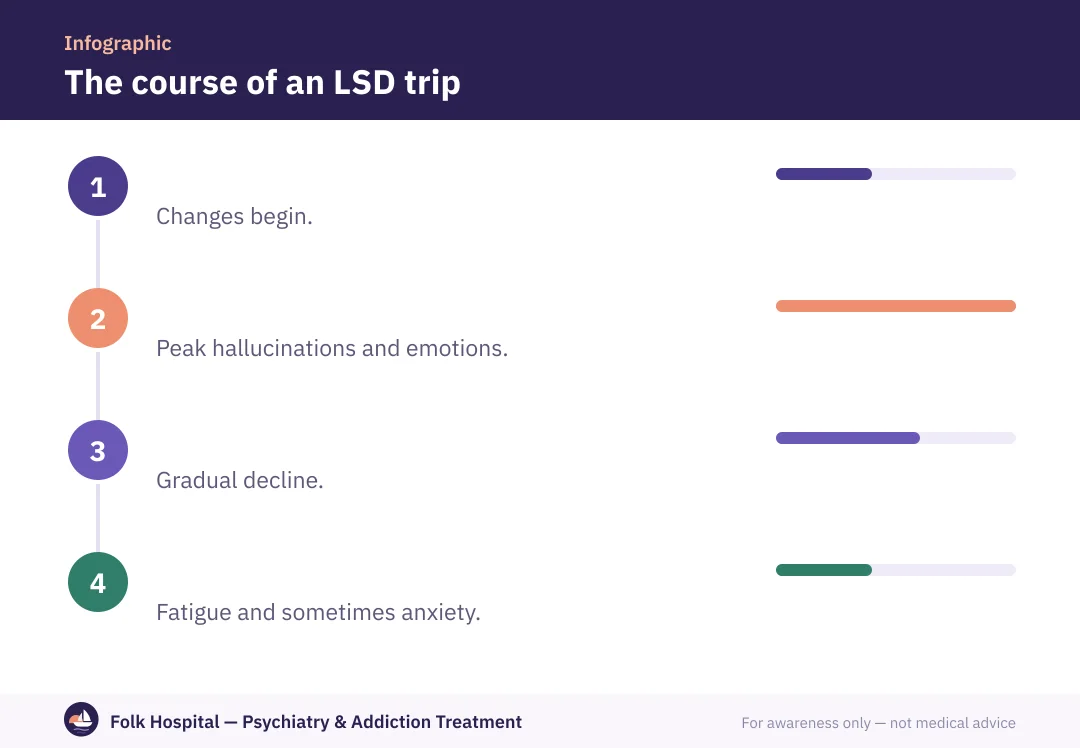
- Its effect lasts about 8–12 hours.
- It doesn't cause strong physical dependence, but its psychological harms are real.
LSD is one of the strongest known hallucinogens; a tiny amount is enough to alter perception for many hours.
01Key facts
| Item | Details |
|---|---|
| Class | Hallucinogen |
| Common forms and names | Small papers or drops |
| How it's used | On or under the tongue |
| Does it show on a standard test? | No, it needs a specific test |
| Risk of dependence | Low physically |
02How does it affect the brain and body?
It acts on serotonin receptors, altering perception, colours and time and causing hallucinations and intense emotions, and a bad trip can occur.
03The main risks
- Panic and dangerous behaviour.
- Psychosis in predisposed people.
- Flashbacks.
- More dangerous counterfeit substitutes.
- Dangerous behaviour or attempts at self-harm.
- Seizures or high temperature.
04What to read next
؟Frequently asked questions
Is LSD addictive?
It usually doesn't cause physical dependence, but some people repeat it compulsively, and the bigger danger is its psychological effects and accidents.
What is a bad trip?
An experience of terror, panic, frightening hallucinations and loss of control that can drive dangerous behaviour.
Is LSD legal?
It falls under drug laws in Egypt and most countries.
Is there treatment?
Yes. It includes psychiatric assessment and treatment of persistent symptoms.
Sources and references
- Hallucinogens — research topic — National Institute on Drug Abuse (NIDA)

A psychiatrist specialising in addiction and mental illness in adults and adolescents, with a focus on dual diagnosis.
For awareness only — not a substitute for medical advice. Editorial policy · View profile