- The gap between an effective and a fatal dose is very small.
- Used patches can still contain a dangerous amount.
- An overdose may need more than one dose of naloxone.
- Addiction to it is treated with medication, therapy and follow-up.
01What is fentanyl?
Fentanyl is a synthetic opioid painkiller that binds very strongly to the brain's opioid receptors, relieving pain and causing euphoria and drowsiness, while suppressing the breathing centre. It's used medically in precise doses under monitoring. Outside that, any small mistake can be fatal.
In short: fentanyl is the most powerful commonly used opioid. What relieves a monitored patient's pain can be enough to stop the breathing of someone not used to it.
02Why is it so dangerous?
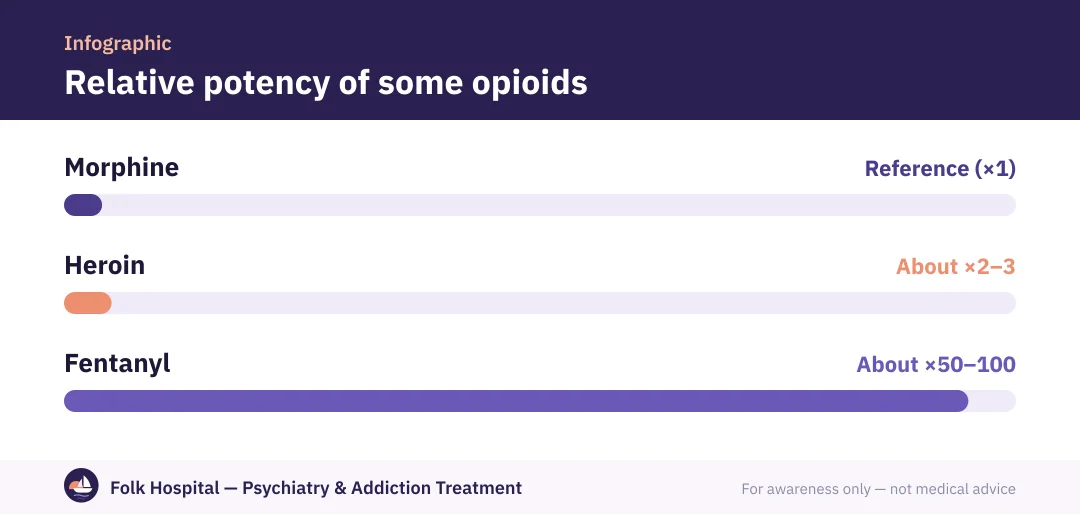
Because its high potency makes doses hard to judge, because it's sometimes mixed into other substances without the user knowing, and because its effect on breathing is fast. Read about overdose.
- Very slow breathing, strange snoring or stopped breathing.
- Blue lips and fingertips.
- Very small pupils.
- No response to voice or pain.
Put them on their side and stay with them until the ambulance arrives.
Ambulance: 12303What to read next
؟Frequently asked questions
Is fentanyl found in Egypt?
It exists medically in hospitals and some prescribed forms such as patches, and misuse does happen. Worldwide, illicit fentanyl is spreading mixed into other drugs.
What are the signs of a fentanyl overdose?
Very slow or stopped breathing, blue lips, pinpoint pupils and no response. Call an ambulance immediately.
Sources and references
- Fentanyl — research topic — National Institute on Drug Abuse (NIDA)
- Opioid overdose — fact sheet — World Health Organization

A psychiatrist specialising in addiction and mental illness in adults and adolescents, with a focus on dual diagnosis.
For awareness only — not a substitute for medical advice. Editorial policy · View profile