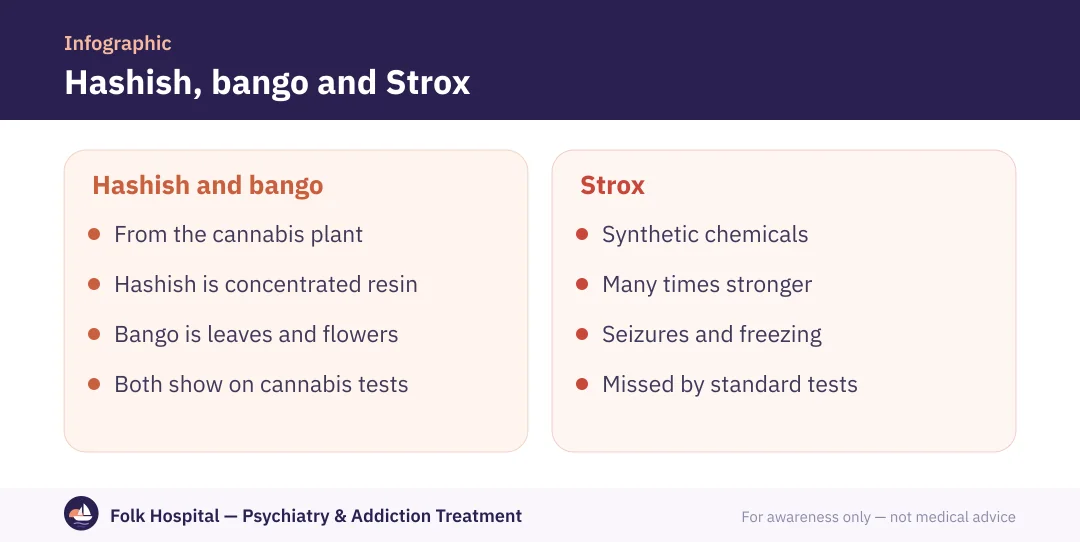
- Hashish is usually stronger than bango because it's concentrated resin.
- THC levels in today's products are much higher than decades ago, raising the risks.
- Starting in adolescence raises the chance of addiction and mental illness.
- Hashish is completely different from Strox, which is more dangerous synthetic chemistry.
01What is hashish?
Hashish is a brown or dark green substance made by collecting sticky resin from the cannabis plant and pressing it into pieces. It's usually smoked mixed with tobacco in a cigarette or in shisha. It contains dozens of compounds, the most important being THC, which produces the psychological effect.
In short: hashish = concentrated cannabis resin. Its effect starts within minutes of smoking, lasts hours and varies a lot with THC content.
02How does hashish affect the brain?
The brain has a natural endocannabinoid system that helps regulate mood, memory, appetite and sleep. THC binds to this system's receptors, bringing relaxation, altered sense of time, colour and sound, increased appetite and temporary lapses in memory and focus.
With daily use the brain dulls these receptors, so more is needed and sleep and calm become hard without it. That's where the cycle of dependence begins.
03Is hashish really "light"?
The common idea that hashish is safe ignores three facts: THC levels in current products are far higher than in the past, the teenage brain is more sensitive to its effects, and a considerable share of daily users develop addiction. We treat it as a substance that needs awareness, and treatment when use turns into dependence.
04When does hashish use become addiction?
Signs of addiction
- Smoking every day or most days.
- Finding it hard to sleep, eat or relax without it.
- Failed attempts to cut down or stop.
- Neglecting study, work or family.
- Irritability and insomnia when it runs out.
- Continuing despite anxiety, paranoia or problems.
05What to read next
؟Frequently asked questions
Is hashish addictive?
Yes. A share of users develop cannabis use disorder, and the rate rises sharply with daily use and starting in adolescence. It shows as loss of control, continued use despite harm and withdrawal when stopping.
What's the difference between hashish and bango?
Both come from cannabis, but bango is dried leaves and flowers, while hashish is compressed resin that usually has more THC.
Can hashish make you go crazy?
It can cause temporary psychotic episodes and raises the risk of lasting psychosis in vulnerable people, especially with early use and strong products. Read about hashish and paranoia.
Sources and references
- Cannabis (Marijuana) — research topic — National Institute on Drug Abuse (NIDA)
- World Drug Report 2024 — United Nations Office on Drugs and Crime (UNODC)

A psychiatrist specialising in addiction and mental illness in adults and adolescents, with a focus on dual diagnosis.
For awareness only — not a substitute for medical advice. Editorial policy · View profile