01What is addiction, and why does it need specialist treatment?
Addiction is when a person loses the ability to control their use of a substance and keeps using despite seeing the damage it causes to their health, work, money and relationships. It happens because drugs rewire the brain's reward system, pushing the drug ahead of food, sleep and family on the list of priorities.
That's why advice and promises rarely work, and locking someone in a room at home usually fails. Treatment has to deal with a body that has adapted to the drug, a mind that has learned to reach for it, and an environment that keeps pulling the person back.
Medical definition: addiction is a chronic brain disorder marked by compulsive use, loss of control over quantity and continued use despite harm. Like diabetes or high blood pressure, it is treatable.
02When does someone need addiction treatment?
Don't wait for "rock bottom". These signs mean it's time:
Signs that call for help
- Needing more of the drug to feel the same effect.
- Physical or emotional symptoms when stopping.
- Several attempts to quit that didn't last.
- Lying, borrowing or selling things to get the drug.
- A clear drop in performance at work or school.
- Pulling away from family and old friends.
If three or more apply, a specialist assessment is the sensible next step. You can also take our private addiction self-test first.
03What are the stages of addiction treatment?
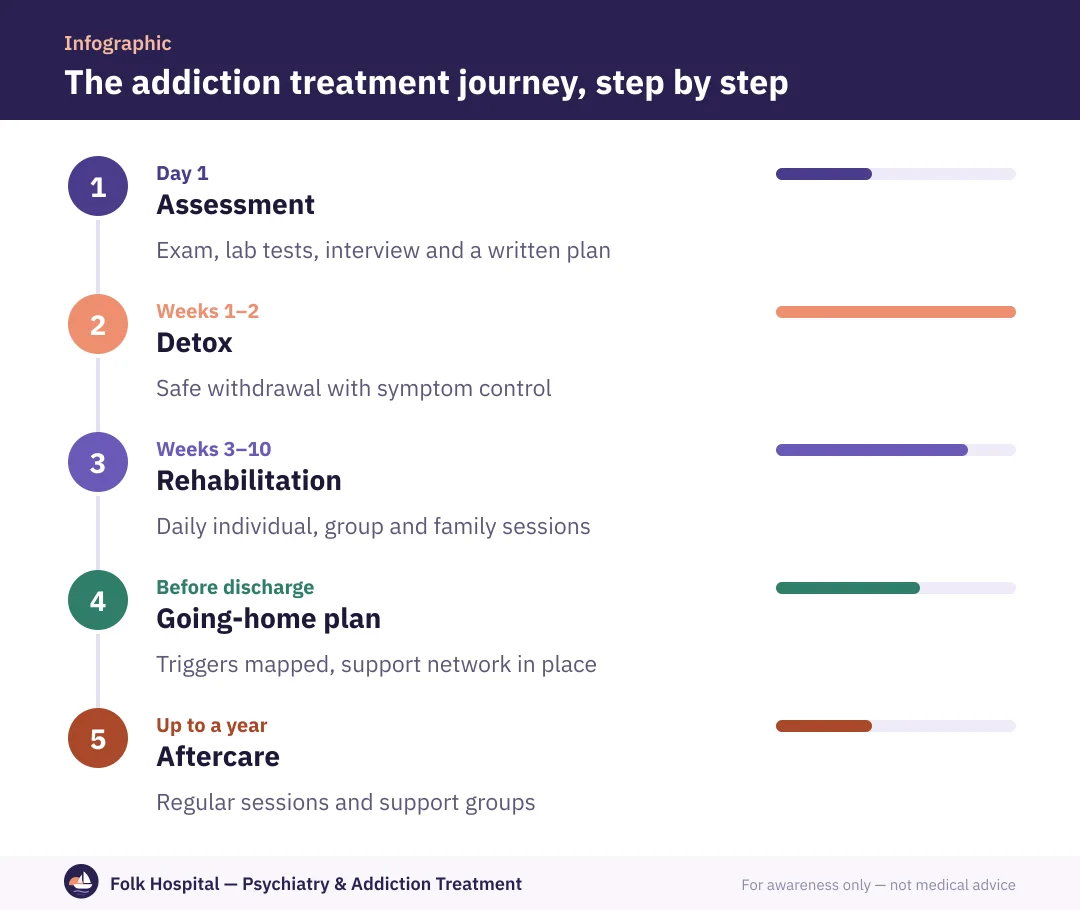
- Full assessmenta physical exam, lab tests and a psychiatric interview to uncover depression, anxiety or other conditions, followed by a written treatment plan.
- Detoxthe body clears the drug under continuous medical supervision, with medication that eases withdrawal. See medical detox.
- Rehabilitationindividual and group therapy that explores why the person used and teaches them to handle stress and cravings without drugs.
- Family therapyhome is part of treatment, so we help families understand the illness, rebuild trust and set healthy boundaries.
- Relapse preventiona written discharge plan, scheduled sessions and support groups through the first months, which are the hardest.
04How long does addiction treatment take?
There's no single answer. Detox usually lasts 7 to 14 days, sometimes longer for sedatives or alcohol. Rehabilitation commonly runs 4 to 12 weeks depending on the case. Clinical experience shows that longer programmes paired with good follow-up tend to produce more lasting results.
| Factor | How it affects duration |
|---|---|
| Substance | Opioids, alcohol and sedatives need closer, longer detox |
| Years of use | Longer histories usually need longer rehabilitation |
| Multiple drugs | Mixing substances complicates withdrawal and planning |
| Mental illness | Requires dual diagnosis care alongside |
| Family support | A supportive home shortens the road and lowers relapse risk |
05Inpatient or outpatient: which is right?
Outpatient care suits
- Recent or light use without dangerous withdrawal.
- A supportive family and a drug-free home.
- Commitment to attending sessions regularly.
Residential care suits
- Regular heroin, alcohol, sedative or meth use.
- Previous attempts to stop that ended in relapse.
- Severe depression, self-harm thoughts or psychotic symptoms.
The doctor recommends the right setting after assessment, and patients can move between them as they progress. Read about residential rehab and outpatient care.
06How do you choose a trustworthy rehab?
This decision matters, so look past photos and advertising and ask directly:
Signs of a good centre
- Clear licensing from the relevant authorities.
- A psychiatrist personally involved in care.
- Detox with a medication protocol, not deprivation.
- A written plan and family involvement.
- Organised follow-up after discharge.
Red flags
- Promises of a full cure within days.
- Blocking family contact without a medical reason.
- No doctors, only supervisors.
- Punitive or humiliating treatment of patients.
- Refusing to explain costs upfront.
07What happens after treatment ends?
Leaving hospital isn't the end of the road. The riskiest period is usually the first three months, when people return to the places and faces linked to their use. So each patient leaves with a plan that names their triggers, who to call when a craving hits and how to fill their time, and continues in our aftercare and relapse prevention programme.
08What to read next
؟Frequently asked questions
Can addiction be treated at home?
Some mild cases can be managed as outpatients, but withdrawal from heroin, alcohol or sedatives can cause serious complications. A doctor should decide where treatment happens after assessing the person.
How much does addiction treatment cost?
Cost depends on the programme (inpatient or outpatient), its length and the patient's health. We explain the full cost after assessment, with no hidden fees.
What if the person refuses treatment?
Refusal is a common part of the illness. Families can start with a counselling session to learn how to approach the person, and in high-risk situations the law permits admission without consent under medical safeguards. See our family guide.
Does relapse mean treatment failed?
No. Relapse happens in many chronic conditions and signals that the plan needs adjusting. What matters is returning to treatment quickly, before old patterns take hold again.
Sources and references
- Treatment Approaches for Drug Addiction — DrugFacts — National Institute on Drug Abuse (NIDA)
- Guidelines for the psychosocially assisted pharmacological treatment of opioid dependence — World Health Organization
- Drug misuse in over 16s: psychosocial interventions (CG51) — National Institute for Health and Care Excellence (NICE)
- Co-Occurring Disorders and Health Conditions — National Institute on Drug Abuse (NIDA)
- World Drug Report 2024 — United Nations Office on Drugs and Crime (UNODC)

A psychiatrist specialising in addiction and mental illness in adults and adolescents, with a focus on dual diagnosis.
For awareness only — not a substitute for medical advice. Editorial policy · View profile