- Methadone is a long-acting synthetic opioid.
- Many countries use it to treat opioid dependence within supervised programmes.
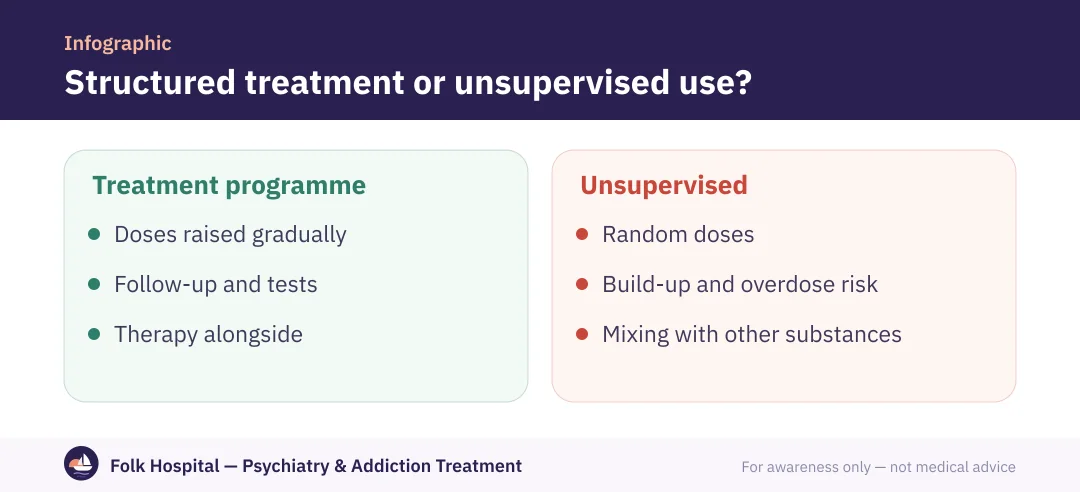
- It builds up in the body, and unsupervised use is dangerous.
Methadone is one of the oldest and most studied treatments for opioid addiction, but its long action makes it dangerous when used without supervision.
01Key facts
| Item | Details |
|---|---|
| Class | Long-acting synthetic opioid |
| Common forms and names | Liquid or tablets |
| How it's used | By mouth under a treatment programme |
| Does it show on a standard test? | Needs a specific test |
| Risk of dependence | High, managed medically in programmes |
02How does it affect the brain and body?
It prevents withdrawal and reduces cravings for a long time, and builds up with daily doses, which is why programmes start low.
03The main risks
- Overdose from build-up.
- Heart rhythm disturbance in some people.
- Slowed breathing when mixed.
- Long withdrawal on stopping.
- Deep drowsiness or slow breathing.
- Fainting with palpitations.
04What to read next
؟Frequently asked questions
Is methadone a treatment or an addiction?
In a structured medical programme it's a treatment that reduces deaths and relapse for some opioid patients; used without supervision it can be dangerous and cause dependence.
Is methadone available in Egypt?
Availability of methadone programmes varies between countries. We explain the medication options available and suitable for you after assessment.
Is it used for pain?
Sometimes for severe pain under close supervision.
Sources and references
- Medications to Treat Opioid Use Disorder — Research Report — National Institute on Drug Abuse (NIDA)
- Guidelines for the psychosocially assisted pharmacological treatment of opioid dependence — World Health Organization

A psychiatrist specialising in addiction and mental illness in adults and adolescents, with a focus on dual diagnosis.
For awareness only — not a substitute for medical advice. Editorial policy · View profile