- "Natural" doesn't mean safe; opium is the source of morphine and heroin.
- Myths about energy and sexual stamina hide growing dependence.
- Daily use causes tolerance and withdrawal.
- It's treated like other opioid addiction, usually with good results.
01What is opium?
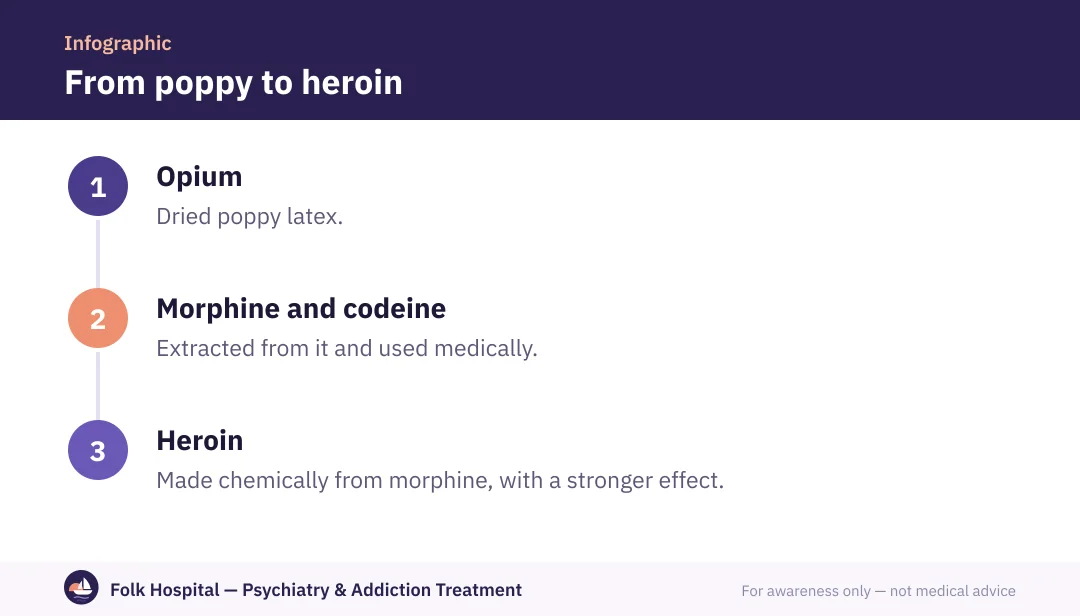
The unripe poppy seed pod is scored, releasing a milky latex that dries into a sticky brown substance: opium. It contains varying amounts of morphine, so each piece acts differently. Read about morphine and heroin.
In short: opium is raw morphine in plant form. Its effect is slower than heroin's, but the road to addiction is the same.
02Why do myths about it persist?
Because opium was historically used for pain, coughs and diarrhoea, and because it delays ejaculation and calms tension, the idea spread that it's a "tonic". In reality, these temporary effects hide growing tolerance and dependence, followed by weaker desire and energy.
- Severe drowsiness and no response.
- Very slow breathing.
- Blue lips and pinpoint pupils.
Call an ambulance on 123 immediately.
Ambulance: 12303What to read next
؟Frequently asked questions
Does opium strengthen the body or sexual performance?
No. It may delay ejaculation or ease pain temporarily, but over time it weakens desire, hormones and energy, and causes addiction.
Is opium milder than heroin?
It's usually slower and weaker, but it causes the same addiction and contains the morphine that heroin itself turns into.
Sources and references
- Opioids — research topic — National Institute on Drug Abuse (NIDA)
- World Drug Report 2024 — United Nations Office on Drugs and Crime (UNODC)

A psychiatrist specialising in addiction and mental illness in adults and adolescents, with a focus on dual diagnosis.
For awareness only — not a substitute for medical advice. Editorial policy · View profile