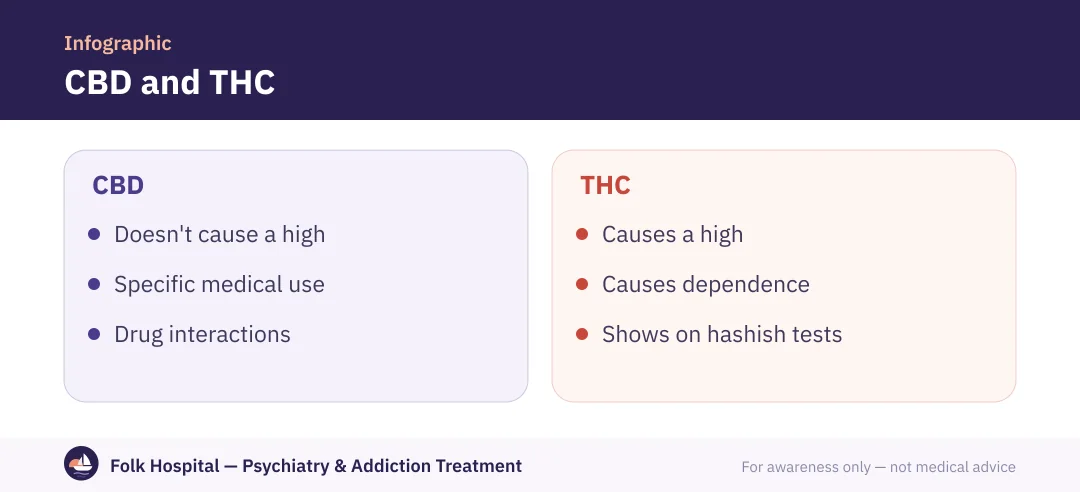
Cannabidiol (CBD) is one of the compounds in the cannabis plant, differing from THC in that it doesn't cause a high. Its commercial products have spread with many promises, most without enough evidence.
01Key facts
| Item | Details |
|---|---|
| Class | A non-intoxicating compound from the cannabis plant |
| Common forms and names | Oils, capsules, creams and food products |
| How it's used | By mouth, on the skin or vaped |
| Does it show on a standard test? | CBD itself isn't tested for, but mixed-in THC may show |
| Risk of dependence | Low for pure CBD |
02How does it affect the brain and body?
CBD affects several systems in the brain and body differently from THC, which is why it doesn't cause a high. Strong evidence of benefit is limited to rare epilepsy conditions; other claims need more study.
03The main risks
- Drowsiness, diarrhoea and appetite changes.
- Interactions with medicines such as blood thinners and some epilepsy drugs.
- Raised liver enzymes at high doses.
- Mislabelled products that may contain THC.
- Severe drowsiness or confusion after an unknown product.
- Acute psychological symptoms that may mean THC or synthetic substances are present.
04What to read next
؟Frequently asked questions
Is CBD legal in Egypt?
The legal status of cannabis-derived products is complex; we don't advise buying or importing any product without checking official sources and consulting a doctor.
Is CBD legal?
Laws differ between countries and change, so check the local position; this isn't legal advice.
Does CBD treat anxiety?
The evidence is still limited, and proven, safer treatments for anxiety are available.
Sources and references
- Cannabis (Marijuana) — research topic — National Institute on Drug Abuse (NIDA)

A psychiatrist specialising in addiction and mental illness in adults and adolescents, with a focus on dual diagnosis.
For awareness only — not a substitute for medical advice. Editorial policy · View profile