- Tapentadol is a strong opioid painkiller with two mechanisms.
- It's prescribed for moderate to severe pain.
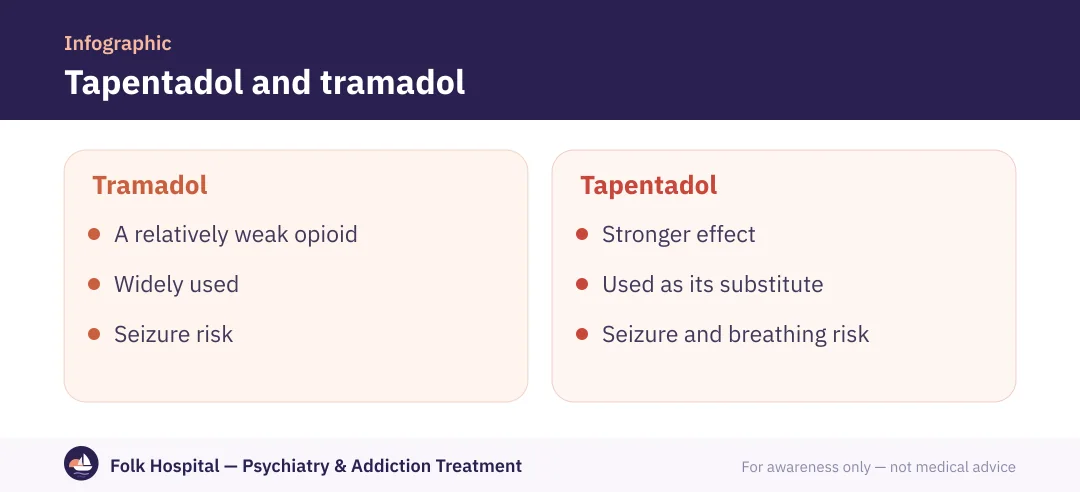
- It's misused as a substitute for tramadol.
Tapentadol is a relatively new painkiller combining an opioid effect with raised noradrenaline, which is why it may attract people used to tramadol.
01Key facts
| Item | Details |
|---|---|
| Class | Opioid painkiller (agonist and noradrenaline reuptake inhibitor) |
| Common forms and names | Immediate- and extended-release tablets |
| How it's used | By mouth |
| Does it show on a standard test? | Usually doesn't show on the opioid strip |
| Risk of dependence | High with misuse |
02How does it affect the brain and body?
It eases pain via opioid receptors and raised noradrenaline, causing calm or euphoria; with repetition dependence develops, and high doses can cause seizures.
03The main risks
- Dependence and withdrawal.
- Slowed breathing when mixed.
- Seizures at high doses.
- Serotonin syndrome with some antidepressants.
- Slow breathing or unresponsiveness.
- Seizures, or fever with agitation.
04What to read next
؟Frequently asked questions
Is tapentadol more dangerous than tramadol?
It's usually stronger per dose, so it can be more dangerous when misused, especially with sedatives or alcohol.
Does it show on a drug test?
Usually not on a standard opiate test; it needs a specific test.
Is tapentadol stronger than tramadol?
Usually yes, which is why its risk of dependence is high.
Does it show up on a test?
It usually needs a specific test.
Sources and references
- Opioids — research topic — National Institute on Drug Abuse (NIDA)
- Prescription Medicines — research topic — National Institute on Drug Abuse (NIDA)

A psychiatrist specialising in addiction and mental illness in adults and adolescents, with a focus on dual diagnosis.
For awareness only — not a substitute for medical advice. Editorial policy · View profile