Street names keep changing, and «biesa» is one of them. The rule with any unknown substance: you can't know what's inside, and that alone makes it dangerous.
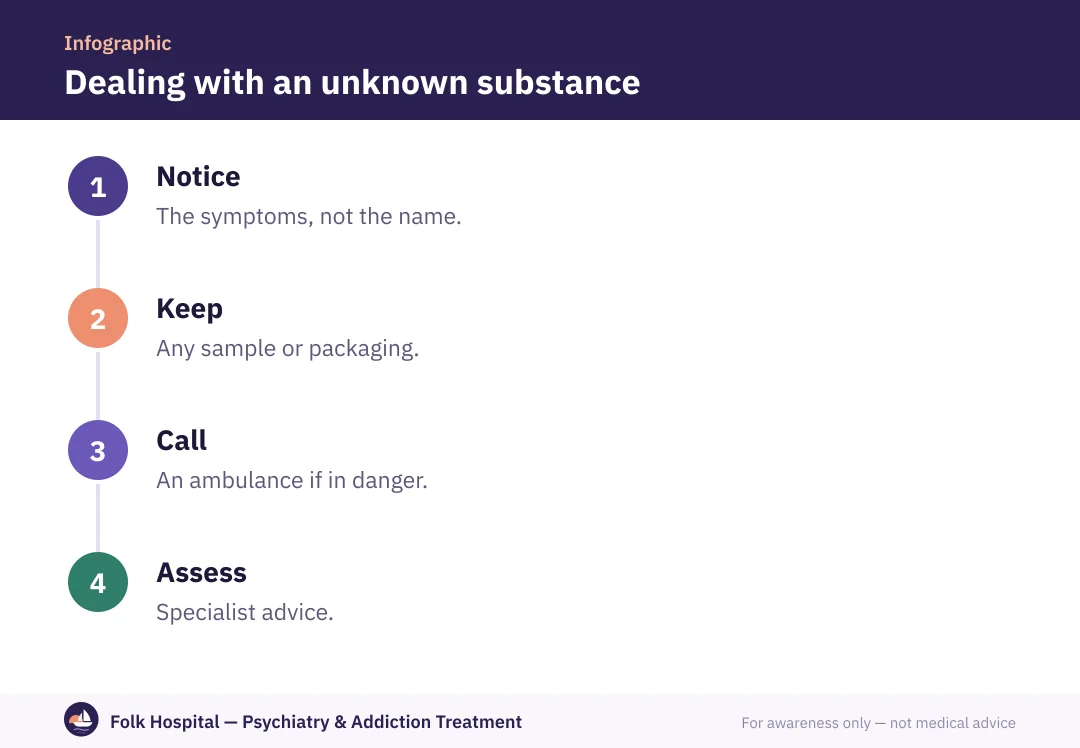
01Key facts
| Item | Details |
|---|---|
| Class | Unknown (possible mixtures) |
| Common forms and names | Unspecified |
| How it's used | Unspecified |
| Does it show on a standard test? | Some components may or may not show |
| Risk of dependence | Unknown, with high risk |
02How does it affect the brain and body?
Because the contents are unknown, a mixture may combine sedatives, stimulants and synthetic cannabinoids, producing conflicting, unpredictable symptoms.
03The main risks
- Unexpected overdose.
- Seizures or freezing.
- Hallucinations and psychosis.
- Dangerous interactions with other substances.
- Unconsciousness or slow breathing.
- Seizures or severe agitation.
04What to read next
؟Frequently asked questions
Why don't you list biesa's ingredients?
Because we found no reliable source that identifies them, and we don't publish unconfirmed medical information. If you have a sample, a lab can test it.
What exactly is biesa?
There's no reliable data on its contents, which may vary from place to place.
Does it show up on a test?
Some components may show on standard or specialist tests, or may not.
Sources and references
- Drugs, Brains, and Behavior: The Science of Addiction — National Institute on Drug Abuse (NIDA)
- Synthetic Cannabinoids (K2/Spice) DrugFacts — National Institute on Drug Abuse (NIDA)

A psychiatrist specialising in addiction and mental illness in adults and adolescents, with a focus on dual diagnosis.
For awareness only — not a substitute for medical advice. Editorial policy · View profile