01Why do the two disorders occur together?
| Pathway | Example |
|---|---|
| Mental illness comes first | An anxious person turns to sedatives or cannabis to calm down |
| Use causes psychological symptoms | Shabu causes psychosis, and withdrawal causes depression |
| Shared factors | Genetics, trauma and stress raise the risk of both |
02The commonest examples
| Disorder | Read |
|---|---|
| Depression | Depression and addiction |
| Anxiety | Anxiety and addiction |
| Bipolar disorder | Bipolar disorder and addiction |
| ADHD | ADHD and addiction |
| Borderline personality | Borderline and addiction |
| Psychosis | Drug-induced psychosis |
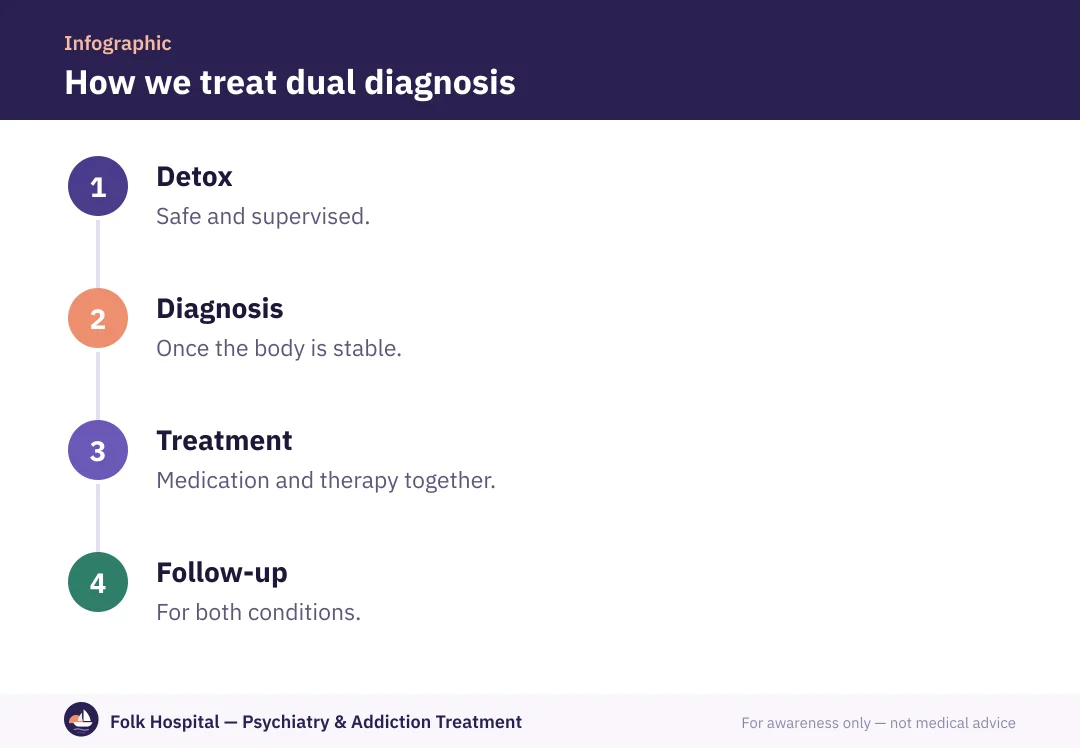
03How does integrated treatment work?
- Safe withdrawalunder medical supervision, monitoring psychological symptoms.
- Careful assessmentrepeated after a period off the substance to separate substance effects from an independent illness.
- One planone team treating both disorders together.
- Carefully chosen medicinesavoiding those open to misuse wherever possible.
- Psychological therapyCBT, DBT and relapse prevention.
- Family and follow-upto spot early signs of relapse in both disorders.
04Why isn't one treatment enough?
Separate treatment
Integrated treatment
- Treating addiction while leaving depression | Treating both together
- Relapse driven by psychological symptoms | A plan that prevents relapse in both
- Conflicting messages from two teams | One team and one plan
Read about our dual diagnosis programme and detox.
- Suicidal thoughts are common with depression and addiction. The mental health hotline 08008880700, or ambulance 123.
؟Frequently asked questions
Which comes first: addiction or mental illness?
Either can come first, and some people start using to calm psychological symptoms. What matters is treating both together.
Should I treat the addiction first, then the mental illness?
Current guidance favours integrated treatment at the same time, because leaving one untreated weakens treatment of the other.
Can depression disappear after stopping drugs?
Sometimes, if it was caused by the substance or withdrawal. But if it persists for weeks after stopping, it's usually an independent disorder that needs treatment.
Do psychiatric medicines cause addiction?
Most antidepressants, mood stabilisers and antipsychotics don't. Sedatives are used carefully and for short periods.
Which disorders most often accompany addiction?
Depression, anxiety, bipolar disorder, ADHD, personality disorders and psychosis.
Sources and references
- Comorbidity: Substance Use and Other Mental Disorders — National Institute on Drug Abuse (NIDA)
- Co-Occurring Disorders and Health Conditions — National Institute on Drug Abuse (NIDA)
- Mental disorders — fact sheet — World Health Organization
- Depression — National Institute of Mental Health (NIMH)

A psychiatrist specialising in addiction and mental illness in adults and adolescents, with a focus on dual diagnosis.
For awareness only — not a substitute for medical advice. Editorial policy · View profile