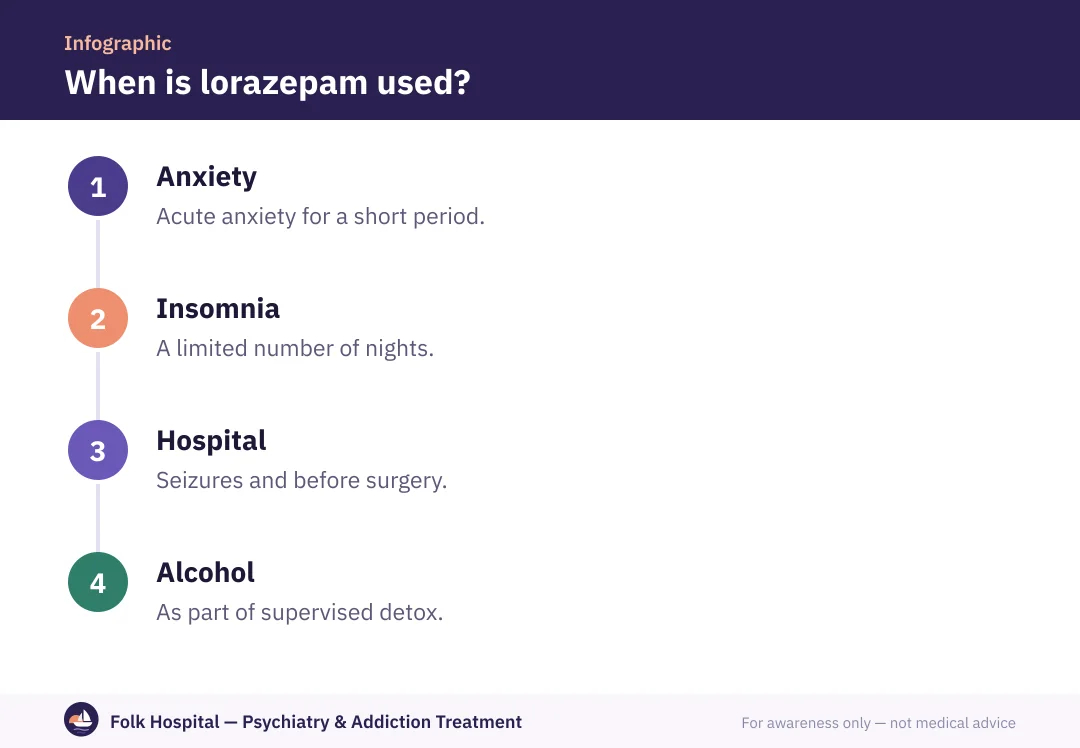
- Lorazepam is an intermediate-acting sedative for short-term anxiety and insomnia.
- It's used in hospitals for seizures and alcohol withdrawal.
- Long-term use causes dependence.
Lorazepam (Ativan) is an effective, fast medicine, which is why it can turn from a temporary solution into dependence if used long-term without a plan.
01Key facts
| Item | Details |
|---|---|
| Class | Intermediate-acting benzodiazepine |
| Common forms and names | Tablets and injections |
| How it's used | By mouth, or injected in hospital |
| Does it show on a standard test? | Some strips may not detect it |
| Risk of dependence | Moderate to high with long-term use |
02How does it affect the brain and body?
It boosts the calming effect of GABA in the brain, reducing anxiety and causing drowsiness; with repetition, tolerance and dependence develop.
03The main risks
- Dependence and withdrawal.
- Weak memory and concentration.
- Falls and accidents.
- Slowed breathing when mixed.
- Deep drowsiness or slow breathing with other substances.
- Seizures after stopping suddenly.
04What to read next
؟Frequently asked questions
Is lorazepam stronger than Xanax?
They differ more in speed and duration than strength. Both can cause dependence and need gradual tapering.
Does it show on a drug test?
Some rapid strips may miss it; a laboratory test detects it.
Is lorazepam safe?
Usually safe for short periods under supervision; the danger lies in long-term use, high doses and mixing.
What's its alternative for anxiety?
CBT and some antidepressants.
Sources and references
- Prescription Medicines — research topic — National Institute on Drug Abuse (NIDA)

A psychiatrist specialising in addiction and mental illness in adults and adolescents, with a focus on dual diagnosis.
For awareness only — not a substitute for medical advice. Editorial policy · View profile