01What is a vape and how does it work?
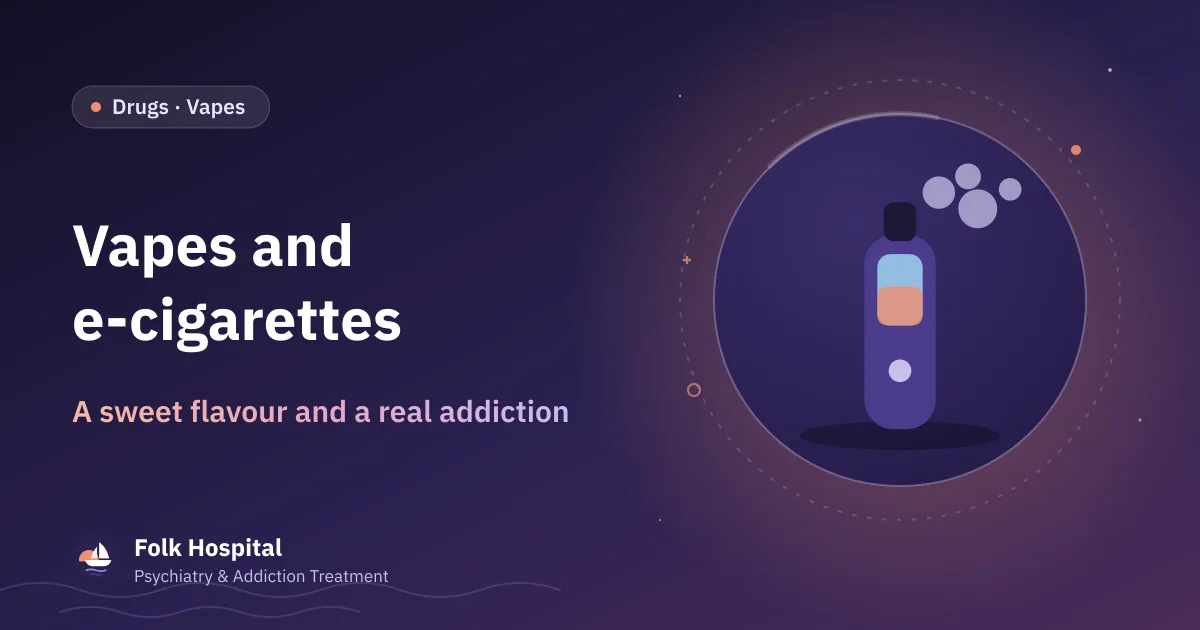
A vape is a battery-powered device that heats a liquid, usually nicotine, solvents and flavourings, into an aerosol the user inhales. Devices come in many shapes: pens, small units resembling a USB stick, and disposables. Being easy to hide, with a sweet smell, has made them widespread among school and university students.
02Why does nicotine cause addiction so quickly?
Nicotine reaches the brain within seconds, raising dopamine and giving a sense of focus and calm. Its effect fades fast, so the person keeps reaching for the device. The teenage brain keeps maturing until the mid-twenties, so it learns to «need» nicotine faster, and attention and impulse control are affected more than in adults.
03Vapes and cigarettes: a quick comparison
Conventional cigarettes
- Burning tobacco produces thousands of harmful substances.
- The leading cause of smoking-related lung and heart disease.
- Quitting clearly improves health.
Vapes
- No burning, but the aerosol contains nicotine, irritants and fine metals.
- Long-term effects are still being researched.
- May help some adult smokers switch, but isn't safe for non-smokers.
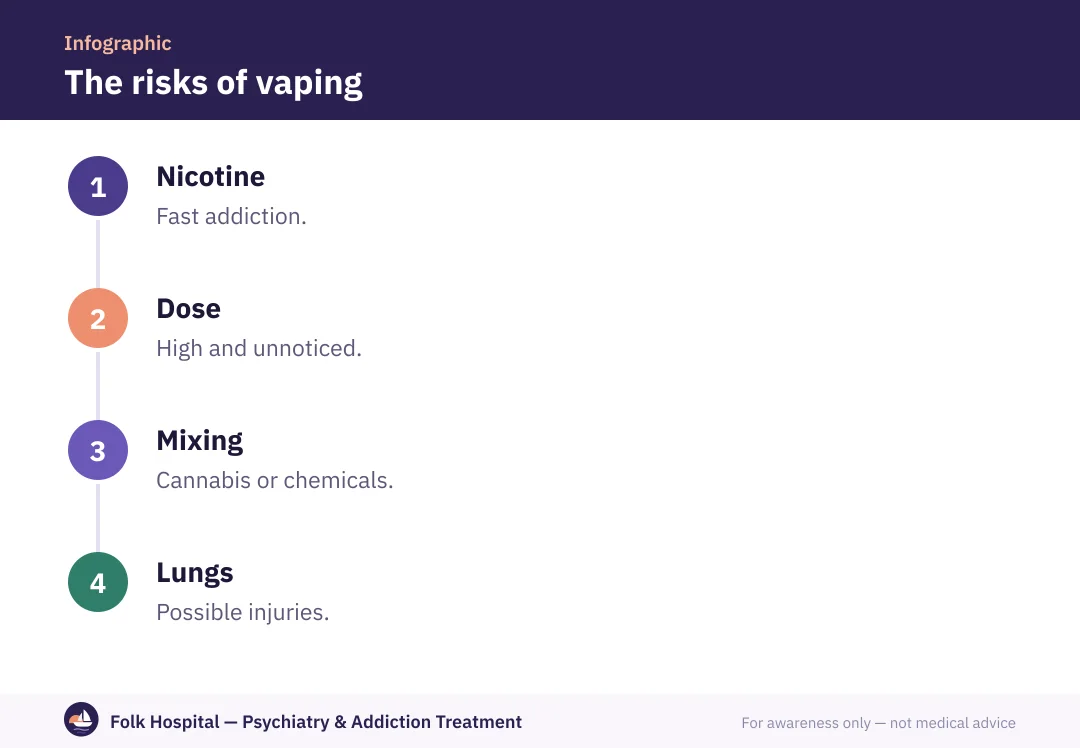
04The risks of vaping
- Nicotine addiction and its withdrawal: irritability, anxiety and poor concentration.
- Lung irritation and coughing, with breathlessness in some users.
- Acute lung injuries, linked in documented cases to liquids containing THC and oily additives.
- Burns and battery explosions in poor-quality or modified devices.
- Poisoning of young children who swallow concentrated nicotine liquid.
- A gateway to other substances: teenagers who start vaping are more likely to try cigarettes and other drugs.
05Unknown liquids: the biggest danger
Some liquids sold outside official channels contain cannabis oils or synthetic cannabinoids such as strox. The user can hardly know this or the strength, and may suffer seizures, a panic attack or acute psychosis from a single puff.
- Seizures or loss of consciousness after vaping.
- Severe breathlessness or chest pain.
- A young child swallowing vape liquid.
Keep the device and liquid to show the doctor.
Ambulance: 12306Signs of vaping
Signs a family may notice
- A sudden sweet or fruity smell in the room or on clothes.
- Devices resembling a USB stick or pen, and odd chargers or pods.
- A new cough, hoarseness or breathlessness.
- Irritability and tension when prevented from going out or to the bathroom.
- Unexplained spending or repeated requests for money.
07How to help your son quit
Start with a calm conversation that doesn't accuse or threaten, and ask why: peer pressure, anxiety, boredom? Then agree on a clear plan. If strong withdrawal appears, or you suspect other substances in the device, specialist advice is essential. Read the family guide and quitting smoking.
؟Frequently asked questions
Is vaping less harmful than smoking?
It may be less harmful for an adult smoker who switches completely and stops cigarettes, but it isn't safe and isn't recommended for non-smokers or teenagers.
Is vaping addictive?
Yes, if it contains nicotine, which most liquids do. Some devices deliver a large amount of nicotine in a short time.
Are there nicotine-free vapes?
Some liquids are sold as nicotine-free, but labels aren't always accurate, and the aerosol itself contains substances that can irritate the lungs.
What's the danger of putting hashish or strox in a vape?
The strength is hard to know, so a high dose can arrive quickly, and synthetic cannabinoids in liquids can cause seizures, panic or acute psychosis.
How can I tell if my son is vaping?
A sudden sweet smell, devices that look like a USB stick or pen, odd chargers, coughing, irritability when restricted, and unexplained spending.
How can I help my son quit vaping?
Through calm conversation without threats, understanding why he uses it, agreeing a quit plan, and seeking specialist advice if clear withdrawal or other substances appear.
Sources and references
- Vaping Devices (Electronic Cigarettes) — DrugFacts — National Institute on Drug Abuse (NIDA)
- Tobacco — fact sheet — World Health Organization
- Synthetic Cannabinoids (K2/Spice) DrugFacts — National Institute on Drug Abuse (NIDA)
- Parents & Educators — National Institute on Drug Abuse (NIDA)

A psychiatrist specialising in addiction and mental illness in adults and adolescents, with a focus on dual diagnosis.
For awareness only — not a substitute for medical advice. Editorial policy · View profile