- Oxycodone is a strong opioid painkiller for severe pain.
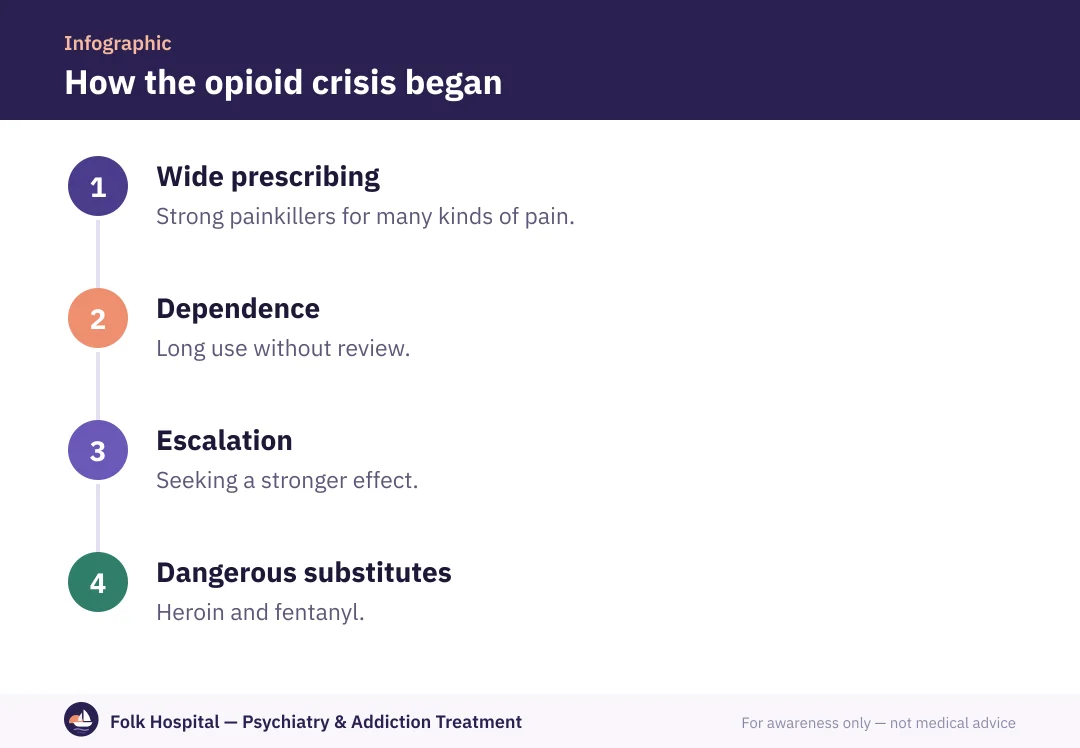
- It has been linked to the opioid crisis in some countries.
- Crushing extended-release tablets is very dangerous.
Oxycodone is one of the strongest prescribed opioid painkillers, and its story in some countries shows how addiction can start from a prescription.
01Key facts
| Item | Details |
|---|---|
| Class | Opioid painkiller |
| Common forms and names | Immediate- and extended-release tablets, sometimes with paracetamol |
| How it's used | By mouth, misused by crushing or snorting |
| Does it show on a standard test? | May not show on every opioid strip |
| Risk of dependence | High |
02How does it affect the brain and body?
It binds to opioid receptors in the brain, easing pain and causing calm and euphoria; with repetition, tolerance and dependence develop, and high doses slow breathing.
03The main risks
- Slowed breathing and overdose.
- Dependence and withdrawal.
- Liver damage with combination products.
- Moving on to more dangerous opioids.
- Unresponsiveness or slow breathing.
- Pinpoint pupils and blue lips.
04What to read next
؟Frequently asked questions
Can I become addicted to a painkiller my doctor prescribed?
Yes, if it's used for a long time, at higher doses or for mood. Follow-up and a stopping plan reduce the risk.
Is oxycodone available in Egypt?
It's tightly controlled as a strong opioid painkiller, and availability varies by medical setting.
Can it be used safely?
Yes, under medical supervision for the shortest possible time, with regular review.
Sources and references
- Opioids — research topic — National Institute on Drug Abuse (NIDA)
- Prescription Medicines — research topic — National Institute on Drug Abuse (NIDA)

A psychiatrist specialising in addiction and mental illness in adults and adolescents, with a focus on dual diagnosis.
For awareness only — not a substitute for medical advice. Editorial policy · View profile