01Drug harms to the brain
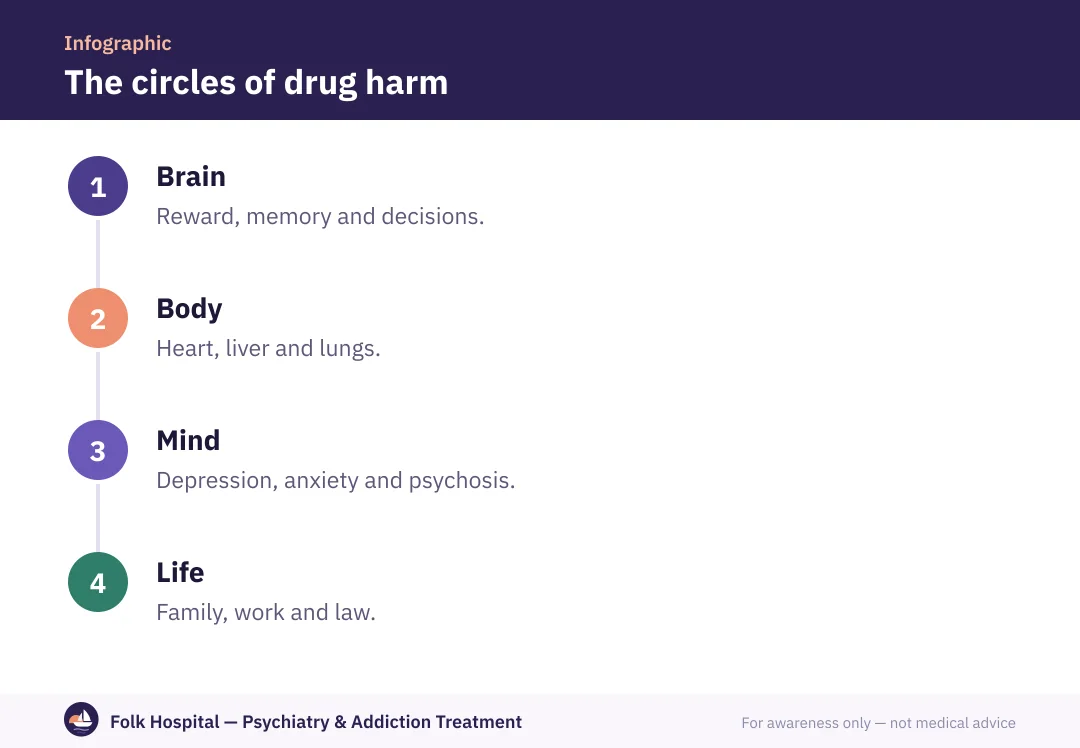
Most drugs flood dopamine circuits with strong signals; the brain adapts by lowering its sensitivity, so ordinary things stop feeling rewarding and impulse control weakens. Read about brain chemistry and addiction.
02Drug harms to the body
| Organ | Examples of harm |
|---|---|
| Heart | Stimulants: heart attacks and rhythm problems |
| Lungs | Smoking and opioids: infections and suppressed breathing |
| Liver | Alcohol and injecting: cirrhosis and hepatitis |
| Kidneys | Synthetic cannabinoids and some stimulants |
03Psychological harms
Drugs are linked to depression and anxiety and can trigger psychosis; many patients need dual-diagnosis care.
04Harms to family and life
Debt and conflict, falling behind at school and work, legal trouble, and constant worry for the family. Read the family guide.
05Browse harms by substance
؟Frequently asked questions
Is drug damage to the brain permanent?
Some of it improves greatly within months of stopping; some may persist, especially after long use or overdoses, so stopping early is better.
Sources and references
- Drugs, Brains, and Behavior: The Science of Addiction — National Institute on Drug Abuse (NIDA)
- World Drug Report 2024 — United Nations Office on Drugs and Crime (UNODC)
- Opioid overdose — fact sheet — World Health Organization
- Co-Occurring Disorders and Health Conditions — National Institute on Drug Abuse (NIDA)

A psychiatrist specialising in addiction and mental illness in adults and adolescents, with a focus on dual diagnosis.
For awareness only — not a substitute for medical advice. Editorial policy · View profile