01Who needs specialist treatment for opioid addiction?
Opioids are a broad family including heroin, opium, morphine and opioid painkillers such as tramadol, tapentadol, codeine and fentanyl. They all act on the same brain receptors, so treating dependence on them follows the same core path, even if the details differ from one substance to another.
A person needs a specialist assessment if one or more of these appear:
- Raising the dose to get the same effect, or moving to a stronger substance.
- Withdrawal symptoms when a dose is late: yawning, runny nose, bone pain, diarrhoea and insomnia.
- Repeated failed attempts to stop alone.
- Injecting or sharing equipment, or a previous overdose.
- Depression, anxiety or thoughts of self-harm alongside use.
- A clear slide at work or study, or repeated debts and lies to get the drug.
Opioid dependence is a medical condition, not a lack of willpower. The drug changes the brain's reward and pain systems, and stopping suddenly brings painful withdrawal that pushes many people back to using, which is why supervised treatment succeeds more often than going it alone.
Physical dependence isn't always addiction
Someone taking a prescribed opioid painkiller for a long time can develop physical dependence, with withdrawal symptoms on stopping, without being addicted. The difference lies in behaviour: addiction means carrying on despite harm, losing control over the amount and constantly seeking the drug. The first person usually needs a gradual taper with their doctor and another plan for their pain; the second needs a full treatment programme. Telling them apart takes a medical assessment, not a single sign.
02The stages of treatment, step by step
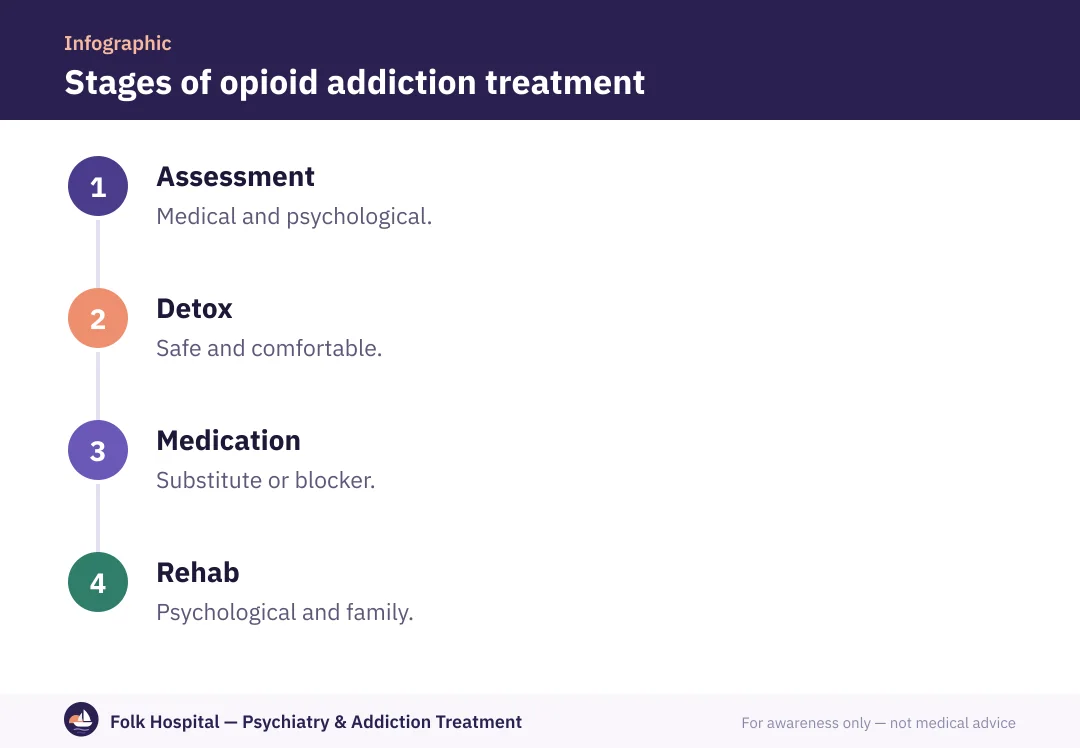
- Full assessmentThe doctor asks about the substance, amount, route and length of use, checks the heart, liver and kidneys, orders tests including hepatitis screening where there's been injecting, and assesses mental state and suicide risk.
- Medical withdrawal (detox)Withdrawal symptoms are eased with suitable medicines while vital signs, sleep and fluids are monitored, until the peak has safely passed.
- Long-term medicationDepending on the case, a medical substitution treatment or a relapse-blocking treatment after detox is chosen.
- Psychological and behavioural rehabilitationIndividual and group sessions to understand triggers, build refusal skills and treat accompanying depression or anxiety.
- Family and dischargeEducating the family and writing a discharge plan that sets out follow-up and early warning signs.
03What happens on the first day?
Many families put off treatment because they don't know what to expect on admission. This is what usually happens in the first hours:
- A calm, confidential welcome: basic details are taken and the patient's rights and house rules are explained.
- A detailed history: the last dose and when it was taken, any other substances used with it, chronic illnesses and current medicines.
- Examination and vital signs: blood pressure, pulse, temperature and oxygen level, plus a urine drug screen to see everything in the system.
- Blood tests: blood count, liver and kidney function, and hepatitis screening where needed.
- Measuring withdrawal severity: the team uses a validated tool such as the COWS scale to score symptoms, so medicines are adjusted to real need rather than guesswork.
- A first-day plan: fluids and light meals, symptom medicines and regular checks through the night.
04Withdrawal: what happens and how long does it last?
Withdrawal timing depends on how long the substance stays in the body:
| Substance | Symptoms start | Peak | Approximate acute phase |
|---|---|---|---|
| Heroin and morphine | 8 to 24 hours | Days 2 and 3 | 5 to 7 days |
| Tramadol | 12 to 24 hours | Days 2 to 4 | About a week, sometimes longer |
| Methadone | 24 to 48 hours | Days 3 to 8 | Two to three weeks |
These are approximate figures; dose, length of use and health change them. After the acute phase, protracted symptoms such as insomnia, low mood and cravings can last weeks or months, the riskiest period for relapse, so treatment doesn't end when the drug leaves the body.
Opioid withdrawal is painful but rarely fatal in itself in a healthy person. The real danger comes from dehydration with vomiting and diarrhoea, from mixing other substances such as sedatives and alcohol, and from returning to use after tolerance has dropped. With tramadol specifically, seizures can occur at high doses, another reason for medical supervision.
Read more in opioid withdrawal and our detox programme.
05Does treatment differ by substance?
The core path is the same, but each substance has points the doctor watches for:
- Heroin: often high doses and injecting or smoking, so screening for hepatitis and HIV matters, along with particular attention to overdose risk after detox. Details in heroin addiction treatment.
- Tramadol: the most widespread in Egypt, combining an opioid effect with an effect on serotonin. High doses can cause seizures, and its withdrawal sometimes brings stronger anxiety than usual. Read tramadol addiction treatment.
- Tapentadol: works much like tramadol and needs a controlled withdrawal with mood follow-up. Read tapentadol addiction treatment.
- Prescription painkillers and codeine: many patients began with real pain, so they need a pain plan alongside the withdrawal plan, and sometimes a gradual taper rather than stopping at once.
- Fentanyl and its analogues: extremely potent, with a higher risk of breathing stopping, so they should never be handled without direct medical supervision.
06Medication: the main options
No single medicine suits everyone; the choice is a medical decision based on the substance, severity of dependence, previous attempts and the patient's preference.
Medical substitution treatment
- Methadone or buprenorphine at a stable dose set by the doctor.
- Prevents withdrawal and eases cravings without a high.
- Shown in studies to reduce relapse and overdose deaths.
- Needs regular attendance and long-term follow-up.
Blocking treatment after detox
- Naltrexone blocks opioid receptors so the drug has no effect.
- Starts days after detox is complete, to avoid sudden withdrawal.
- Suits people with strong motivation and a supportive family.
- Isn't addictive, but success depends on adherence.
During detox the doctor uses medicines to ease symptoms, not to replace the drug, such as clonidine to calm sweating and anxiety, and medicines for diarrhoea, cramps and insomnia as needed. All of this is given at controlled doses under monitoring, not from prescriptions shared online.
The availability of some of these medicines, and the rules for dispensing them, vary between countries, so the doctor chooses the right option within what's available and permitted. The World Health Organization recommends that naloxone, a medicine that reverses an overdose, be available to people likely to witness one.
Warning
Don't attempt opioid withdrawal at home with sedatives or sleeping pills bought without a prescription. Mixing sedatives with opioids still in the body is one of the commonest causes of slowed breathing and death.
07Psychological rehabilitation: why detox alone isn't enough
Clearing the drug from the body treats physical dependence only. What drove the person to use, and what pulls them back, needs structured psychological work:
- Cognitive behavioural therapy: recognising the triggers and thoughts that come before cravings, and learning practical alternatives.
- Motivational interviewing: strengthening the patient's own motivation to change rather than imposing it.
- Contingency management: tangible rewards for engagement and negative test results, one of the best-evidenced behavioural approaches.
- Group therapy: breaking isolation and shame, and learning from others' experience.
- Treating co-occurring conditions: many people with opioid addiction have depression, anxiety or past trauma, and ignoring these raises relapse. Read about dual diagnosis.
- Involving the family: sessions that help families support without enabling, and set clear boundaries. See our family programme.
08Situations that need a tailored plan
Pregnancy
Stopping opioids suddenly during pregnancy can put the baby at risk, so international guidance generally recommends a specialist medical plan, often a stable substitution treatment rather than rapid withdrawal, with shared care between the addiction doctor and the obstetrician. The newborn may need monitoring for withdrawal after birth. Read drugs and pregnancy.
Teenagers and young adults
A teenager needs an assessment that includes the family and school, a stronger focus on family therapy and alternative activities, and particular care in choosing medicines. Read teenagers and drugs.
Chronic pain
If dependence began with real pain, stopping the painkiller without another pain plan pushes the patient back. So pain is treated with non-opioid medicines, physiotherapy and psychological techniques alongside withdrawal.
A co-occurring mental illness
Severe depression, bipolar disorder or suicidal thoughts usually call for residential care and a psychiatrist reviewing the patient daily, because the first days of withdrawal can temporarily worsen these symptoms.
09Residential or outpatient?
Outpatient care may suit
- Relatively recent use at lower doses.
- No injecting and no previous overdose.
- A stable home, a supportive family and no drugs in the environment.
- No severe mental illness.
Residential care is better when
- Heroin, high-dose tramadol or injecting is involved.
- Previous attempts failed or relapses keep happening.
- Opioids are mixed with sedatives or alcohol.
- There's severe depression, suicidal thoughts or health problems.
A residential stay usually ranges from a few weeks to three months depending on the case, followed by outpatient follow-up for months. Evidence suggests people who complete an adequate course and keep up follow-up do better than those in very short programmes. See Folk's treatment programmes, residential care and outpatient care.
10How to choose the right place for treatment
Before deciding, ask clearly about these points:
- Licensing: is the place licensed as a medical facility for psychiatry and addiction treatment?
- The team: is there a psychiatrist specialising in addiction, and 24-hour nursing?
- Medical detox: is withdrawal managed with medicines and monitoring, or with deprivation and force?
- A written plan: do you get a clear treatment plan covering length and goals?
- Rehabilitation and follow-up: is there individual and group therapy and an aftercare programme?
- Dignity and rights: is the patient's privacy respected, with no humiliation or violence?
Places promising detox "in three days", a "100% guaranteed" cure, or relying on confinement alone are a warning sign. Read our full guide: how to choose an addiction treatment centre.
11Is treatment confidential?
Yes. A patient's medical information is confidential, seen only by the treating team and anyone the patient authorises, within what the law allows. Many families fear the legal side and delay treatment, yet seeking treatment voluntarily is the safest route. For the legal position in Egypt, read addiction treatment and the law in Egypt.
12Common myths about opioid treatment
The myth
- Three days of detox means you're cured.
- Methadone and buprenorphine are just a substitute addiction.
- Someone who relapses isn't worth treating.
- Willpower alone is enough.
The reality
- Detox is only the first step; rehabilitation and follow-up are what prevent a return.
- They're approved medical treatments that reduce relapse and death when supervised.
- Relapse is common in chronic illness and means adjusting the plan, not abandoning it.
- Addiction changes brain chemistry; structured treatment gives willpower a real chance.
Read more in why addiction treatment sometimes fails.
13Preventing relapse and overdose
Relapse is common in opioid addiction, as in other chronic illnesses, and it's a signal to adjust the plan, not proof of failure. Most importantly, families should know the most dangerous moment: the days and weeks after stopping, because the body loses tolerance quickly, and going back to the old dose can be fatal.
- Extreme drowsiness or not responding to their name.
- Very slow breathing, strange snoring or breathing that stops.
- Blue lips or fingernails.
- Pinpoint pupils.
Call an ambulance on 123 immediately, place the person on their side and don't leave them alone.
Ambulance: 123A relapse-prevention plan includes knowing personal triggers, a structured daily routine, regular follow-up with the doctor, staying on prescribed medication and a support network of family or recovery groups. Read our relapse prevention guide and cravings.
The first 90 days after discharge
These three months carry the highest risk, and simple steps help:
- Week onea follow-up appointment booked before discharge, any drugs or equipment removed from the home, and contact with using friends cut off.
- Month oneweekly sessions, staying on medication, regular sleep and meal times, and daily physical activity.
- Months two and threea gradual return to work or study, joining a support group, and reviewing the relapse-prevention plan with the therapist.
See our aftercare programme and the family guide to life after rehab.
Signs treatment is on the right track
- More regular sleep and a better appetite after the first weeks.
- Cravings that are weaker and shorter, and easier to handle.
- More honesty with the family, and keeping to appointments and medication.
- Renewed interest in work, study or hobbies.
- Consistently negative follow-up tests.
14How treatment works at Folk
We start with a confidential assessment of the patient and family, then write a treatment plan setting out the level of care, length of detox, proposed medication and rehabilitation goals. The doctor reviews symptoms daily in the early phase, therapists lead rehabilitation and relapse prevention, and the social worker prepares the discharge and follow-up plan with the family. If the person is refusing treatment, we help the family first with a consultation on how to convince someone to get treatment.
؟Frequently asked questions
How long does opioid addiction treatment take?
Detox usually takes 5 days to two weeks, a residential stay a few weeks to three months depending on the case, then outpatient follow-up continues for months. Long-term medication may continue longer if the doctor advises.
Are methadone and buprenorphine just a substitute addiction?
No, they're approved medical treatments given at stable doses under supervision; they prevent withdrawal and cravings without a high and reduce relapse and overdose deaths, unlike uncontrolled use.
Can tramadol addiction be treated at home?
In selected low-dose cases with regular medical follow-up, outpatient treatment may be possible, but high doses carry a seizure risk, so the decision needs a medical assessment.
Is heroin withdrawal dangerous?
It's very painful but rarely fatal in a healthy person. The dangers are dehydration, mixing sedatives and returning to use after tolerance drops, so supervised detox is advised.
What is the success rate of opioid addiction treatment?
Outcomes improve greatly with completing treatment, continuing follow-up and suitable medication. If relapse happens, it means adjusting the plan, not that treatment failed.
Can opioid addiction be treated during pregnancy?
Yes, but with a specialist medical plan; stopping suddenly can harm the baby, so a stable substitution treatment with shared care between the addiction doctor and the obstetrician is often preferred.
Is addiction treatment confidential?
Yes, medical information is confidential and seen only by the treating team and anyone the patient authorises, within the law. Seeking treatment voluntarily is the safest route.
What can the family do if the person refuses treatment?
Start with a calm conversation without blame, and seek family counselling to learn persuasion skills and boundary-setting. Read our guide to convincing someone to get treatment.
How long does opioid addiction treatment take?
Detox usually takes 5 days to two weeks, a residential stay a few weeks to three months depending on the case, then outpatient follow-up continues for months. Long-term medication may continue longer if the doctor advises.
Are methadone and buprenorphine just a substitute addiction?
No, they're approved medical treatments given at stable doses under supervision; they prevent withdrawal and cravings without a high and reduce relapse and overdose deaths, unlike uncontrolled use.
Can tramadol addiction be treated at home?
In selected low-dose cases with regular medical follow-up, outpatient treatment may be possible, but high doses carry a seizure risk, so the decision needs a medical assessment.
Is heroin withdrawal dangerous?
It's very painful but rarely fatal in a healthy person. The dangers are dehydration, mixing sedatives and returning to use after tolerance drops, so supervised detox is advised.
What is the success rate of opioid addiction treatment?
Outcomes improve greatly with completing treatment, continuing follow-up and suitable medication. If relapse happens, it means adjusting the plan, not that treatment failed.
What can the family do if the person refuses treatment?
Start with a calm conversation without blame, and seek family counselling to learn persuasion skills and boundary-setting. Read our guide to convincing someone to get treatment.
Sources and references
- Guidelines for the psychosocially assisted pharmacological treatment of opioid dependence — World Health Organization
- Opioid overdose — fact sheet — World Health Organization
- Medications to Treat Opioid Use Disorder — Research Report — National Institute on Drug Abuse (NIDA)
- Opioids — research topic — National Institute on Drug Abuse (NIDA)
- Drug misuse in over 16s: opioid detoxification (CG52) — National Institute for Health and Care Excellence (NICE)
- Opiate and opioid withdrawal — U.S. National Library of Medicine — MedlinePlus

A psychiatrist specialising in addiction and mental illness in adults and adolescents, with a focus on dual diagnosis.
For awareness only — not a substitute for medical advice. Editorial policy · View profile