01Why does relapse happen?
The brain keeps a strong memory of the drug even months after stopping. Sometimes an old place, a friend from using days or a stressful situation is enough to trigger that memory and wake the craving. So preventing relapse doesn't rely on willpower but on planning ahead for what the person will do when the craving comes.
Scientific bodies compare addiction to chronic illnesses such as diabetes and high blood pressure: just as someone with diabetes needs follow-up after their blood sugar is controlled, a person in recovery needs follow-up after intensive treatment ends. In this context, relapse is a signal to adjust the plan, not proof that treatment failed.
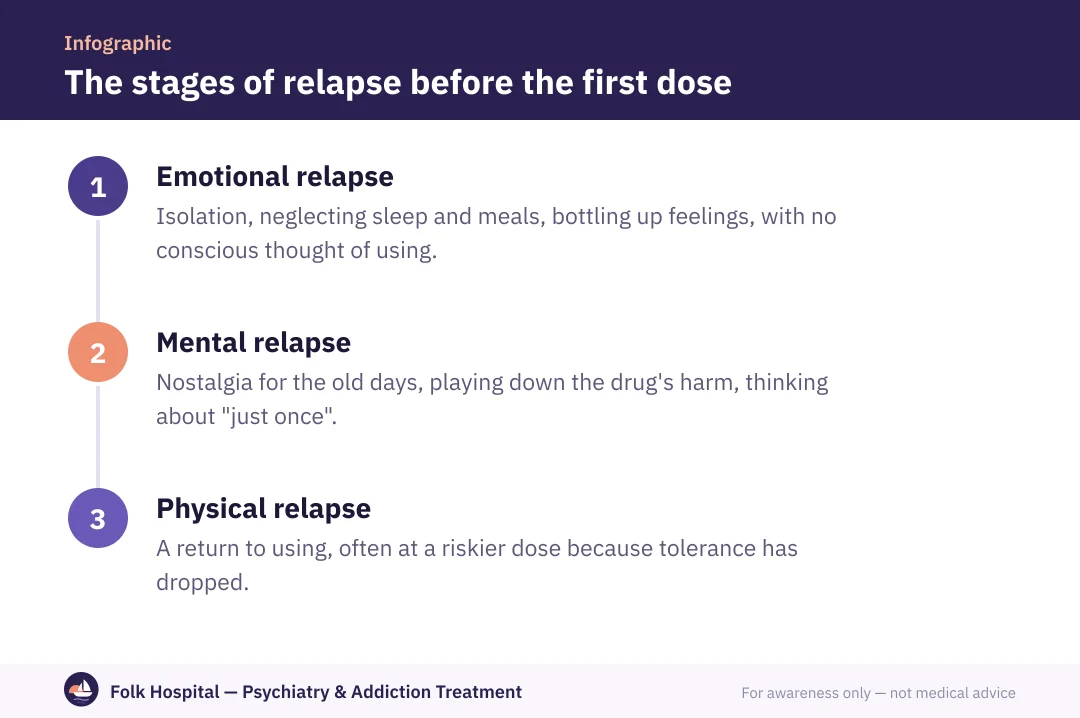
02Relapse starts before using
Therapists describe relapse as a process with three stages, and the earlier it's spotted the easier it is to stop:
- Emotional relapsethe person isn't thinking of using, but neglects sleep and food, bottles up feelings and drifts away from sessions.
- Mental relapsethe inner struggle begins: nostalgia for the drug, playing down its risks, planning "just once".
- Physical relapseactually using again, the last link in a chain that could have been broken earlier.
03What are the early warning signs?
Signs worth watching
- Dropping out of follow-up sessions or support groups.
- Going back to old using friends or places.
- Disturbed sleep and increased irritability.
- Talking about the drug with nostalgia or playing it down.
- Lying about small details, or money going missing.
Read more in our relapse guide and cravings and how to handle them.
04What does aftercare at Folk include?
Regular sessions
Scheduled meetings with a therapist to review challenges and adjust the plan.
Support groups
A weekly meeting with others in recovery to share experience.
Regular testing
Testing with the patient's consent that protects them and reassures the family.
A contact line
A number to call when cravings are strong or in a crisis.
| Period after discharge | Session frequency | Focus |
|---|---|---|
| First month | Weekly | Daily routine, avoiding triggers, sleep |
| Months 2–3 | Every two weeks | Returning to work or study, relationships, handling stress |
| Months 4–12 | Monthly | Settling the new way of life, planning ahead |
05A personal relapse-prevention plan
Before discharge, each patient writes their own plan with the therapist, and it's reviewed at every follow-up session. It includes:
- A list of triggers: people, places, times and feelings linked to using.
- A plan for each trigger: what will I do if I meet an old friend? If I'm bored on a Friday? If I argue with my wife?
- A contact list: at least three people to call when a craving hits.
- Ready alternatives: exercise, a call, leaving the place, or a breathing exercise, because a craving usually eases within minutes if it isn't acted on.
- Their own warning signs, and what they and their family will do when they appear.
06Building a life that doesn't need the drug
Aftercare isn't only about "avoiding using" but about building days full of things worth protecting:
- A steady routine for sleep and meals, because exhaustion and hunger are among the strongest triggers.
- Work or study that gives the day meaning, returning gradually rather than all at once.
- Regular physical activity that improves mood and sleep.
- New, supportive relationships in place of using friends.
- Treating any ongoing mental health condition, because untreated depression and anxiety are major causes of relapse.
07If a slip happens
A slip is a moment of danger, but not the end
Stop at once, contact your therapist the same day and don't hide what happened. Be especially aware that tolerance drops after a period off the drug, so going back to the old dose can cause a dangerous overdose, particularly with heroin, tramadol and alcohol.
After a slip we look together at what led up to it, adjust the plan and increase sessions for a while. If slips repeat or become a relapse, we may recommend a short period of residential care.
08The family's role in aftercare
- Don't treat the person as a permanent suspect, or as if nothing happened.
- Respect the agreements written before discharge, and keep to your part in them.
- Notice early signs and talk about them calmly, or contact the team.
- Attend the spaced-out family sessions. Read our guide to life after rehab.
؟Frequently asked questions
What should I do if the person relapses?
Don't treat it as final failure, and don't ignore it either. Contact the treatment team straight away for an assessment; extra sessions may be enough, or a short residential stay may be needed.
How often are aftercare sessions?
Usually weekly in the first month after discharge, then every two weeks, then monthly until the end of the first year, with flexibility to suit the case.
Can I join aftercare if I was treated somewhere else?
Yes. We start with an assessment of your current situation and previous treatment plan, then set a suitable follow-up plan.
What's the difference between a slip and a relapse?
A slip is limited use that stops quickly with help sought; a relapse is a return to the previous pattern of use. Acting quickly after a slip stops it becoming a relapse.
Is regular testing compulsory?
It's done with the patient's consent and is part of the plan, because it gives them proof of progress, reassures the family and catches problems early.
When does aftercare end?
After about a year, sessions become very spaced out, but the door stays open for any session the person needs at any time.
Does someone in recovery need medicines after discharge?
Some continue a relapse-prevention medicine or treatment for a co-existing mental health condition; others don't. The doctor decides and reviews this at follow-up.
Sources and references
- Treatment Approaches for Drug Addiction — DrugFacts — National Institute on Drug Abuse (NIDA)
- Drug misuse in over 16s: psychosocial interventions (CG51) — National Institute for Health and Care Excellence (NICE)
- Alcohol-use disorders: diagnosis, assessment and management (CG115) — National Institute for Health and Care Excellence (NICE)
- Drug addiction: getting help — NHS (UK)

A specialist in psychological rehabilitation, behaviour modification and relapse prevention, with over 15 years in addiction programmes.
For awareness only — not a substitute for medical advice. Editorial policy · View profile