01Why does relapse happen?
After stopping, the drug leaves a "trace" in the brain: a strong memory linking it with relief or pleasure, and sensitivity to the cues tied to it. Daily factors add to this: stress, an argument, boredom, money to hand, or meeting an old friend. When these come together without a ready plan, the risk of going back rises.
That's why relapse is a known part of the course of chronic illnesses. Reviews by the US National Institute on Drug Abuse note that relapse rates in addiction are similar to those in illnesses such as asthma and high blood pressure when treatment stops.
02How does relapse begin?
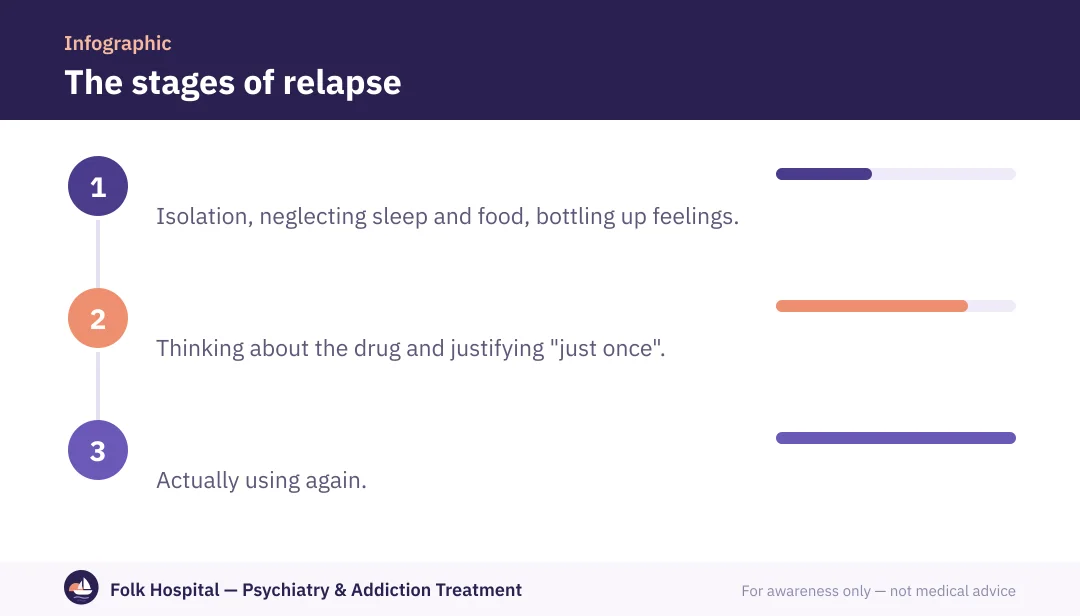
- Emotional relapsethe person isn't thinking of using, but bottles up feelings, neglects sleep and food, and drifts from sessions and support.
- Mental relapsean inner struggle begins: nostalgia for the drug, remembering only "the good times", playing down the risk, thinking of "just once".
- Physical relapseactually using again, the last link in a chain that could have been broken earlier.
03Early warning signs
Watch for these signs
- Dropping sessions, support groups or medication.
- Isolation, secrecy and increased irritability.
- Disturbed sleep and eating.
- Going back to using places or friends.
- Talking about the drug with nostalgia or playing it down.
- Lying about small details, or money going missing.
- Overconfidence: "I'm cured now and don't need follow-up."
04The commonest triggers
| Trigger | Example | Alternative |
|---|---|---|
| Negative feelings | Anger, sadness, loneliness, anxiety | Talking to someone supportive, writing, exercise |
| Positive feelings | Success or celebration | Celebrating in a new way and with safe people |
| Places and people | The old café or a using friend | Changing routes and places, and refusal skills |
| Exhaustion, hunger and lack of sleep | A long working day | A steady routine for sleep and meals |
| Money | Payday | Managing money with a trusted person at first |
Read about cravings and how to handle them.
05What to do if it happens
- Stop at oncea slip doesn't mean "everything's lost" and you might as well carry on.
- Ask for help todaycall your therapist, doctor or support person; don't wait.
- Watch out for overdosetolerance falls after stopping, and the old dose can be dangerous.
- Understand what happenedwhat came in the days before the slip? What was the trigger? What was missing from the plan?
- Adjust the planmore sessions, medication, or a short residential stay if needed.
- After a period off the drug, tolerance falls, and going back to the old dose, especially of heroin, tramadol, alcohol or sedatives, can cause an overdose. Extreme drowsiness, slow breathing or blue lips need an ambulance on 123 immediately.
Don't leave the person alone, and place them on their side until the ambulance arrives.
Ambulance: 12306The family's role
- No blame or insults: they push people to lie and hide, and delay asking for help.
- No ignoring it: silence lets relapse deepen.
- Keep the agreed boundaries, and contact the treatment team.
- Protect yourself and the rest of the family if violence or danger appears.
Read our guide to life after rehab.
07How do we reduce relapse risk?
- A written plan covering triggers, alternatives and contact numbers.
- Regular follow-up in the first months. Read about our aftercare programme.
- Treating ongoing depression and anxiety.
- Relapse-prevention medicines for those they suit, depending on the drug.
- A full life: work, exercise, healthy relationships and goals.
؟Frequently asked questions
Does relapse mean treatment failed?
No. Relapse is common in chronic illnesses, and its rates in addiction are similar to illnesses such as asthma and high blood pressure. It's a sign that the plan needs adjusting or intensifying.
What's the difference between a slip and a relapse?
A slip is limited use that stops quickly with help sought; a relapse is a return to the previous pattern of use. Handling a slip well prevents a relapse.
When is relapse risk highest?
In the first months after discharge, during major stress, at social events, when money is available, when returning to old places and friends, and when follow-up or medication stops.
What should the family do if the person relapses?
Stay calm, make sure they're safe, contact the treatment team straight away, avoid blame and insults, and keep to the agreed boundaries.
Does relapse take someone back to square one?
No. The skills and understanding they've gained aren't lost, and returning to treatment after relapse is often quicker and deeper.
Sources and references
- Treatment Approaches for Drug Addiction — DrugFacts — National Institute on Drug Abuse (NIDA)
- Drug misuse in over 16s: psychosocial interventions (CG51) — National Institute for Health and Care Excellence (NICE)
- Alcohol-use disorders: diagnosis, assessment and management (CG115) — National Institute for Health and Care Excellence (NICE)
- Opioid overdose — fact sheet — World Health Organization

A specialist in psychological rehabilitation, behaviour modification and relapse prevention, with over 15 years in addiction programmes.
For awareness only — not a substitute for medical advice. Editorial policy · View profile