01Why has tapentadol spread?
Tapentadol is an opioid painkiller that works in two ways: on opioid receptors, and on noradrenaline in the brain. So some users feel energy and a lift in mood alongside pain relief, just as with tramadol. Many moved to it after tramadol, switch between the two, or mix them.
Read about causes of tapentadol addiction and its signs.
02How is it treated?
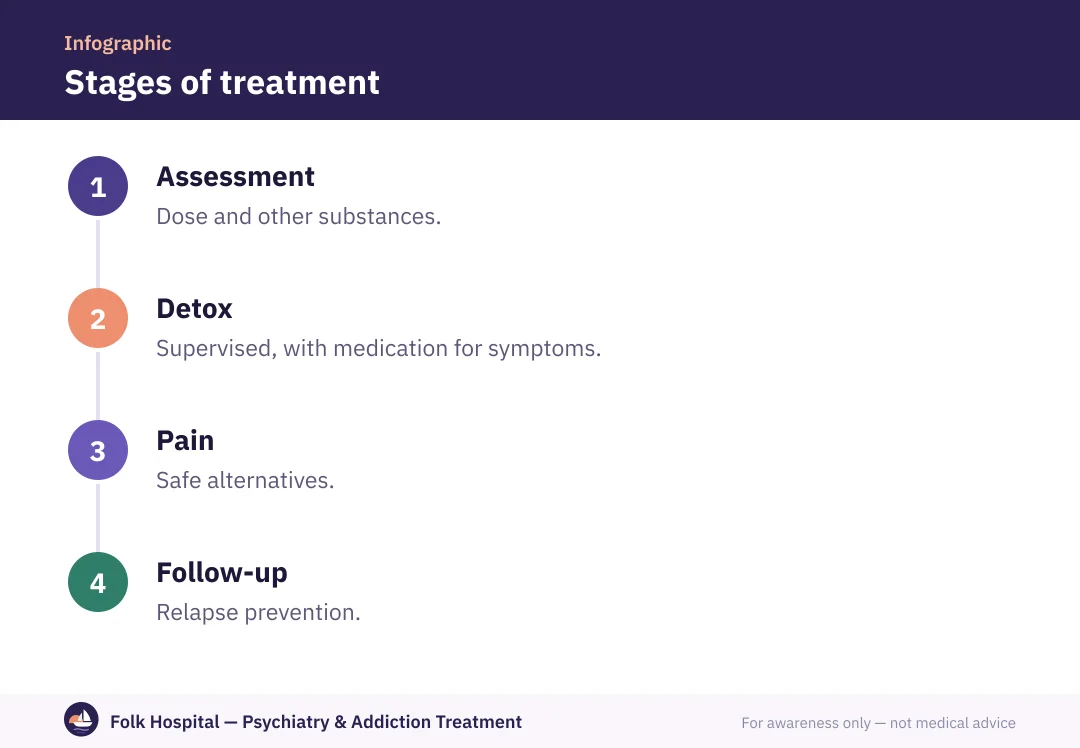
- Assessmentdaily dose and source of tablets, tramadol, pregabalin or sedatives, seizure history and mental state.
- Detox or taperingdepending on the dose, a gradual taper or supervised detox with symptom medicines.
- Treating other substancesone plan covering every substance together.
- A pain planfor anyone who started because of genuine pain.
- Rehabilitation and follow-upCBT, treating anxiety and depression, and relapse prevention.
03What happens in withdrawal?
| Type | Symptoms |
|---|---|
| Opioid symptoms | Bone and muscle pain, diarrhoea, runny nose, sweating, insomnia |
| Mood symptoms | Anxiety, irritability, mood swings, low energy, sometimes low mood |
| Protracted symptoms | Insomnia and intermittent cravings for weeks |
The doctor monitors mood and thoughts during this period, and treats anxiety and depression if they persist. Read about tapentadol withdrawal.
Dangerous combinations
Tapentadol with tramadol or some antidepressants can raise the risk of seizures or serotonin syndrome, and with sedatives, pregabalin or alcohol it raises the risk of slowed breathing. Extreme drowsiness, seizures, or fever with confusion need an ambulance on 123 immediately.
04When tapentadol replaced tramadol
When someone moves from tramadol to tapentadol, they usually haven't dealt with the original reasons: exhaustion, sexual performance, anxiety or pain. So rehabilitation works on these reasons, as in tramadol addiction treatment, so they don't move on to a third drug.
05An alternative pain plan
- Non-opioid medicines suited to the type of pain.
- Physiotherapy and exercise.
- CBT for chronic pain.
- Follow-up with an orthopaedic or neurology specialist.
06Residential or outpatient?
Outpatient care may be enough
- Moderate doses.
- No tramadol or sedatives alongside.
- No previous seizures.
Residential care is better with
- High doses or mixing drugs.
- Previous seizures.
- Severe depression or failed previous attempts.
Read about the harms of tapentadol and opioid addiction treatment.
؟Frequently asked questions
Is tapentadol milder than tramadol?
Not necessarily. It's a strong opioid that causes dependence and withdrawal, and doses used outside prescriptions are usually high.
How long does tapentadol treatment take?
Detox or tapering takes one to two weeks, rehabilitation one to two months, and follow-up several months.
I use tramadol and tapentadol together. Are they treated together?
Yes, with a plan covering both drugs and the seizure risk, and a residential stay is usually safer.
Does tapentadol cause seizures?
It can, especially at high doses or with other drugs that lower the seizure threshold, so this risk is accounted for in the detox plan.
Can treatment be done as an outpatient?
At moderate doses with no other drugs, yes, with a structured taper and follow-up. Otherwise residential care is safer.
Sources and references
- Prescription Medicines — research topic — National Institute on Drug Abuse (NIDA)
- Opioids — research topic — National Institute on Drug Abuse (NIDA)
- Guidelines for the psychosocially assisted pharmacological treatment of opioid dependence — World Health Organization
- Drug misuse in over 16s: opioid detoxification (CG52) — National Institute for Health and Care Excellence (NICE)

A psychiatrist specialising in addiction and mental illness in adults and adolescents, with a focus on dual diagnosis.
For awareness only — not a substitute for medical advice. Editorial policy · View profile