01What is a craving?
A craving is a strong, sudden urge to use, sometimes with physical sensations such as a knotted stomach or racing heart, and insistent thoughts of "just once". It's one of the things that most worries people in recovery and their families, but it's a normal part of recovery, especially in the first months.
02Why do cravings happen?
The brain links the drug with many things that surrounded using: places, people, times, smells and feelings. When these appear after stopping, the brain calls up the old "expectation" and a craving appears. With abstinence and time, the link gradually weakens. Read about brain chemistry and addiction.
03What are the commonest triggers?
| Type | Examples |
|---|---|
| Feelings | Stress, anger, sadness, loneliness, boredom, and sometimes joy and celebration |
| Places | The street, café or room where they used |
| People | Using friends or the dealer |
| Times | Weekends, after work, or at night |
| Physical states | Hunger, exhaustion, lack of sleep and pain |
| Objects | Money, drug equipment and scenes in films |
04How to handle a wave of craving
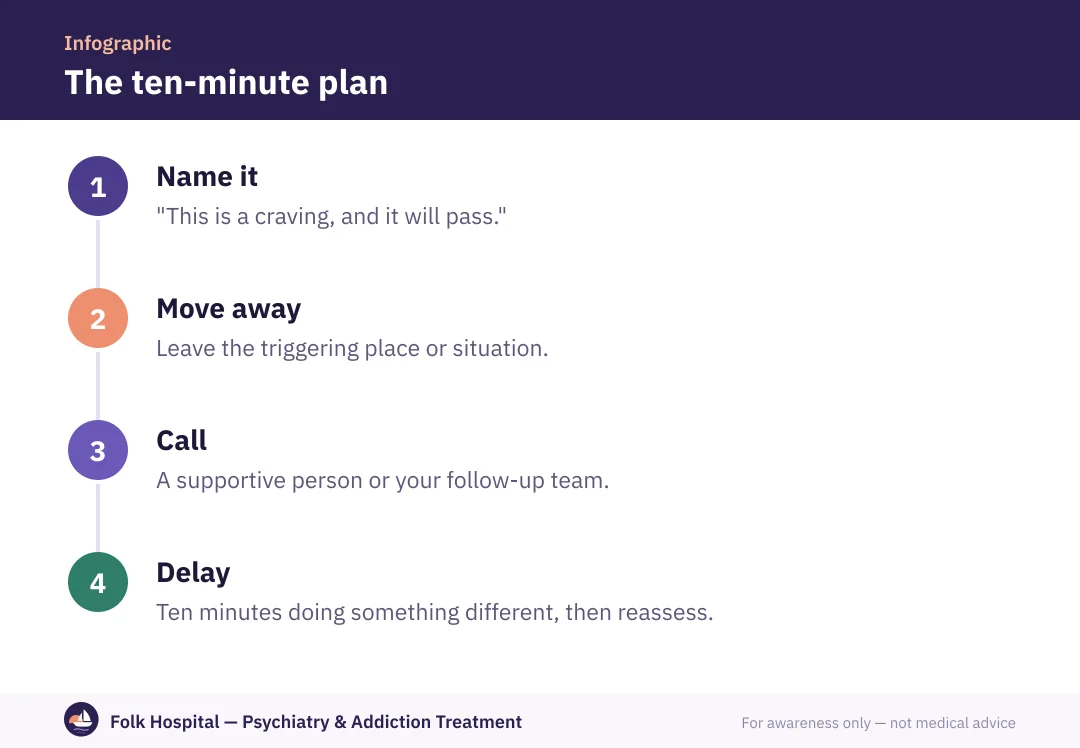
- Name ittell yourself, "This is a craving, and it will pass." Naming the feeling reduces its grip.
- Move away from the triggerleave the place, end the call or put the money away.
- Delayagree with yourself to wait twenty minutes; the wave usually settles before then.
- Switch activitya brisk walk, a shower, a breathing exercise, or something that occupies your hands and mind.
- Call someoneyour therapist, a supportive friend or a family member.
- Remember why you stoppedread your written list of reasons and what you lost to the drug.
05Surfing the urge
One technique taught in cognitive behavioural therapy is called urge surfing: instead of fighting or fearing the craving, you notice it as a wave that rises, peaks and falls. You watch the sensations in your body and breathe slowly without acting. With practice, the brain learns that a craving is a bearable feeling, and its power fades.
06An emergency card in your pocket
Write a small card with your therapist to carry everywhere:
- Three numbers to call.
- Three quick activities to do.
- Three reasons for recovery.
- A safe place to go.
07When do you need extra help?
Ask for help if
Cravings are intense and daily despite your plan, you start thinking about the details of getting the drug, you've stopped follow-up, or cravings come with depression or severe insomnia. You may need more sessions, a medicine that reduces cravings for some substances, or a review of your relapse-prevention plan.
Read about relapse and its signs and our aftercare programme.
08For families
If someone in recovery tells you they're having cravings, that's a sign of trust, not a sign of danger. Listen without panic or blame, encourage them to use their plan or call their therapist, and help them move away from the trigger.
؟Frequently asked questions
How long does a craving last?
A single wave usually settles within minutes if not acted on. How often cravings come falls gradually over weeks and months of abstinence, though one may appear long afterwards with a strong trigger.
Does a craving mean I'll relapse?
No. A craving is a feeling; relapse is a decision and a behaviour. Many people in recovery have cravings without using, because they have a plan.
Are there medicines that reduce cravings?
Yes, for some substances, such as medicines for alcohol and opioid addiction decided by the doctor. For other substances, treatment relies on behavioural skills.
What should I do if a craving hits at night?
Get out of bed and change place, drink water, do a breathing exercise, write down what you're feeling and call your support person if possible. Remind yourself the wave will pass.
Sources and references
- Treatment Approaches for Drug Addiction — DrugFacts — National Institute on Drug Abuse (NIDA)
- Drug misuse in over 16s: psychosocial interventions (CG51) — National Institute for Health and Care Excellence (NICE)
- Alcohol-use disorders: diagnosis, assessment and management (CG115) — National Institute for Health and Care Excellence (NICE)
A specialist in psychological rehabilitation, behaviour modification and relapse prevention, with over 15 years in addiction programmes.
For awareness only — not a substitute for medical advice. Editorial policy · View profile