01Types of groups
| Type | Aim |
|---|---|
| CBT groups | Learning specific skills |
| Addiction recovery groups | Relapse prevention and support |
| Family groups | Understanding the illness and supporting the patient |
| Skills groups | Emotion regulation and communication |
02Session rules
- Confidentialitywhat's said in the group stays there.
- Respectno interrupting or judging.
- Commitmentregular attendance.
- Optional sharingas much as is comfortable.
Individual only
- More privacy.
- Focus on your case.
With group
- Peer support.
- Real-life social practice.
Read psychiatric therapies and the psychiatric hospital. Also read social anxiety and treatment programmes.
؟Frequently asked questions
What is group therapy?
Sessions led by a therapist with a small group facing similar problems, to learn skills and support each other.
What are its benefits?
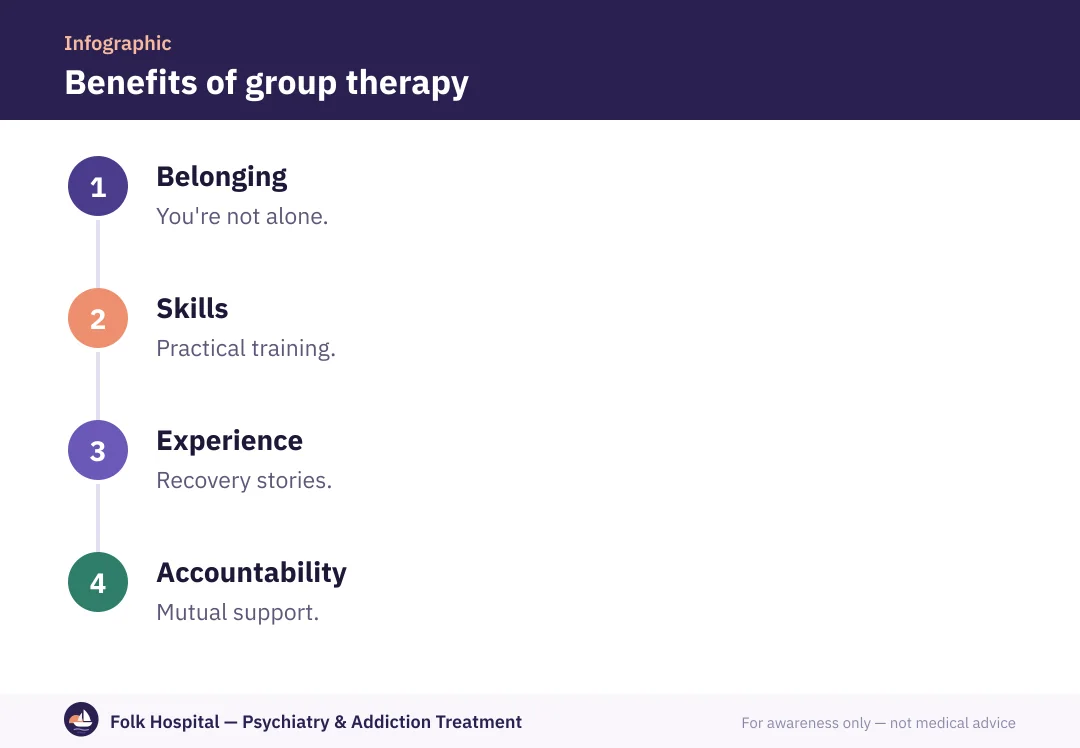
Not feeling alone, learning from others and practising social skills in a safe place.
Do I have to talk about everything?
No. Share as much as feels comfortable; comfort grows over time.
Are sessions confidential?
Yes. Confidentiality is a rule kept by the therapist and participants.
How does it differ from support groups?
Group therapy is led by a therapist with a treatment plan; support groups are run by members themselves.
Does it suit social anxiety?
Yes, and it can be very helpful despite a hard start.
Sources and references
- Psychotherapies — National Institute of Mental Health (NIMH)
- Types of talking therapies — NHS (UK)

A specialist in psychological rehabilitation, behaviour modification and relapse prevention, with over 15 years in addiction programmes.
For awareness only — not a substitute for medical advice. Editorial policy · View profile