Important
The information on this page is general and for awareness only, not legal advice, and laws can change. For any specific legal situation, consult a specialist lawyer.
01What does the law say about seeking treatment?
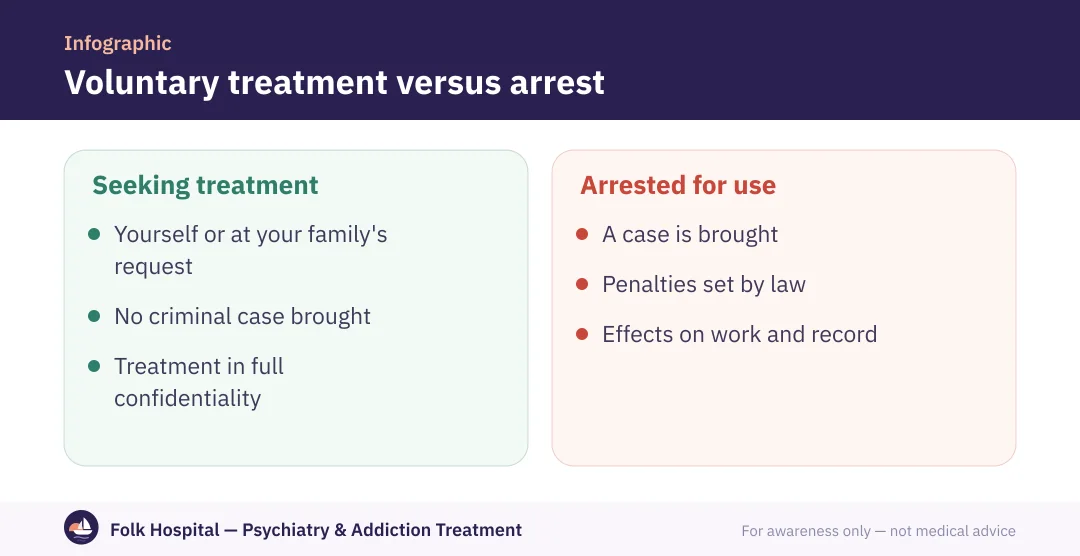
Law No. 182 of 1960 on combating narcotics, as amended, governs how drug use is handled in Egypt. It criminalises use and possession for use, but it also adopts the idea that a person who uses drugs is a patient to be encouraged into treatment before being caught. So several articles open the door to treatment:
| Article | In brief |
|---|---|
| 37 bis (a) | No criminal case is brought against someone who comes forward of their own accord to the competent committee for treatment, and they remain in treatment until the committee decides otherwise |
| 37 bis (b) | A spouse, parent or child may request the person's treatment, with set safeguards and procedures |
| 37 bis (c) | Information reaching those who treat addiction is confidential, and disclosing it is punishable |
| 37 bis (d) | Establishes a special fund for combating and treating addiction |
| 37 (second paragraph) | Instead of carrying out the sentence for use offences, a court may order someone proven to be addicted into a treatment facility |
02Important conditions to know
- Coming forward voluntarily: protection from prosecution depends on the person coming forward of their own accord to the competent committee before being caught.
- Handing over the drug: the protection doesn't apply to anyone holding a drug they didn't hand over to the authorities.
- Staying in treatment: anyone who leaves before the committee decides treatment has ended must pay the treatment costs.
- The competent committee: formed in each governorate and chaired by a judge, with representatives of the prosecution and relevant government bodies.
03Free treatment and the fund
The law establishes the Fund for Drug Control and Treatment of Addiction, which provides free, confidential treatment through the 16023 hotline. Read about free addiction treatment.
04What about treatment in a private hospital?
Seeking treatment at a licensed medical facility is essentially a medical decision, a patient's medical information is confidential, and the hospital doesn't report anyone who comes asking for treatment. But the specific legal protection in Article 37 bis (a) is tied to the route the law sets out through the competent committee. So if you have a pending case or legal situation, consult a lawyer before taking any step.
05What role does the Mental Health Care Law play?
Mental Health Care Law No. 71 of 2009 governs admission to and discharge from psychiatric hospitals, admission without consent, and patients' rights to dignity, confidentiality and knowing their treatment plan. Read about treatment without the patient's consent.
06Government employees
A 2021 law regulates drug testing of employees in government bodies and the consequences of a positive result. The effects vary by case, so consulting a lawyer is advised. In every case, early treatment before the problem grows is the best protection for health and work. Read about drug testing.
07Why does the law encourage treatment?
Because dealing with addiction through punishment alone doesn't solve the problem: people often leave punishment and go back to using, and may be more at risk of overdose. Treatment addresses the illness itself and protects the family and society. This is also the approach of international health bodies that regard addiction as a health condition needing treatment.
؟Frequently asked questions
Will the hospital tell the police if I come for treatment?
No. Medical information is confidential, and the law itself treats patient information held by those treating addiction as secrets whose disclosure is punishable. We're committed to full confidentiality.
Could I lose a government job because of drug use?
A 2021 law regulates drug testing of government employees and its consequences. For your own circumstances, it's best to consult a lawyer, and early treatment is the best course.
Does the law protect me if I ask for treatment myself?
The law provides that no criminal case is brought against someone who comes forward of their own accord to the competent committee for treatment, under conditions including not holding a drug they haven't handed over. For your case, consult a lawyer.
Can my family request my treatment?
Yes. The law allows a spouse, parents or children to apply for the person's treatment, with safeguards and procedures set by the authorities.
What happens if I leave treatment early on the legal route?
Under Article 37 bis (a), anyone who leaves treatment before the committee decides it has ended must pay the treatment costs, which can be recovered by administrative seizure.
Is this legal advice?
No. It's general information for awareness, and laws change, so for any specific situation consult a specialist lawyer.
Sources and references
- قانون رقم 182 لسنة 1960 في شأن مكافحة المخدرات (النص وفق آخر تعديل) — Egyptian law text

A psychiatrist specialising in addiction and mental illness in adults and adolescents, with a focus on dual diagnosis.
For awareness only — not a substitute for medical advice. Editorial policy · View profile