01Why are the first months decisive?
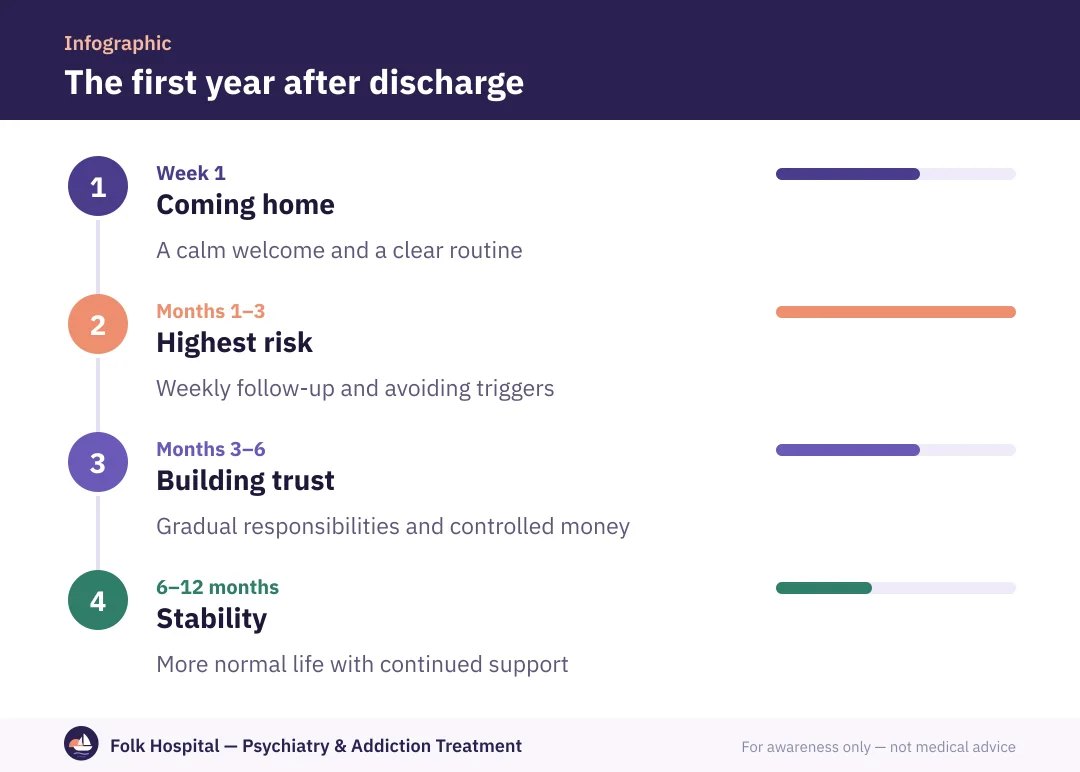
After discharge the person in recovery faces old triggers: the same places, friends and pressures, without the protection of the treatment centre. Relapse risk is highest in this period, so the family needs a clear plan. Read about relapse.
02The family's role step by step
- A calm welcomewithout judgement or constant reminders of the past.
- Sticking to the discharge planfollow-up appointments, medicines and support groups.
- Organising moneya set allowance agreed with the therapist.
- Changing the environmentremoving substances and unnecessary medicines from home, and avoiding friends who use.
- A daily routineregular sleep, gradual work or study, and physical activity.
- Rebuilding trustgradually, based on concrete actions.
03Support or surveillance?
Suffocating surveillance
Healthy support
- Constant searches and accusing questions | A clear agreement on the rules
- Constant reminders of the past | Celebrating progress, however small
- Banning every outing | Safe outings with supportive people
- An angry reaction to any mistake | Calm conversation and contact with the team
04Early signs of relapse
| Sign | What to do |
|---|---|
| Dropping follow-up or medicines | Contact the therapist |
| Returning to old friends | A calm talk about triggers |
| Secrecy, lying and asking for money | Review the money plan |
| Irritability and insomnia | May be strong cravings or depression; seek an assessment |
05An important warning
- After a period without use, the body's tolerance drops, especially for opioids such as heroin and tramadol. Going back to the old dose can cause a fatal overdose. If they're unresponsive or breathing slowly: ambulance 123 immediately. Read about overdose.
06Look after yourself too
The family needs support as well: family counselling sessions, time to rest and realistic expectations. Read about life after recovery and our programmes.
؟Frequently asked questions
Should I give them money after discharge?
Gradually and in measured amounts; ideally agree a money plan for the first months with the therapist.
What if they relapse?
Don't panic and don't ignore it. Contact the treatment team immediately. Relapse isn't final failure, and a quick return to treatment shortens the road.
Should they go back to the same friends and job?
Friends who use are among the biggest causes of relapse. A gradual return to work helps if the environment is safe.
How long is follow-up after discharge?
Usually at least a year of regular follow-up, more frequent in the first months.
What are the early signs of relapse?
Going back to old friends, secrecy, dropping follow-up, irritability, disturbed sleep and asking for money without a clear reason.
Sources and references
- Treatment Approaches for Drug Addiction — DrugFacts — National Institute on Drug Abuse (NIDA)
- Drugs, Brains, and Behavior: The Science of Addiction — National Institute on Drug Abuse (NIDA)
- Opioid overdose — fact sheet — World Health Organization
- Drug addiction: getting help — NHS (UK)

A specialist in psychological rehabilitation, behaviour modification and relapse prevention, with over 15 years in addiction programmes.
For awareness only — not a substitute for medical advice. Editorial policy · View profile