01Why do teenagers try drugs?
| Motive | What they need from you |
|---|---|
| Curiosity and wanting to experiment | Honest information before they hear it on the street |
| Peer pressure and wanting to belong | Refusal skills and alternative friends and activities |
| Escaping pressure from school or problems at home | Room to talk and emotional support |
| Anxiety, depression or ADHD | Early assessment and treatment |
02Why is the risk greater at this age?
The teenage brain keeps developing until about the mid-twenties. Areas for impulse control mature late, while the reward system is very active. So the earlier use starts, the higher the risk of addiction, and memory and concentration are affected. Read about the effects of cannabis.
03Prevention at home
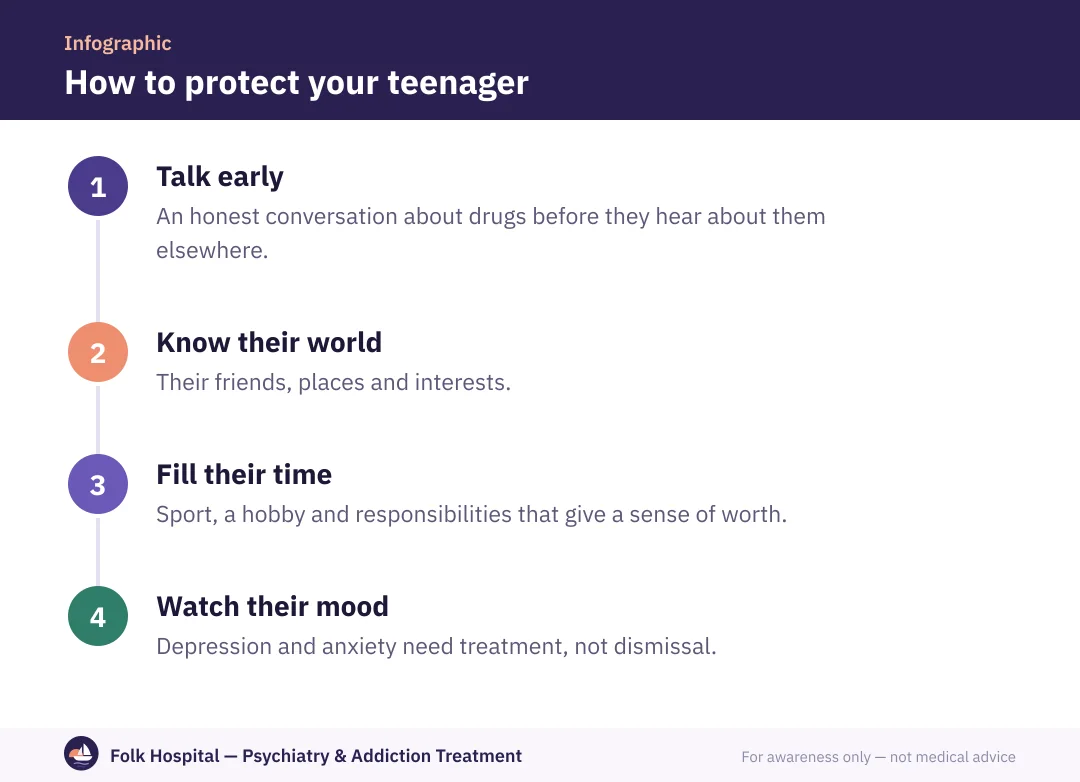
- A close relationshipdaily time to talk without lectures.
- Early, honest conversationabout drugs and their harms, suited to their age.
- Smart supervisionget to know their friends, where they go and their pocket money.
- Refusal skillspractise phrases for saying no without embarrassment.
- Role modelsparents' behaviour with smoking and medicines matters a lot.
- Watch mental healthanxiety and depression are among the main causes of use.
04If you find out they're using
A harmful reaction
A helpful reaction
- Shouting and hitting | Calm and a conversation at a good time
- Throwing them out | Clear boundaries while support stays
- Hiding and ignoring it | An early specialist assessment
- Exposing them to the family | Privacy and respect
Read about the signs of drug use, psychological changes in teenagers and preventing addiction.
- Unresponsiveness, seizures, severe agitation, or sudden strange behaviour after using a substance such as Strox.
؟Frequently asked questions
I found out my son tried cannabis. Is he addicted?
Not necessarily. But trying it is a signal that deserves a calm conversation and follow-up, and an assessment if it repeats or other changes appear.
Why are teenagers more vulnerable to addiction?
Because the brain areas for impulse control and decision-making mature late, while the reward system is very active at this stage.
Should I punish him?
Punishment alone usually increases secrecy. Clear boundaries and agreed consequences, with conversation and assessment, work better.
Which substances are most common among teenagers?
Smoking and vaping, cannabis, Strox, and some medicines such as tramadol and pregabalin.
Should I tell the school?
Working with the school counsellor can help with follow-up, while protecting your child's privacy and not exposing them in front of classmates.
Sources and references
- Parents & Educators — National Institute on Drug Abuse (NIDA)
- Drugs, Brains, and Behavior: The Science of Addiction — National Institute on Drug Abuse (NIDA)
- International Standards on Drug Use Prevention — United Nations Office on Drugs and Crime (UNODC)
- Cannabis (Marijuana) — research topic — National Institute on Drug Abuse (NIDA)

A specialist in psychological rehabilitation, behaviour modification and relapse prevention, with over 15 years in addiction programmes.
For awareness only — not a substitute for medical advice. Editorial policy · View profile