01What is Naltrexone?
Naltrexone binds to and blocks opioid receptors so opioids produce no high, and reduces dopamine release linked to drinking, weakening craving.
02Uses
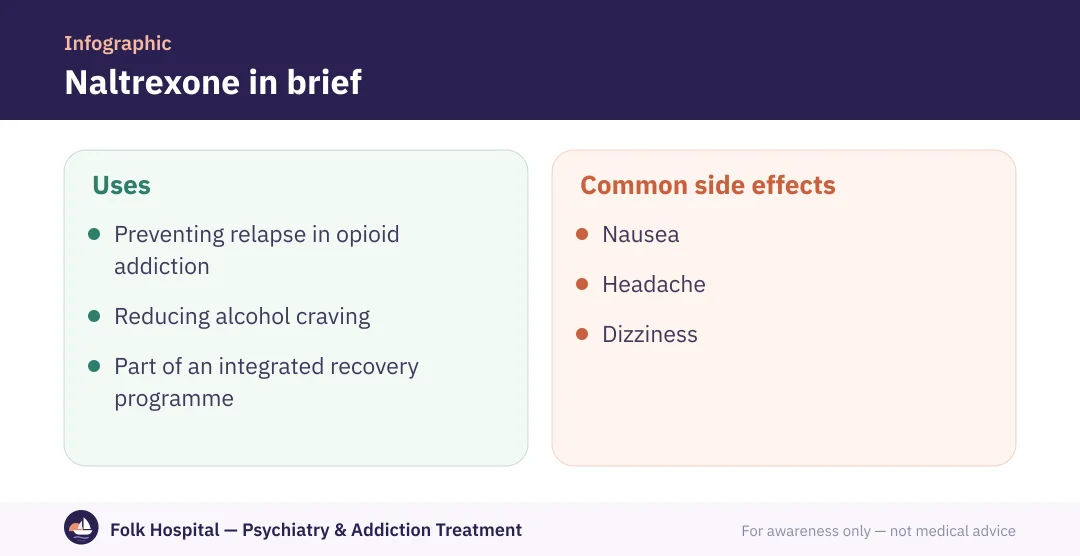
Used for
- Preventing alcohol relapse
- Preventing relapse after opioid detox
- Part of an integrated treatment programme
- Sometimes in behavioural addictions under specialist care
03How is it used safely?
- On prescriptionafter the doctor assesses the condition and other medicines.
- Sticking to the dosewithout raising, lowering or sharing the medicine.
- Follow-upregular reviews of benefit and side effects.
- Stoppingwith a plan agreed with the doctor, not alone.
04Side effects
| Common effects | See a doctor straight away |
|---|---|
| Nausea | Sudden severe withdrawal if taken with opioids in the body |
| Headache | Abdominal pain and yellow eyes (liver problems) |
| Dizziness | Overdose if someone tries to override the block with large amounts |
| Tiredness | Suicidal thoughts |
| Sleep disturbance | — |
- Sudden severe withdrawal if taken with opioids in the body
- Abdominal pain and yellow eyes (liver problems)
- Overdose if someone tries to override the block with large amounts
- Suicidal thoughts
In Egypt call the ambulance on 123 immediately, or the mental-health hotline 08008880700 for suicidal thoughts.
Ambulance: 12305Important interactions
Don't combine without your doctor with
- Any opioids or opioid painkillers
- Cough and diarrhoea medicines containing opioids
- Tramadol
- Buprenorphine and methadone
06Compared with similar medicines
| Medicine | Difference |
|---|---|
| Disulfiram | Causes an unpleasant reaction with alcohol instead of reducing craving |
| Buprenorphine | An opioid substitute, not a blocker |
Read also: alcohol addiction, heroin addiction, relapse prevention, psychiatric medications.
؟Frequently asked questions
Is Naltrexone addictive?
It isn't addictive.
Can I stop Naltrexone suddenly?
It can be stopped without withdrawal, but opioid sensitivity returns higher, so using after stopping carries overdose risk.
Can I drink alcohol with Naltrexone?
It doesn't prevent intoxication or react like disulfiram, but reduces the pleasure of drinking; the goal is abstinence.
When does Naltrexone start working?
It blocks receptors from the first dose; its effect on craving becomes clear within weeks.
Is Naltrexone safe in pregnancy and breastfeeding?
The doctor decides case by case, weighing benefit and risk; don't stop it without advice if pregnancy occurs.
Is naltrexone dangerous after stopping?
Yes. Opioid sensitivity rises, so using the old amount can cause a fatal overdose.
Sources and references
- Naltrexone — MedlinePlus Drug Information — U.S. National Library of Medicine — MedlinePlus
- Mental Health Medications — National Institute of Mental Health (NIMH)
- Medications to Treat Opioid Use Disorder — Research Report — National Institute on Drug Abuse (NIDA)

A psychiatrist specialising in addiction and mental illness in adults and adolescents, with a focus on dual diagnosis.
For awareness only — not a substitute for medical advice. Editorial policy · View profile