01Why is there so much talk about herbs?
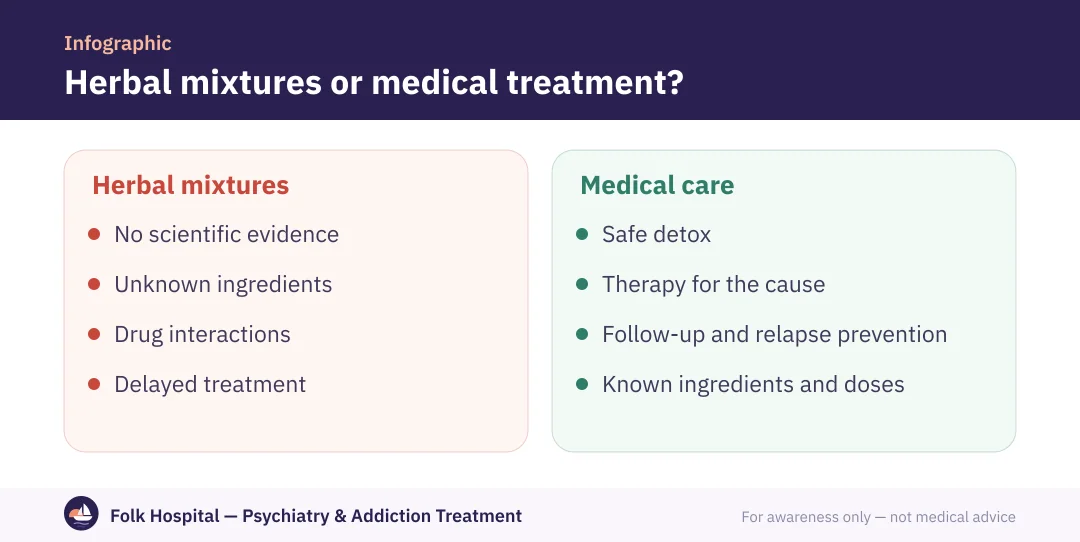
Online and on social media, adverts promise "natural blends" or "magic herbs" that treat addiction in days, discreetly. They attract families because they promise a quick, cheap fix without rehab. But the medical reality is clear: no herb has been shown to treat addiction.
02Why don't herbs work?
- Addiction isn't "toxins" to be washed out; it's a change in the brain and in behaviour. The liver and kidneys clear the drug themselves within days.
- Withdrawal needs medical management, especially with alcohol and sedatives, and herbs don't prevent seizures or delirium.
- Cravings and triggers aren't treated by any herb, but by psychological rehabilitation and follow-up.
- Psychological causes such as depression and anxiety need specialist treatment.
03The risks of unknown blends
Be careful
- They may contain hidden medicines such as undeclared sedatives or painkillers, which is dangerous alongside the drug being used.
- They may harm the liver or kidneys.
- They may interact with medical treatment.
- Worst of all, they may delay real treatment until the condition worsens, or give families a false sense of safety during dangerous withdrawal.
04What actually helps?
- Safe medical detoxmedicines and supervision suited to the drug. Read about detox.
- Psychological rehabilitationCBT, motivational interviewing, and group and family therapy.
- Approved medicinesfor some drugs such as opioids and alcohol. Read about medicines used in addiction treatment.
- A healthy lifestyleregular meals, fluids, sleep and exercise that support recovery.
- Follow-upto protect recovery in the first months.
05What about nutrition and natural drinks?
Good nutrition is very important in recovery: balanced meals, enough fluids, fruit and vegetables, and supplements prescribed by a doctor for any deficiency. Simple warm drinks may help you relax. But all of this supports treatment rather than replacing it. Read about how the body recovers after addiction.
06How to spot a misleading advert
- It promises a "guaranteed" cure or one "in days".
- It says treatment can be given "without the patient knowing" or hidden in food.
- It lists no clear ingredients or licence.
- It mentions no doctor, assessment or follow-up.
؟Frequently asked questions
Are there herbs that treat addiction?
No herb has been scientifically shown to treat addiction. Some herbs may help mildly with relaxation or sleep, but they don't treat dependence, cravings or the causes of addiction.
Do herbs cleanse drugs from the body?
The liver and kidneys clear the drug within days, and there's no evidence any herb usefully speeds this up. Medically, what matters is managing withdrawal, not cleansing the body.
Are unknown blends dangerous?
They can be: some may contain sedatives or undeclared substances, harm the liver, or interact with treatment medicines.
Can herbs be used alongside medical treatment?
Tell your doctor about any herb or supplement you use, because some interact with medicines. Simple warm drinks such as chamomile may help you relax without being a treatment.
Sources and references
- Treatment Approaches for Drug Addiction — DrugFacts — National Institute on Drug Abuse (NIDA)
- Drug misuse in over 16s: opioid detoxification (CG52) — National Institute for Health and Care Excellence (NICE)
- Alcohol-use disorders: diagnosis, assessment and management (CG115) — National Institute for Health and Care Excellence (NICE)
A specialist in psychological rehabilitation, behaviour modification and relapse prevention, with over 15 years in addiction programmes.
For awareness only — not a substitute for medical advice. Editorial policy · View profile