01Is the addictive personality real?
The idea of an "addictive personality" that makes someone addicted to anything is widespread. But psychiatry doesn't recognise it as a single diagnosis. What research shows is that certain traits and disorders make some people more vulnerable to addiction than others, and that combined with certain circumstances they raise the risk.
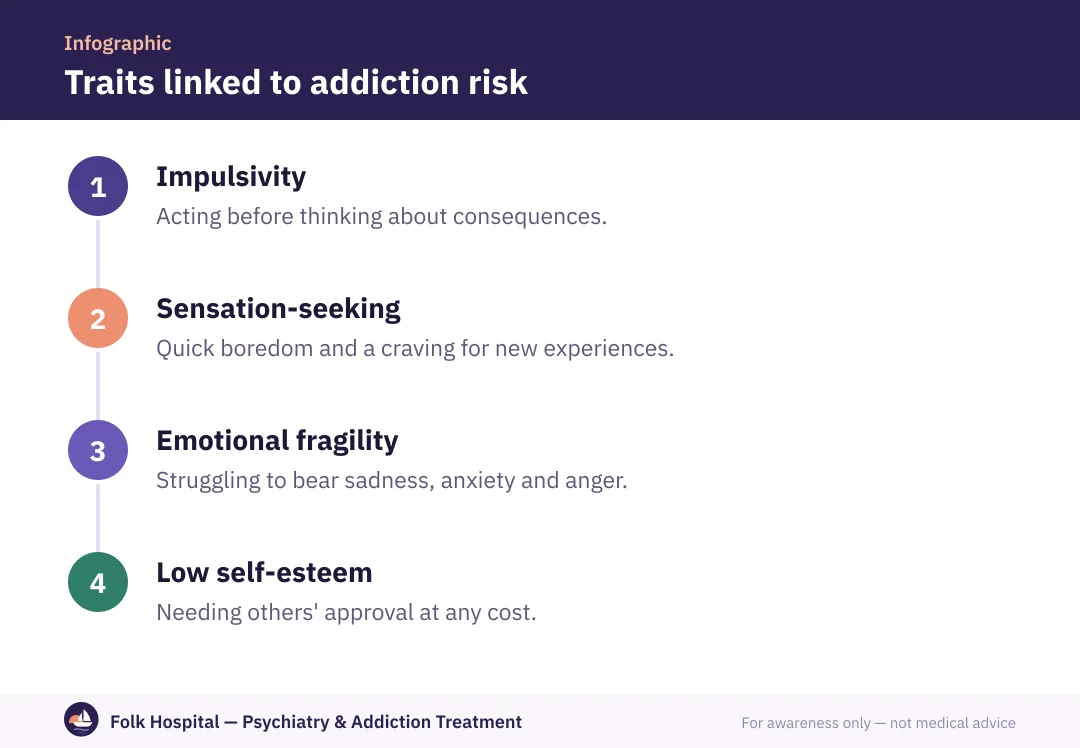
02Which traits raise the risk?
| Trait | Why it raises the risk |
|---|---|
| Impulsivity | Acting before thinking about consequences, and finding it hard to stop once started |
| Thrill-seeking | Getting bored quickly and being drawn to the new and risky |
| Difficulty tolerating negative feelings | Seeking a quick escape from anxiety, sadness or anger |
| Social anxiety | Using the drug to make dealing with people easier |
| Low self-esteem | Seeking acceptance or artificial confidence |
| Isolation | No support network or alternative activities |
03Conditions linked to higher risk
Some mental health conditions carry a higher risk, not because the person is "weak", but because the drug seems a quick fix for their distress:
- ADHD: impulsivity and difficulty organising.
- Depression and anxiety: seeking quick relief.
- Borderline personality disorder: emotional swings and impulsivity.
- PTSD: trying to silence memories.
Read about the causes of addiction and dual diagnosis.
04How to protect yourself if you have these traits
- Know yourselfknowing you're more vulnerable makes you more careful about "just trying it".
- Channel the energysport, safe adventures and hobbies that satisfy your need for excitement.
- Learn to regulate emotionscalming techniques, talking about feelings, and CBT or DBT.
- Treat what needs treatinganxiety, depression or ADHD, rather than self-medicating with drugs.
- Build a support networkfriends, family and healthy group activities.
05An important point: nothing is inevitable
Having these traits doesn't mean you'll become addicted, and having an addiction doesn't mean your personality is "defective". The very traits that raise the risk, such as passion, enthusiasm and boldness, can be a strength in work and life when channelled well. Psychological therapy helps with that.
؟Frequently asked questions
Is there really such a thing as an addictive personality?
Psychiatry doesn't recognise it as a single diagnosis, but research shows some traits and disorders raise the risk of addiction, such as impulsivity, thrill-seeking, anxiety and depression.
I'm impulsive and love new experiences. Will I become addicted?
Not necessarily. These traits raise the risk, but they can be channelled into healthy activities. Being aware of them and avoiding early experimentation with drugs protects you a great deal.
Are personality disorders linked to addiction?
Some, such as borderline and antisocial personality disorders, are linked to a higher risk and need specialist treatment alongside addiction treatment.
Sources and references
- Treatment Approaches for Drug Addiction — DrugFacts — National Institute on Drug Abuse (NIDA)
- Co-Occurring Disorders and Health Conditions — National Institute on Drug Abuse (NIDA)
- Attention-Deficit/Hyperactivity Disorder — National Institute of Mental Health (NIMH)
- Mental disorders — fact sheet — World Health Organization

A specialist in psychological rehabilitation, behaviour modification and relapse prevention, with over 15 years in addiction programmes.
For awareness only — not a substitute for medical advice. Editorial policy · View profile