01Where does addiction lead?
Addiction is a progressive illness: it usually starts with small losses that are easy to ignore, then they mount up. How fast this happens varies with the drug, dose and circumstances, but the overall direction without treatment is similar.
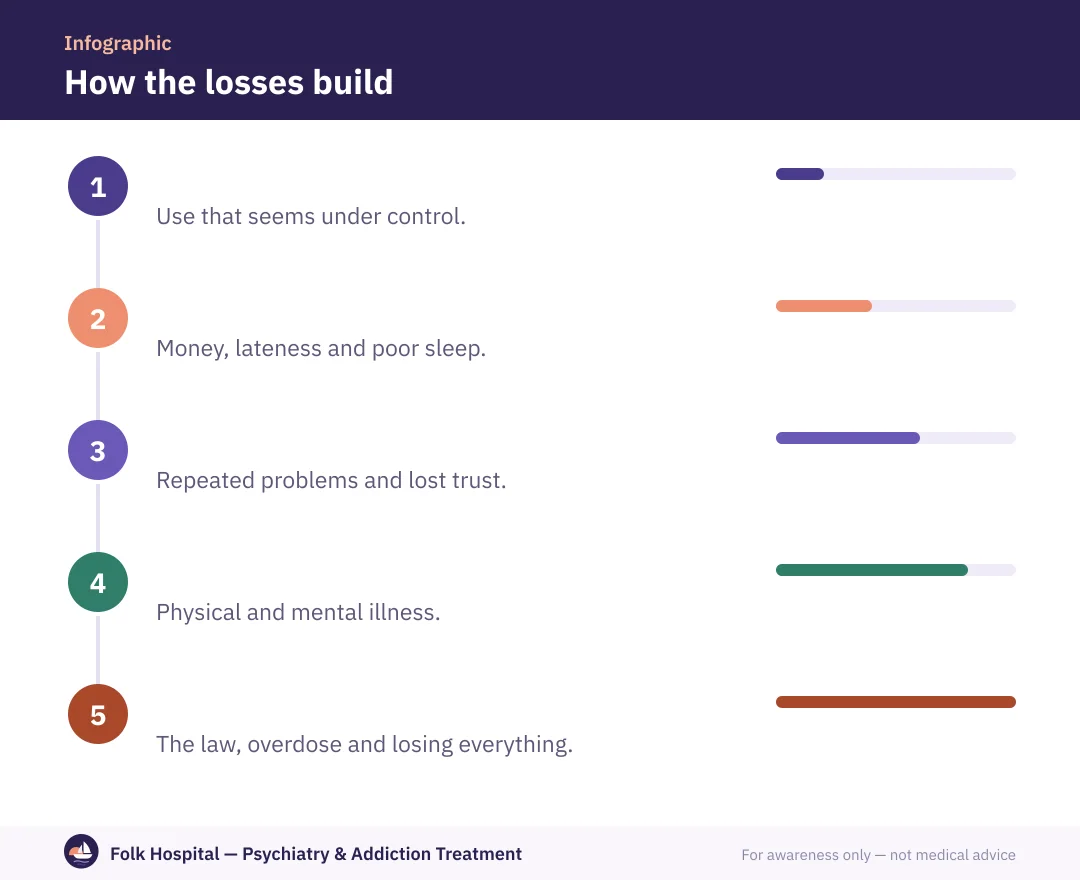
| Area | What happens over time without treatment |
|---|---|
| Physical health | Liver, heart and lung disease, weakened immunity, infections from injecting, malnutrition |
| Mental health | Depression, anxiety, psychosis, chronic insomnia and a higher risk of suicide |
| Work and study | Falling performance, absences, then losing a job or dropping out |
| Money | Debt, selling possessions and sometimes theft |
| Family | Lost trust, conflict, separation and deep effects on children |
| The law | Possession or use charges, or money-related crimes |
| Life | The risk of overdose and accidents, especially with injecting and mixing drugs |
Read about the harms of drugs.
02A danger that can't be ignored: overdose
- Extreme drowsiness or no response.
- Very slow or stopped breathing.
- Blue lips or nails.
- Seizures or very high temperature with stimulants.
The risk rises after a period off the drug because tolerance drops, when drugs are mixed, and with drugs of unknown origin.
Ambulance: 12303The "rock bottom" myth
Many people believe someone with addiction won't seek treatment until they "hit rock bottom" and lose everything. This idea is dangerous, because rock bottom can mean losing health, freedom or life itself. In reality, early treatment is easier and more successful, and families can help move the person towards treatment before losses pile up. Read how to convince someone to get treatment.
04Can the ending change?
Yes, at any stage. Millions of people live in recovery today after years of addiction. When use stops, the body starts to recover, relationships gradually return, and people regain their work and lives. Read about how the body recovers after addiction and life after recovery.
- Acknowledging itthat there's a problem needing help, not "a phase that will pass".
- Assessmentto identify the drug, severity and risks.
- Treatmentsafe detox, then psychological and family rehabilitation.
- Follow-upto protect what's been achieved in the first months.
؟Frequently asked questions
What happens to someone with addiction who isn't treated?
It varies, but untreated addiction usually moves towards mounting harm: physical and mental illness, loss of work and money, broken relationships, legal problems and the risk of overdose. Treatment at any stage changes that course.
Should someone wait to hit rock bottom before treatment?
No. The idea of rock bottom is dangerous because it can mean losing health or life. Early action is easier and more successful.
Is it too late for treatment after many years?
It's never too late. Many people recover after long years of use, though some physical damage needs specific treatment.
Sources and references
- Treatment Approaches for Drug Addiction — DrugFacts — National Institute on Drug Abuse (NIDA)
- Opioid overdose — fact sheet — World Health Organization
- Mental disorders — fact sheet — World Health Organization
- World Drug Report 2024 — United Nations Office on Drugs and Crime (UNODC)

A specialist in psychological rehabilitation, behaviour modification and relapse prevention, with over 15 years in addiction programmes.
For awareness only — not a substitute for medical advice. Editorial policy · View profile