01What is this test based on?
The DSM-5 diagnostic manual lists eleven signs of substance use disorder and measures severity by how many are present: two or three means mild, four or five moderate, and six or more severe. We've written ten simplified questions covering the most important of these signs.
02How do you read your score?
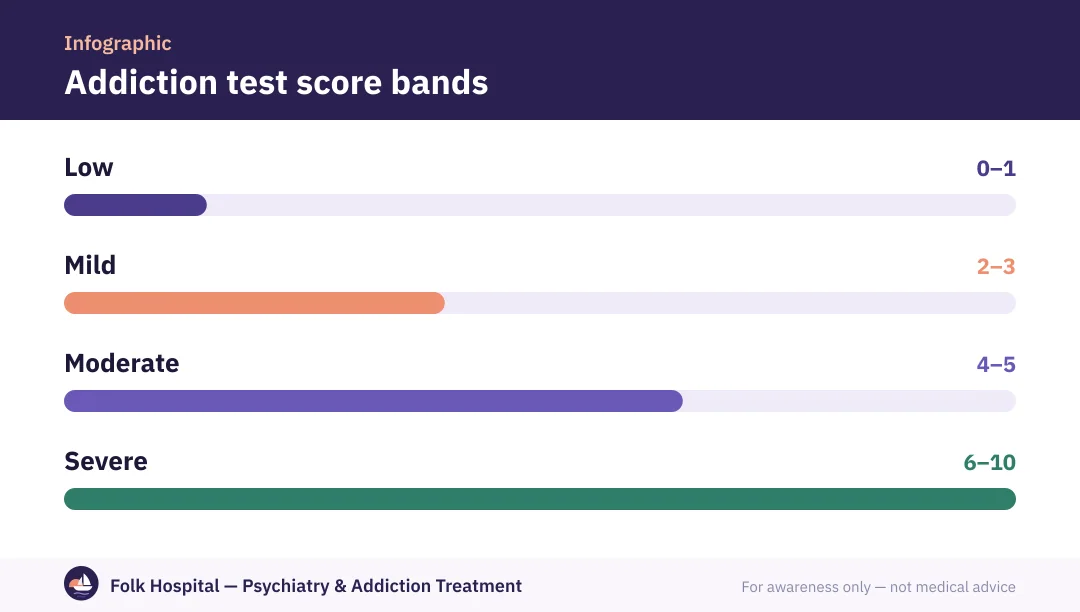
| Number of "Yes" answers | Level |
|---|---|
| 0–1 | Low |
| 2–3 | Mild |
| 4–5 | Moderate |
| 6–10 | Severe |
Read about the stages of addiction treatment and safe detox.
03From experimenting to dependence
| Stage | What marks it |
|---|---|
| Experimenting | Curiosity or peer pressure |
| Regular use | A pattern at set times |
| Harmful use | Problems at work or home |
| Dependence | Tolerance, withdrawal and loss of control |
- Don't stop suddenlyfrom alcohol, sedatives or opioids without a doctor.
- Count the costswhat in your life has been affected?
- Avoid triggersplaces and friends linked to use.
- Contact us confidentiallyfor assessment and a treatment plan.
- Suicidal thoughts or intent to harm yourself or others.
- Losing touch with reality or severe agitation.
In Egypt call the ambulance on 123 or the mental-health hotline 08008880700.
Ambulance: 123؟Frequently asked questions
Does the test work for any substance?
Yes, the questions apply to drugs, alcohol and misused medicines. Answer about the substance you use most.
Can I answer for someone else?
You can answer based on what you observe, but the result will be an estimate. For an accurate assessment talk to us about the situation, or read our family guide.
Is using only on occasions addiction?
Not necessarily, but the result shows whether the pattern is progressing.
Which substances have dangerous withdrawal?
Alcohol, sedatives and opioids need medical supervision.
Is addiction a lack of willpower?
No. It's a disorder that changes brain function and responds to treatment.
Can I get treatment without my family knowing?
Treatment is confidential, and family support helps if you choose it.
Sources and references
- Drugs, Brains, and Behavior: The Science of Addiction — National Institute on Drug Abuse (NIDA)
- Treatment Approaches for Drug Addiction — DrugFacts — National Institute on Drug Abuse (NIDA)
- Addiction: what is it? — NHS (UK)

A psychiatrist specialising in addiction and mental illness in adults and adolescents, with a focus on dual diagnosis.
For awareness only — not a substitute for medical advice. Editorial policy · View profile