01Can you stop on your own?
Yes, sometimes. Some people manage to stop by themselves, especially when use is light or recent, when the drug doesn't cause dangerous withdrawal, and when they have strong motivation and a supportive environment. But the picture is very different with advanced addiction.
02When is stopping alone dangerous?
- Drink heavily every day.
- Have taken sedatives regularly for weeks or longer.
- Use high doses of tramadol or heroin.
- Mix more than one drug.
- Have a history of seizures, or heart or liver disease.
- Have severe depression or thoughts of self-harm.
In these cases stopping suddenly can cause seizures, delirium, severe dehydration or dangerous depression, and going back after stopping can cause an overdose.
Ambulance: 12303Why do solo attempts so often fail?
| Reason | What happens |
|---|---|
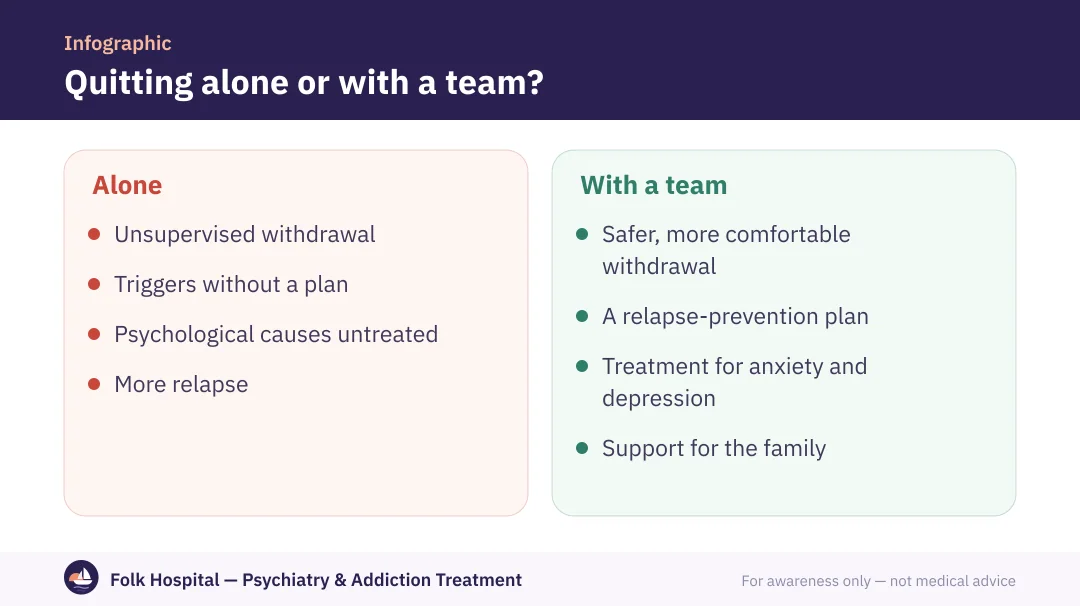
| Severe withdrawal | The first days are painful, so the person goes back to escape the pain |
| Cravings | They continue for weeks and months after withdrawal |
| Triggers | Surroundings, friends and money are unchanged |
| Underlying causes | Anxiety, depression or pain go untreated |
| No plan | No one follows up, and there's no ready alternative for a weak moment |
Read why treatment sometimes fails.
04How to improve your chances
Even if you decide to start alone, these steps raise your safety and success:
- At least one medical consultationto know whether stopping is safe for you and whether you need medicines.
- A written planyour start date, what you'll do with cravings, and who you'll call.
- Remove the drug and triggersget rid of the drug and equipment, and keep away from using friends.
- Tell someone you trustsupport doubles the chances of success.
- Structure your daysleep, meals and physical activity.
- Ask for help quicklyif the attempt fails or dangerous symptoms appear.
05When do you need specialist treatment?
If you've tried more than once and gone back, if the drug is one with dangerous withdrawal, or if a mental illness accompanies the use, that's a clear sign willpower alone isn't enough and you need a treatment plan. That isn't weakness; it's a smart decision. Read about outpatient care and detox.
؟Frequently asked questions
Can I quit drugs without rehab?
In mild cases sometimes yes, with outpatient care or even simple support and follow-up. Advanced cases and drugs with dangerous withdrawal need medical supervision.
Why do I go back every time I try to stop alone?
Because in advanced addiction, withdrawal, cravings and triggers are stronger than willpower alone, and the reasons that drove you to use are still there. That isn't weakness; it's a sign you need a plan and support.
Which drugs are most dangerous to stop suddenly alone?
Alcohol and sedatives because of seizures and delirium, high-dose tramadol because of seizures, and opioids because of overdose risk on going back.
Sources and references
- Treatment Approaches for Drug Addiction — DrugFacts — National Institute on Drug Abuse (NIDA)
- Drug misuse in over 16s: opioid detoxification (CG52) — National Institute for Health and Care Excellence (NICE)
- Alcohol-use disorders: diagnosis, assessment and management (CG115) — National Institute for Health and Care Excellence (NICE)
- Drug addiction: getting help — NHS (UK)

A specialist in psychological rehabilitation, behaviour modification and relapse prevention, with over 15 years in addiction programmes.
For awareness only — not a substitute for medical advice. Editorial policy · View profile